How a Broken Postal System Became a Weapon Against Voting
A USPS whistleblower warns that rushed, untested technology could block millions of mail-in ballots ahead of the midterms. What's inside that report reveals how crumbling infrastructure is being weaponized — and why the stakes extend far beyond one election.
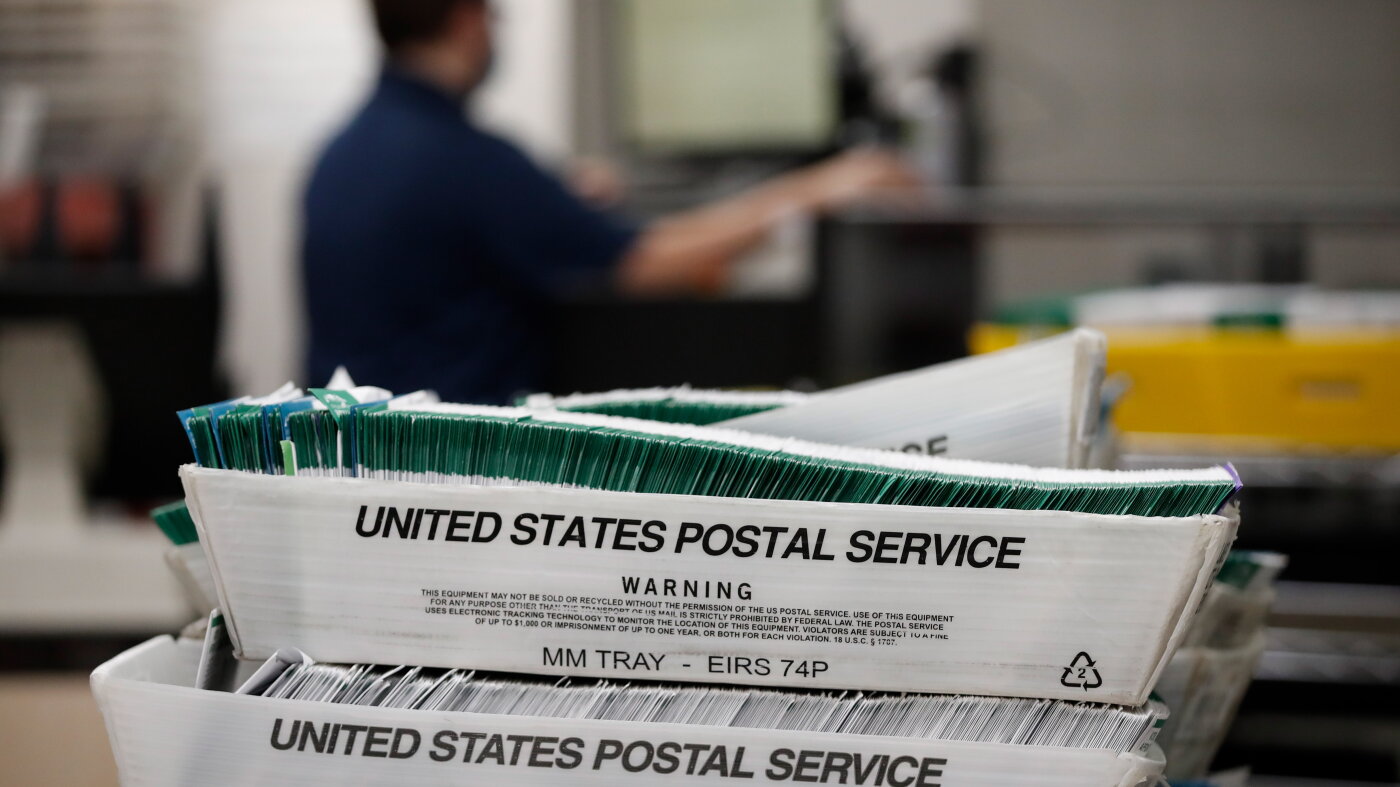
The system is designed to fail — and that’s the point
A federal whistleblower has released what may be the most damning internal document on American electoral infrastructure in years. The warning: the U.S. Postal Service is speeding toward a September 1 launch of an untested online portal that could prevent states from mailing millions of absentee ballots, effectively undermining the midterm elections while a court battle rages over whether the president even has the authority to try.
The report, submitted by Democratic Senator Richard Blumenthal of Connecticut to USPS leadership this week, was prepared by Whistleblower Aid, a nonprofit representing a federal employee with direct knowledge of the system’s development. Its language is unusually stark for a government disclosure. “USPS leadership, it appears, has discarded all best practices as they speed the project to be ready for a September 1 implementation — raising questions about whether catastrophic failure would be a feature rather than a bug,” the disclosure states.
Those are not the words of someone speculating about glitches. Someone inside the Postal Service thinks this system was built to break.
What the portal is supposed to do
Here is the mechanics of the crisis. In April, President Trump issued an executive order requiring states to verify the citizenship status of anyone requesting a mail-in ballot and to share absentee voter names and ballot envelope barcodes with USPS through a centralized online system. The order was framed as a move to prevent non-citizens from voting — a claim that multiple audits and studies have found to be virtually baseless.
USPS has spent months building the digital infrastructure to enforce this rule. But according to the whistleblower, the system has never been properly tested. There is no evidence that it can handle the volume of data that five0 states will generate when voters begin requesting mail ballots this week. And the design includes what the report calls a “zero-percent failure policy” — a verification process that allows no margin for error when confirming whether a ballot envelope meets the new requirements.
In practice, that means every mismatch, every glitch, every momentary system failure becomes a hard stop. Ballots pile up. States cannot mail them. Voters — many of them elderly, rural, disabled, or in communities of color who rely on mail voting — receive nothing.
“As designed, the process is entirely unforgiving. It could delay ballots by the thousands in repeated verification cycles — and thus prevent states from mailing enormous numbers of ballots,” the disclosure warns.
The legal chess match
A federal judge in Boston issued a temporary restraining order last week blocking USPS from implementing the system, finding that the mailing agency likely has no authority to control how states run their mail-in voting procedures. The Trump administration has appealed to the 1st U.S. Circuit Court of Appeals. The Supreme Court has not yet weighed in, and more lower-court challenges are likely as election officials and voters try to navigate the legal fog.
But legal uncertainty alone does not explain what is happening inside USPS. The real story is an agency that appears to have prioritized speed over function, compliance over confidence, and political objectives over institutional competence.
USPS spokespersons did not respond to NPR’s questions about the whistleblower report. Postmaster General David Steiner received a letter from Blumenthal urging him to “abandon this ill-conceived, unconscionable plan and ensure that all Americans can exercise their constitutional right to vote, including by mail, without interference by USPS.”
Blumenthal called the details “mind-boggling.” On a call with reporters, he said flatly: “What the disclosure reveals is that the Postal Service has designed a system that is intended to fail.”
Who wins, who loses
The calculus here is clear. If the portal works perfectly — a big if — the new verification system adds a layer of bureaucratic friction that will disproportionately affect certain voters: older Americans who have voted by mail for decades, military personnel stationed overseas, Native Americans living on reservations with limited postal access, and low-income voters in urban areas where mail delays are already common. Every delay is a disenfranchisement event.
If the portal fails — and the whistleblower suggests it is structurally prone to failure — the fallout is even more consequential. States will be unable to mail ballots at scale. Election administrators who have spent months preparing for a surge in mail voting will find their work blocked by a system they never asked for and do not trust. The resulting chaos will fall heaviest on the communities that rely most on mail voting and have the fewest resources to litigate their way back into the ballot box.
The president, who votes by mail himself, has defended the directive as necessary to stop illegal voting by non-citizens. The evidence does not support that claim. But the political signal is unmistakable: the administration is willing to risk election infrastructure on a policy whose justification rests on a myth, and it is using an agency that has spent decades underinvested and understaffed as the enforcement mechanism.
Why the world should watch
Democracies around the world are watching the United States with growing alarm. Not because they expect American institutions to collapse — but because they are seeing how quickly institutional decay can be weaponized when the guardrails are already weakened.
The USPS is not a robust organization. It has operated under chronic financial strain, political interference, and leadership appointments that prioritize loyalty over expertise. A postal service that cannot reliably deliver birthday cards and utility bills is a fragile instrument for administering the foundational act of democracy. That fragility is now being exploited.
Other authoritarian-leaning governments have faced the same temptation: take an institution that is already broken and use its brokenness to tilt the playing field. Hungary’s electoral administration, Turkey’s election infrastructure, India’s voter registration systems — each has shown how administrative complexity can become a tool of exclusion when paired with political will.
The United States has a different problem. Its institutions are not deliberately weaponized in the same way. They are simply allowed to atrophy while being asked to perform tasks they were never designed to handle under these conditions. The result looks the same even if the intent differs.
What happens next
The immediate question is whether courts will allow USPS to proceed with the portal for the 2026 midterms. The Boston ruling suggests the legal odds are against it, but appeals courts and the Supreme Court are unpredictable, especially on election questions. Even if the system is blocked, the damage may already be done: states have had to redesign their mail-voting processes, voters have lost confidence in the reliability of their ballots, and the precedent of using postal infrastructure as an election weapon has been set.
Beyond the courts, the deeper story is about what happens when a country lets its democratic infrastructure become expendable. The whistleblower’s report is not just about a software rollout. It is about an agency that has been told to build a system it knows will fail, under a timeline it cannot meet, to enforce a rule its own experts believe is unlawful. That is not incompetence. That is something more deliberate.
The midterms begin this week. Voters will request ballots. States will try to mail them. And somewhere in the background, a system designed without testing, without safeguards, and without regard for its own failure rate will stand ready to stop them.