Huang Defies Trump on AI Speed — A Flash Point for U.S. Tech Policy
Jensen Huang's public disagreement with Trump on AI development pace reveals a fault line in American tech policy. Who gains when the race is controlled by chipmakers and presidents, and who gets left behind?
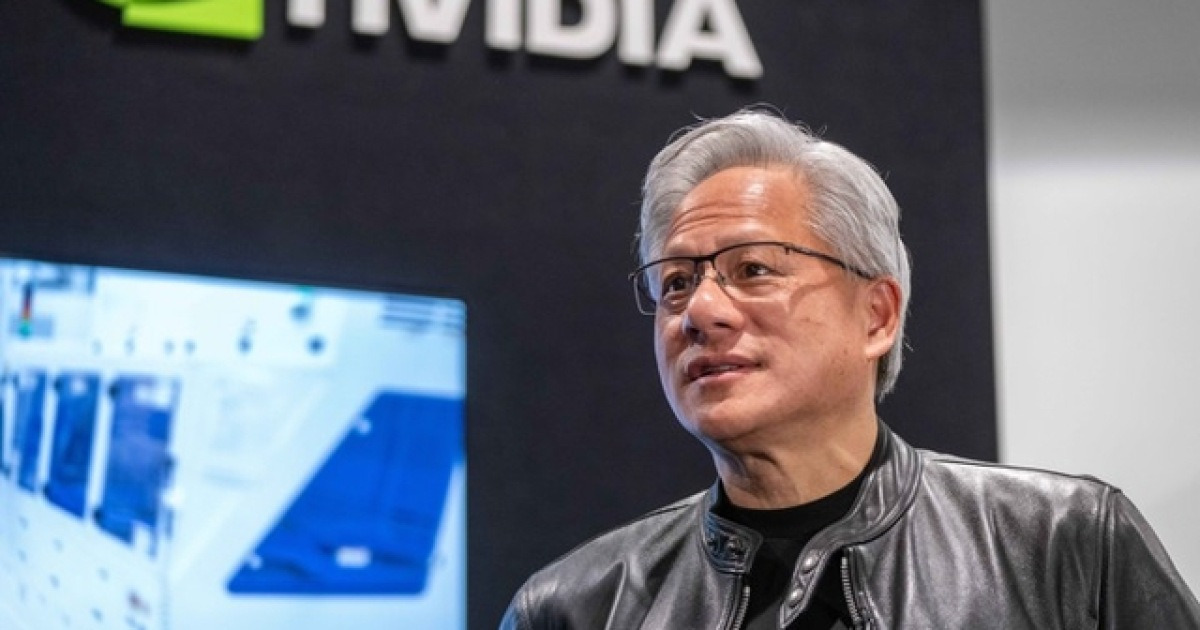
When the Chipmaker Talks Back
Jensen Huang didn’t just disagree with Donald Trump. He publicly overruled him.
At the All-In Summit in Los Angeles on September 14, the Nvidia CEO was mid-conversation with Dario Amodei, Anthropic’s CEO, who had been arguing for slowing AI development. The phone rang. It was Trump. Huang put it on speaker. What followed was not a private policy discussion but a televised tussle over the soul of American artificial intelligence — and its trajectory relative to Beijing.
Trump warned that “people don’t want this happening” could be politicians or China itself. He called the push for AI speed bumps a “hoax.” Huang’s reply was immediate and measured: “We will not let that happen.”
The applause from the audience was unmistakable. So was the fracture.
The Safety Camp vs. The Accelerationists
Amodei’s argument isn’t fringe. Sam Altman of OpenAI has echoed similar concerns about controllability and risk. The underlying premise: if AI models become sufficiently capable before safeguards catch up, the consequences could outpace human control.
Huang’s counter-principle is simpler and more commercial: slowing down helps no one except China.
The framing has shifted. What began as a technical safety debate — how fast should we build dangerous tools? — has become a geopolitical question. How fast can we build before someone else builds faster?
That matters because the person asking the first question holds different incentives than the person asking the second. Amodei and Altman run model labs. Their risk is catastrophic failure. Huang runs the factory that supplies the bricks. His risk is irrelevance.
But the stakes go deeper than corporate positioning. The safety camp is not merely warning about runaway models. They are raising a structural concern: that the current architecture of AI development, optimized for capability gains above all else, produces externalities — concentration of power, displacement of labor, erosion of informational ecosystems — that no single company or administration has a framework for managing. Huang’s objection is not to safety per se but to the tempo of its implementation. Every pause, every review, every voluntary commitment to testing buys time for competitors who have no such constraints.
The Chipmaker’s Uncomfortable Position
Nvidia’s business model is transparent: more AI development, more GPU sales, more revenue. Data center expansion is existential growth fuel. The company’s market cap reflects that dependency.
There is no shame in this alignment of incentives. But it does mean Nvidia’s voice in policy debates carries weight disproportionate to its responsibility for AI outcomes. When the world’s most powerful AI hardware vendor declares that safety concerns are “hoaxes,” the industry listens — and the regulatory calculus tilts.
Critics have already drawn the parallel to “kicking away the ladder.” The two companies furthest ahead in frontier AI are the loudest voices urging caution. The one furthest behind — building the infrastructure others depend on — is the one loudest against it. The pattern raises a question: is the safety camp genuinely fearful, or is it a strategic move by incumbents to slow competitors while hoarding their own advantage?
There’s no clean answer. Both impulses likely coexist. But the second-order effect is what matters most. When the narrative of AI policy becomes a debate between safety advocates and accelerationists, the question of who builds the infrastructure — and who profits from it — is pushed to the background. The chipmaker’s interests are so perfectly aligned with unfettered growth that they masquerade as national interest. That conflation is not accidental. It is the product of deliberate positioning, and it has real consequences for how policy gets shaped.
The Data Center War at Home
The debate isn’t only about speed. It’s about where that speed physically happens.
A Gallup poll cited by TechCrunch found that seven in ten Americans oppose data centers in their neighborhoods. Environmental impact topped the list, followed by rising living costs and declining quality of life. The infrastructure driving AI’s advancement is deeply unpopular where it lands.
Trump has framed this opposition as another form of sabotage — domestic actors trying to strangle American AI by blocking the physical plants. He told Huang to be careful but not stop. “I’m with you all the way,” he said.
The rhetorical symmetry is striking. External opponents (China, regulators) and internal opponents (NIMBYs, environmental groups) are lumped together as threats to national technological supremacy.
This framing does more than consolidate support. It redefines democratic opposition as existential threat. When local resistance to data centers is equated with Chinese espionage or regulatory capture, the political cost of resisting AI infrastructure grows dramatically. Communities that have historically won battles over industrial projects — against pipelines, refineries, and landfills — now face an opponent that claims the mantle of national security. That is a profoundly asymmetric fight.
The environmental toll is real and measurable. Data centers consume massive amounts of water for cooling and draw significant portions of local electricity grids. In regions already strained by drought or aging infrastructure, the addition of AI-driven demand creates compounding pressures. The economic benefits — jobs, tax revenue — are concentrated and temporary; the long-term costs are distributed and enduring.
The Geopolitical Calculus
The China dimension adds urgency but also distortion. Beijing has made no secret of its ambition to achieve AI dominance by 2030. Its approach differs from America’s in key ways: state-directed investment, less reliance on private venture capital, and a willingness to accept social trade-offs that Western democracies cannot. The competitive pressure is genuine.
But the assumption that speed alone determines outcomes is contested. Several analysts have argued that China’s AI ambitions are constrained by its own structural challenges — an aging population, capital controls, and the fundamental difficulty of replicating America’s ecosystem of top-tier universities and risk capital. Others note that the most dangerous AI capabilities are not the ones China lacks but the ones America is building today. The priority, some argue, should be ensuring those capabilities are safe rather than racing to make them more powerful.
Huang’s position implicitly rejects this trade-off. It holds that the safest path is the fastest path — that China will win if America hesitates, and that safety can be addressed after capability is secured. This is a bet, not a certainty. And it is a bet that privileges one kind of risk over another.
What Comes Next
The immediate consequence is a public rift between two factions within the AI establishment. The safety camp — Amodei, Altman, Musk — now shares a stage with an accelerationist coalition led by Nvidia and the Trump White House. That coalition’s argument is blunt: every day of delay is a day China gains ground.
But the data center opposition is real and politically potent. Even a president who calls it a hoax cannot indefinitely bulldoze local resistance. Each veto, each court case, each delayed permitting decision is a brake on the very acceleration Huang champions.
The longer-term bet is on whether “we will not let that happen” becomes policy or merely posture. If Trump’s administration adopts Huang’s accelerationist framework — which seems likely given their mutual rhetoric — the next salvo will come in regulation: weaker safety reviews, faster environmental permits, and a trade policy that treats AI capability as a weapon of statecraft.
If the safety camp loses that fight, the cost may not appear for years. If they win, the cost is immediate: China advances faster, and American firms that invested heavily in the current architecture fall behind.
Huang’s moment at the All-In Summit was performative, but performance shapes policy. He made clear who speaks for the industry’s infrastructure layer — and who gets left out of the conversation when the chips are down.
The broader implication is about who gets to define the terms of the AI age. For years, the conversation was dominated by researchers and ethicists debating alignment and controllability. Now the question has shifted: who builds the foundation, and who decides how fast? The answer to that question will determine not just the pace of technological change but the distribution of its rewards and risks. Huang’s declaration that America will not slow down was not just a defense of Nvidia’s business model. It was a claim to speak for the nation’s future — a claim that demands scrutiny from everyone who has a stake in what comes next.