Why Huawei Selling DJI Cameras Changes Everything
Huawei is reselling DJI's Osmo Pocket 4 under its own branding in China — a move that signals a far-reaching shift in how Chinese tech giants approach product markets.
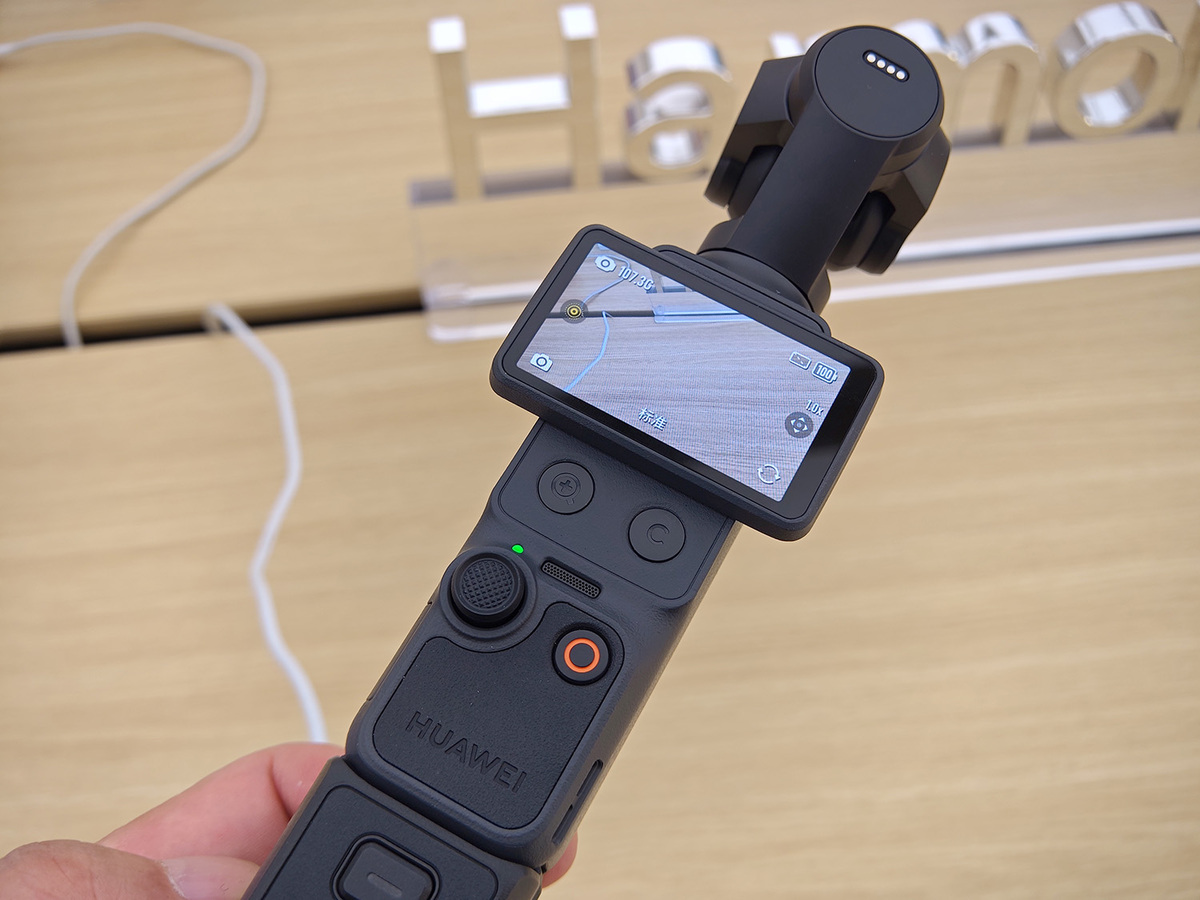
A Huawei Store Sells a DJI Camera
Walk into a Huawei store in Beijing and you will find a gimbal camera on the shelf bearing a quiet but unmistakable twist: the HUAWEI × DJI Osmo Pocket 4. The hardware inside is identical to DJI’s flagship pocket camera. The price tag is 2,999 yuan — roughly $415. The only real differences live in the software layer and in the logos.
This is not a rebranding exercise in the usual sense. It is something more strategic.
Why This Matters
The immediate implication is simple: Huawei has decided it does not want to build a gimbal camera from scratch. But the second-order reading is what makes this story worth following. Huawei, which just reclaimed the No. 1 slot in China’s smartphone market with a 21.3 percent share in the third quarter of 2026, is choosing a partnership channel over a competitive one in a new hardware category. That choice tells you a lot about how the company thinks it can grow.
In Japan, Huawei has mostly been visible as a smartwatch maker. The October launch of the WATCH GT 7 Pro reinforced that perception. But in China, the picture is dramatically different. Huawei beat Apple by nearly two percentage points last quarter — a result that surprised many analysts and underscored the depth of the company’s domestic resurgence. With that kind of market power, the question becomes how Huawei deploys its ecosystem reach beyond phones and wearables.
The answer, apparently, is to attach its brand and software integration to products that already dominate their categories.
The Math Behind the Decision
Gimbal cameras are not an easy market to enter. DJI’s Osmo Pocket 3 became a cultural phenomenon when it launched in 2023. At its peak, it accounted for more than one-third of all video cameras sold in Japan — a staggering share for a device that costs a fraction of traditional cinema gear. The category remained essentially a DJI monopoly until Insta360 finally cracked open competition with its Luna series in 2026. Even then, DJI’s lead was insurmountable.
Starting a competing product line against that kind of entrenched dominance would require enormous R&D investment, years of iteration, and a marketing budget large enough to overcome consumer loyalty. Huawei’s calculus appears to be that none of that is necessary when you can simply partner with the incumbent and integrate its software into your ecosystem instead.
The result is a product that looks like a DJI device, runs DJI firmware, accepts DJI accessories, but ships through Huawei retail channels and offers deeper HarmonyOS connectivity. For Huawei’s existing customer base — millions of smartphone owners who already trust the brand — the switch from a phone-only relationship to a camera-plus-phone relationship feels frictionless.
This model flips conventional wisdom about tech partnerships. Rather than trying to acquire or defeat competitors, Huawei is leveraging its platform strength to create value-added distribution channels. The partnership doesn’t dilute DJI’s brand — it extends it. And it doesn’t weaken Huawei’s position — it deepens the lock-in for existing customers without requiring capital expenditure.
Who Wins, Who Loses
Huawei wins in three ways. First, it gains a new product category without the capital expenditure of building one. Second, it deepens the sticky-ness of its HarmonyOS ecosystem — every Osmo Pocket 4 owner who prefers the Huawei-integrated version is another user less likely to switch platforms. Third, it reinforces the brand’s positioning as a full-spectrum tech company rather than a smartphone vendor.
DJI wins by extending its distribution reach through Huawei’s massive retail footprint, including physical stores that most independent camera retailers cannot match. The company also avoids the cost of developing HarmonyOS-specific optimizations itself.
Consumers win modestly — they get a familiar device with slightly better phone integration. The trade-off is that the product is functionally identical to the standard Osmo Pocket 4, so the value add is narrow.
Competitors lose because this model is hard to replicate. Honor tried something similar with its Robot Phone, which mounts a gimbal camera on a foldable phone body and uses it for AI-agent visual presence. But Honor’s approach targets a completely different use case — performative AI interaction rather than serious content creation. Apple and Samsung have no comparable hardware partnerships in this space, leaving them exposed if Huawei’s ecosystem play resonates broadly.
What Happens Next
The most likely scenario is that this arrangement expands. If the Osmo Pocket 4 partnership proves commercially successful — and early signs suggest it may — expect Huawei to negotiate similar deals with other DJI product lines, potentially including drone controllers, action cameras, or even future Osmo models. The pattern mirrors what happened in smartphones: Chinese manufacturers initially competed head-on with Samsung and Apple, then shifted toward differentiation through ecosystem integration and partnerships once direct competition proved costly.
A secondary possibility is that other Chinese hardware brands follow suit. Xiaomi already has extensive IoT partnerships; it is not difficult to imagine Xiaomi approaching Insta360 with a similar proposal once the market matures further. The template is clear: identify dominant players in adjacent categories, propose integration play, capture ecosystem value.
What this does not signal is weakness. Huawei’s decision to partner rather than compete in this category reflects confidence — the company knows it can leverage its platform position to capture value without owning every component of the supply chain. That is a mature strategic posture, and one that Chinese tech companies are increasingly adopting as domestic markets saturate and international expansion grows harder under sanction pressure.
There is also a subtle geopolitical dimension worth noting. By pairing with a domestic champion like DJI rather than pursuing Western alternatives, Huawei is reinforcing the self-reliance narrative that has become central to China’s tech strategy. The partnership demonstrates that Chinese companies can compete globally through collaboration rather than confrontation — a message that resonates both domestically and among Global South markets where these devices sell well.
The Osmo Pocket 4 sitting on a Huawei store shelf may look like a minor curiosity. It is actually a window into how China’s biggest tech companies are redefining what it means to compete.