Huawei's Tau Chip Is a Quiet Signal That China's Semiconductors Are Finding a New Path
Huawei's Tau Scaling Law-based Kirin 9050 Pro is more than a spec bump — it's a design philosophy that could let Chinese chips advance without waiting for cutting-edge foreign equipment. The real question is whether it can scale.
The Timing Isn’t Accidental
Huawei just outflanked Apple.
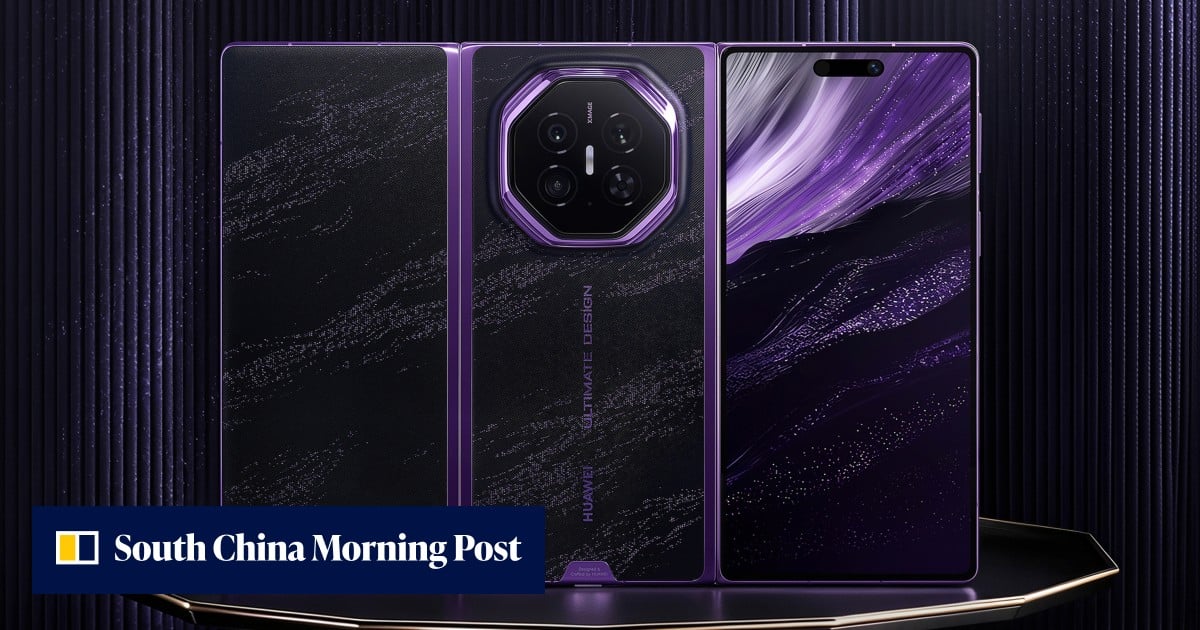
On Monday in Guangzhou, the company unveiled the Mate XT 2 — a trifold phone powered by the Kirin 9050 Pro, its most powerful chip yet. Two days later, Apple is expected to reveal its first foldable. And on the same Monday, rival Xiaomi was set to announce its own new foldable. The week was stacked, and Huawei chose to drop its announcement first.
This isn’t merely marketing choreography. The real story lives inside the chip.
A New Scaling Law
For decades, the semiconductor industry followed Moore’s Law: shrink transistors, pack more in, get faster chips. But as process nodes have approached atomic limits, the old rules have frayed. Foundries like TSMC need EUV lithography machines that the US has effectively blocked China from buying. Huawei can’t simply order a 3nm chip from TSMC anymore.
So it started designing around a different principle.
The Tau Scaling Law, described at the launch event, shifts the focus from transistor density to signal delay. In a chip, electrical signals travel through microscopic pathways. If those paths are long or convoluted, performance degrades — even if you’ve packed a billion transistors into the die. The new approach, particularly a technique called LogicFolding, shortens signal paths and rearranges logic to fit more efficient layouts into the same physical space.
In plain terms: Huawei is getting more out of the transistors it already has, rather than trying to make smaller ones it can’t easily produce.
Richard Yu called the Kirin 9050 Pro the “most powerful Kirin chip ever.” Huawei says it delivers a 42 per cent performance improvement over the previous-generation Mate XTs model. Those are big numbers for a generation-over-generation jump, especially given the manufacturing constraints.
Why This Matters Beyond the Specs
The Tau Scaling Law approach is significant because it represents a potential decoupling of chip design advancement from access to the most advanced fabrication equipment.
US export restrictions have been designed around a simple premise: if China can’t buy the best lithography, it can’t make the best chips. That equation assumes performance gains come almost exclusively from shrinking transistors. Tau flips that assumption. It says you can still move the needle on performance through architectural innovation — by redesigning how signals flow through the silicon, not just by making the silicon smaller.
Whether this scales — and I mean that literally — remains to be seen. A 42 per cent improvement is impressive on paper, but the real test will be whether LogicFolding and related techniques can continue to compound year over year, or whether they hit their own physical limits. No design trick replaces the raw density gains that advanced nodes deliver. But if Huawei can sustain even a fraction of this pace, it changes the calculus for how much US restrictions actually contain Chinese progress.
The Foldable War Gets Complicated
The Mate XT 2 is also the first device to run HarmonyOS 7, the latest version of Huawei’s self-developed operating system. The software launched in developer beta in June with AI coding agents and began rolling out to existing phones this week. The OS update and the chip launch are deliberately bundled — Huawei wants the world to see them as a single, integrated platform play.
The foldable market is accelerating fast. Global shipments grew 18 per cent last year and are projected to reach 24 per cent growth this year and 37 per cent in 2027, according to Counterpoint Research. Chinese manufacturers are racing to capture share. Xiaomi’s announcement later Monday adds another contender. Apple’s entry on Wednesday will shift the entire category into the mainstream spotlight.
Huawei’s triform factor — three folding sections — is a hardware differentiator. Combined with the 19,999 yuan starting price, it’s positioning the Mate XT 2 as a premium statement device. The price alone signals confidence: Huawei is willing to ask for near-flagship money even without Google services or the latest process node.
Who Wins and Who Loses
Chinese chip designers win the most tangible benefit here. The Tau Scaling Law gives them a narrative that US restrictions don’t equal technological stagnation. It’s harder for Washington to claim containment when Beijing announces a new design methodology that theoretically reduces dependency on advanced foundry access.
Apple loses the timing advantage. Dropping its foldable two days after Huawei has already staked a claim in the space means Apple enters an arena where the conversation is already happening — and where Huawei’s chip story may dominate the technical coverage.
TSMC and Samsung lose nothing directly — Huawei isn’t going to start ordering from them for these chips. But if the Tau approach proves viable at scale, it reduces the long-term market opportunity for advanced-node contracts in China’s mobile segment, which has been one of the few bright spots for Western-foundry customers.
What Happens Next
The immediate question is benchmark performance. Huawei’s 42 per cent claim needs independent verification. If it holds up under third-party testing, the Tau Scaling Law becomes a reference point for other Chinese chip designers looking for performance gains without access to cutting-edge EUV tools.
The longer-term question is whether this approach can compound. A single generational leap is possible through focused engineering effort. Sustaining that trajectory requires a design philosophy that keeps producing returns. That’s far harder to prove.
HarmonyOS 7’s rollout to existing devices alongside the Mate XT 2 suggests Huawei is building a broader ecosystem story. The chip, the OS, the foldable hardware — all three are being presented as an integrated alternative to the Android-iPhone duopoly that has dominated smartphones for over a decade.
Whether that integration is enough to win consumers in China’s crowded premium segment remains uncertain. But the message from Guangzhou was clear: Huawei no longer sees itself as playing catch-up. The Tau Scaling Law is its way of changing the game entirely.