Huawei and Xiaomi Are Using Apple's Stage for a Different Show
Chinese makers Huawei and Xiaomi timed their foldable launches to land before Apple's keynote — but the real story is what their hardware reveals about China's chip strategy under sanctions.
The Launches Were Scheduled Around Apple on Purpose
Huawei and Xiaomi didn’t just happen to announce new phones this week. The timing was deliberate — both launches landed squarely in the news cycle leading up to Apple’s Wednesday keynote, forcing their products to be measured against the latest iPhone before the Cupertino company even took the stage.
That choreography matters. It signals confidence that Chinese manufacturers believe they no longer need to hide behind budget pricing or copycat designs. They are stepping onto the same runway as Apple and saying they belong there.
Huawei’s Tri-Fold Is a Statement in Hardware
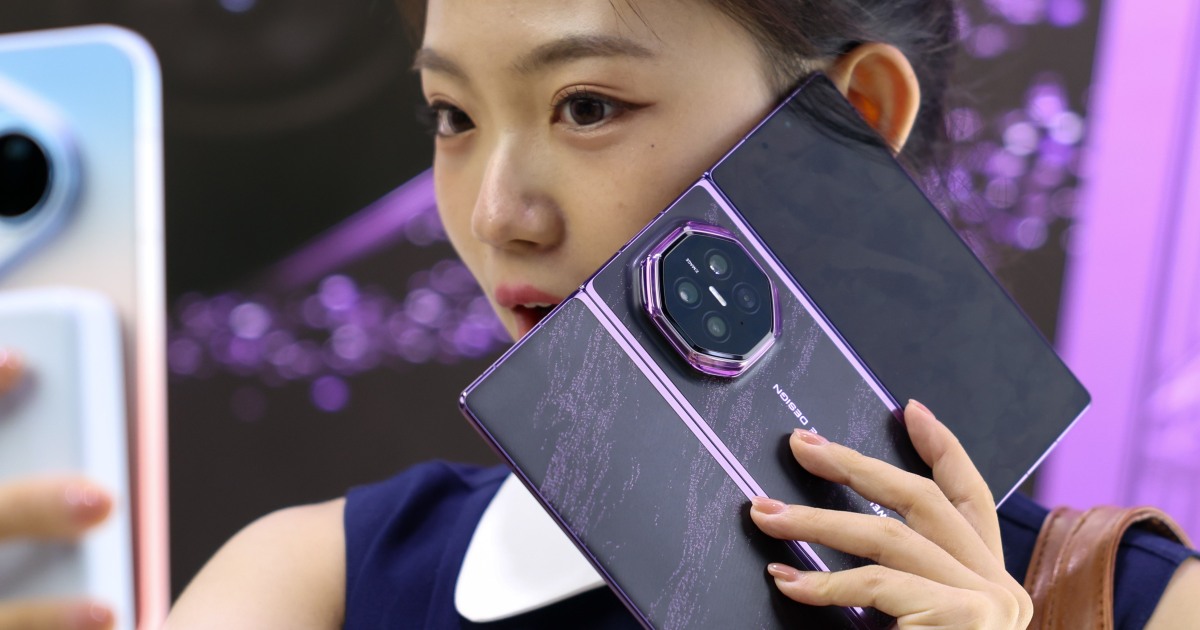
Huawei’s Mate XT2 series unfolds twice, creating a tablet-sized display from what folds down to roughly phone proportions. The starting price is 19,999 yuan — that is roughly $2,980 at current rates. The top configuration reaches 24,999 yuan, or about $3,725. Sales begin Saturday.
Huawei Executive Director Richard Yu did not soften the economics. Memory costs have risen sharply, he told reporters, calling the cost pressure enormous. The company chose to absorb that pressure rather than cut features or raise prices further.
But the chip inside the Mate XT2 is where the bigger story lives. The Kirin 9050 Pro carries Huawei’s attempt to build high-performance mobile silicon without access to the most advanced fabrication equipment. The architecture uses what the company calls LogicFolding, derived from a principle it unveiled in May known as the Tau Scaling Law.
The name sounds abstract, but the idea is practical: stack logic in a way that compensates for manufacturing constraints that U.S. export controls imposed. Huawei is not simply making do with older process nodes. It is redesigning how performance is extracted from those nodes. That is the difference between patching a sanction and engineering around it.
Xiaomi’s Entry Carries Its Own Supply-Chain Signal
Xiaomi’s 18 Fold, announced at a separate event, takes a different approach. It is a single-fold device that stays passport-sized when closed. When opened, it supports three apps side by side. The price range is 10,999 yuan to 14,999 yuan, or roughly $1,540 to $2,100.
CEO Lei Jun made a direct comparison with Apple during the launch. He said the device weighs less than 8 ounces and measures under a quarter-inch thick when unfolded, calling it lighter than Apple’s iPhone Pro Max. More significantly, he claimed the XRing O3 AI processor outperforms Apple’s A19 Pro in responsiveness.
What deserves attention beyond the claims is where the DRAM comes from. Xiaomi confirmed the memory chips are supplied by CXMT, a Chinese memory manufacturer that has also faced U.S. sanctions pressure. That supply chain choice is visible enough to read as a political one.
The Market Numbers Favor Chinese Makers in China
The competition is not just rhetorical. Huawei held 22.6 percent of China’s smartphone market in the second quarter, ahead of Apple’s 18.1 percent, according to IDC. Xiaomi followed with 12.4 percent.
In folding phones specifically, the gap widens dramatically. Huawei accounted for 68 percent of shipments in China during the same period, according to Smart Analytics Global, a U.S.-based research firm. Samsung — which introduced a tri-fold device last December and then reportedly discontinued it after three months — is a distant second in the Chinese market for this form factor.
Apple does not yet sell a foldable phone in China. Reports suggest it could introduce one at Wednesday’s event, but nothing is confirmed. If Apple does launch a foldable, it will be entering a market where Chinese brands have already built category ownership.
What the Timing Reveals About Chinese Tech Strategy
The fact that two Chinese companies are investing in foldable hardware while being cut off from cutting-edge chipmaking tools tells you something about how the technology sector is adapting to sanctions. The play is not to wait for export restrictions to ease. The play is to build products that compete on form and feature while simultaneously proving that domestic supply chains can deliver.
Huawei’s approach leans into vertical integration. It designs its own chip, engineers new architectures to work within manufacturing limits, and pushes form factors that no rival has successfully commercialized. Xiaomi’s approach leans into system-level design and domestic component sourcing. Both are valid strategies under pressure. Neither requires permission from Washington.
The Risks Are Real
Yu’s comments about memory costs make clear this is not painless. Component inflation is squeezing margins. Huawei and Xiaomi are absorbing those costs to maintain positioning, which is sustainable only if sales volumes hold.
Samsung’s experience with its own tri-fold phone is a cautionary note. The company launched, struggled with demand or production, and pulled the product after roughly three months. If Huawei’s Mate XT2 faces similar headwinds — limited production capacity, high pricing that restricts the addressable market, or durability concerns with triple-hinge mechanisms — the dominance it currently enjoys in China could soften.
What Comes Next
Apple’s Wednesday keynote will dominate headlines, but the Chinese launches are the ones worth tracking for longer-term implications. If Huawei and Xiaomi continue to push form factors forward while narrowing the performance gap in domestic chips, the next major inflection point may not be about which company has the better camera or the faster benchmark. It may be about whether the United States can contain a tech sector that is systematically building around its restrictions.
The foldable market in China is already Chinese. The question is whether that pattern spreads.