Bavaria's Aiwanger Dies — And Germany's Coalition Shudders
The death of Bavaria's populist deputy premier and Free Voters chairman throws a wrench into Germany's coalition calculus — and raises questions about a party without a successor.
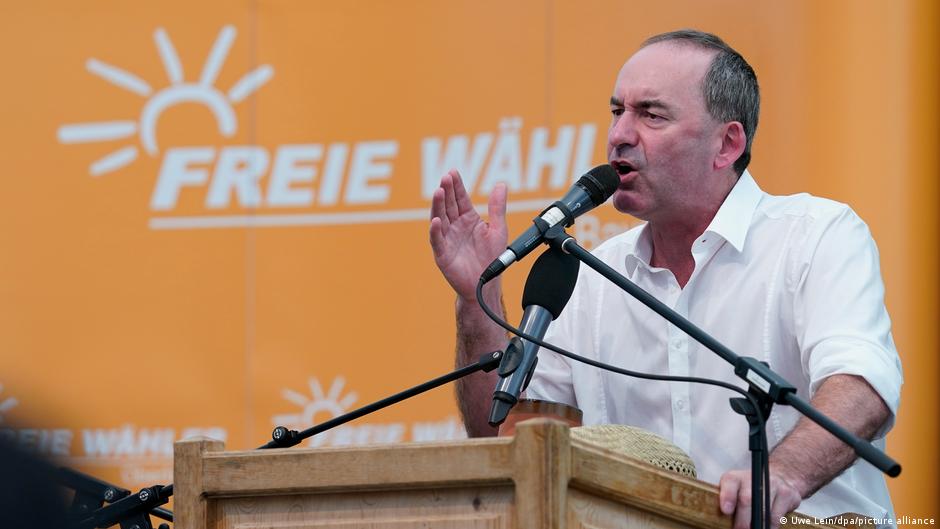
The man who thought he could break into the Bundestag — and died just short of it
Hubert Aiwanger was found dead on Wednesday evening at the Neuer Fritz Hotel on Berlin’s Friedrichstrasse, a street more associated with Cold War spycraft than political ambition. He was 55. The public prosecutor’s office in Berlin has opened an investigation into the circumstances, stating the goal is to determine the specific cause of death and rule out foul play. He had canceled a scheduled speech at a Free Voters party office opening that morning, citing health reasons.
What happened in that hotel room will likely remain unclear for days. But what is already clear is that his death ruptures one of the more consequential political relationships in modern Germany.
Who Aiwanger actually was
Born in Lower Bavaria, Aiwanger was elected to the state parliament in 2008 and quickly became the most polarizing figure in Bavarian conservatism. He led the Free Voters (Freie Wähler), a right-wing populist party that, despite its success in Munich and across Bavaria, has never secured a single seat in the Bundestag. That disconnect — regional muscle, national irrelevance — defined his entire career.
Since 2018, the Free Voters have governed Bavaria in coalition with the Christian Social Union (CSU), the sister party of the CDU at the federal level. Aiwanger served as deputy premier and economy minister, wielding real executive power in a state that is itself a kind of political superpower within Germany. His combative style made him impossible to ignore, and impossible to trust as a long-term governing partner for the more establishment-minded CSU.
He was not an obscure figure. He was a man who understood that in German politics, the states are where the real power lives — and he positioned himself at the center of it.
The scandal that never quite killed him
Weeks before the 2023 Bavarian state elections, the Süddeutsche Zeitung reported that Aiwanger had authored an antisemitic leaflet during high school in the 1980s. The document contained references to Nazi-era atrocities, including Auschwitz. The revelation sent shockwaves through German media and forced a painful reckoning with how such a text could have gone unchallenged for decades.
Aiwanger apologized. He stayed in government. The Free Voters’ electoral performance suffered only modestly.
It is a detail that will shadow whatever legacy he leaves behind. It is also a detail that German politicians — particularly those in populist or right-leaning parties — do not easily escape. The question now is whether his death will trigger a reappraisal of his entire career, or whether grief will simply mute the criticism.
The immediate consequence: Bavaria’s coalition is suddenly unmoored
Markus Söder, the CSU’s chairman and Bavaria’s state premier, called the death “an absolute tragedy” in a post on X. His statement emphasized mourning and family. It said nothing about governance.
That silence is telling. Aiwanger was not merely a coalition partner. He was the Free Voters’ chairman, their most visible face, the only reason the party had any credibility whatsoever in government. Without him, the Free Voters in Bavaria face an existential leadership question. There is no obvious successor. The party entered this relationship with the CSU as a junior partner; now it may find itself leaderless at exactly the moment it needs direction most.
Söder, for his part, has survived every crisis in Bavarian politics through sheer force of personality. He will absorb the shock. But absorbing it and governing effectively are different things. The 2023 state election already weakened the CSU-FW alliance, and Aiwanger’s removal from the equation creates a vacuum that no one in Munich is prepared to fill.
The national dimension: why this matters beyond Bavaria
Germany’s federal coalition — the SPD, the Greens, and the FDP — was already struggling under the weight of internal disagreements and record-low polling for the Greens. Aiwanger’s Free Voters were never part of that arrangement. But their presence in Bavaria, and their combative rhetoric, had a gravitational effect on the national conversation. They pushed the CSU further to the right. They normalized positions that would have been unthinkable a decade ago.
With Aiwanger gone, that gravitational pull weakens. The CSU may find itself pulled back toward the center, or it may simply absorb the populist energy itself — Söder has always been comfortable operating at the edges of respectability. Either way, the federal coalition dynamics shift.
There is also the question of what happens to the Free Voters nationally. They remain banned from the Bundestag. Without Aiwanger’s media machine and confrontational style, their path to federal representation becomes even more opaque. The party may survive as a municipal and state-level force. But the dream of national influence dies with him.
What happens next
The investigation into Aiwanger’s death will likely take weeks. Police in Berlin are examining the circumstances. No foul play is suspected at this stage, but that assessment will change if new evidence emerges.
In Bavaria, the government will continue — temporarily. Söder has the authority to manage the transition. But the deeper question is what happens to the CSU-Free Voters alliance when the man who held it together is gone.
And in Berlin, the federal coalition will note the development and adjust accordingly. Germany’s politics are rarely shaped by one person. But occasionally, one person dies and the whole system tilts.
Aiwanger was never going to be chancellor. He knew that. But he built something real in Bavaria — a political brand, a governing relationship, a way of speaking about immigration and culture that has infected German politics far beyond the state borders. His absence leaves a space that no one is ready to fill.
The investigation continues. The coalition trembles. And the questions about what his death means for Germany are only beginning.