Hyundai's 10-Year Strike Stands to Reshape Global EV Markets
Hyundai Motor's first full-day strike in a decade has shut three domestic plants and jeopardized roughly 50,000 vehicle outputs. The ripple effects extend far beyond South Korea — into global EV pricing, semiconductor demand, and the competitive tension between Tesla and Asian automakers.
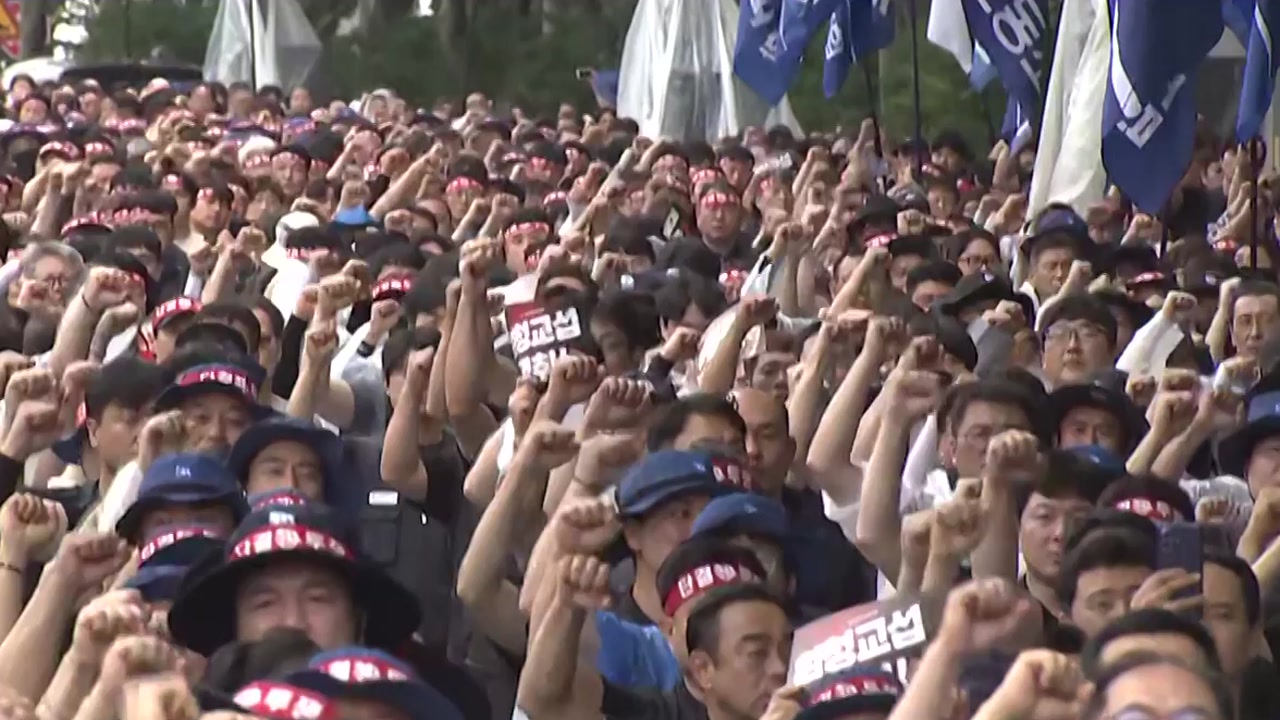
The Strike Nobody Saw Coming — Until Now
Hyundai Motor’s union walked off the job for a full day this week, halting production at its three largest domestic plants in Ulsan, Asan, and Jeonju. It is the first comprehensive work stoppage in a decade and the most significant labor action in South Korea’s auto sector since the early 2010s.
Nearly 39,000 union members participated. The morning and afternoon shifts both stayed away. By early estimates, the disruption could affect around 50,000 vehicle outputs and rack up cumulative revenue losses exceeding 20 billion won (roughly $14.5 million USD) at the company level — a figure analysts say could grow significantly if the strike expands.
What makes this moment distinctive is not just the scale of the disruption but the timing. The world is moving harder and faster into electric vehicles. Hyundai Motor is one of the few non-Chinese automakers racing Tesla globally. A strike at this moment sends a tremor through a supply chain already strained by semiconductor shortages, raw-material bottlenecks, and intensifying price competition.
What the Union Is Fighting For
The core demands are straightforward and consequential.
First, the union wants a 50 percent increase in performance-based bonuses. This is not a request for a modest raise — it is a structural demand that would materially reshape Hyundai’s labor cost curve. Second, the union is pressing for the reinstatement of members dismissed during previous labor actions, arguing those terminations were unjust. Third — and this is the demand with the widest macro implication — the union wants to extend the mandatory retirement age from 60 to 65.
Management’s position is equally clear. The company says dismissed workers were terminated through lawful procedures. On retirement age, Hyundai views the demand as premature, arguing that broader political and legislative debate must precede such a sweeping change. The company also flagged the financial burden an extended retirement age would impose.
Neither side appears willing to blink. The union has signaled it will continue 4-hour partial strikes on Monday and Tuesday, with additional action under discussion if Hyundai does not return to the table with a meaningful proposal.
The Ulsan Factor: Why This Matters Globally
Ulsan is not just Hyundai’s largest domestic plant. It is one of the single most important automotive manufacturing hubs on the planet. The facility produces vehicles for both the domestic market and export — including critical electric models that feed into Hyundai’s global competitiveness.
A stoppage at Ulsan does not only delay Korean shipments. It delays exports to Europe, the Middle East, and North America. Any prolongation of the strike risks pushing back delivery schedules for key EV lineups, potentially ceding shelf space and consumer attention to rivals who can keep their lines running.
For a company that has invested heavily in electrification and global market share, even a short disruption carries outsized strategic cost. Every day Ulsan sits idle is a day competitors move product.
The Ripple Through the EV Supply Chain
The implications extend well beyond the factory gates.
Semiconductor demand: Modern EVs are information technology on wheels. A single vehicle can contain hundreds of chips — for battery management, infotainment, autonomous-driving sensors, and power electronics. When auto production slows, chip demand softens almost immediately. Industry observers note that Hyundai’s strike could depress near-term semiconductor orders for chips that serve automotive applications, particularly those tied to EV-specific systems. That matters for global chipmakers who have been betting heavily on automotive semiconductors as a growth vector.
EV pricing pressure: Hyundai has been pursuing an aggressive pricing strategy in key markets to gain share against Tesla and Chinese EV makers. Disruptions that constrain supply can force companies to ration allocations rather than compete on price — a strategic defeat in a market where volume and availability are everything. If Hyundai cannot deliver on its promises, buyers defect. That defection benefits Tesla, BYD, and other competitors who have not faced equivalent labor disruption.
Battery and raw materials: The strike also intersects with the broader rare-earth and battery-material supply chain. Hyundai has been expanding its battery production capacity and securing long-term supply agreements for lithium, nickel, and cobalt. A production halt does not cancel those contracts, but it does delay the throughput that justifies them. Suppliers counting on Hyundai’s ramp-up may face revenue uncertainty.
The Contagion Risk Within Korea
The most underappreciated risk of this strike is contagion. The Metal Workers’ Union (금속노조) that organized the action represents workers across multiple sectors, including other major Korean exporters. The article notes that the strike was framed as a joint action across the automotive industry — and that Kia, Hyundai’s sibling company, has already conducted its own partial walkouts.
If Kia or other major Korean employers — including GM Korea and Toyota’s Ulsan operations — feel pressure to mirror concessions, the cost escalation could be sector-wide. That would raise production costs across Korea’s entire automotive corridor, narrowing margins and potentially forcing price increases that reduce global competitiveness.
For policymakers in Seoul, this is a delicate equation. Labor demands are legitimate. But a wave of synchronized strikes across export-driven industries could weaken the won, compress corporate investment, and erode South Korea’s position in the global EV race — a race it is already struggling to win against China and Tesla.
Who Wins, Who Loses, and What Comes Next
Who wins: Workers who secure meaningful wage and benefit improvements. The union’s demands are ambitious and, if met, would set a new benchmark for automotive labor compensation in South Korea. The broader labor movement also gains momentum, emboldening workers in other sectors to make similar demands.
Who loses: Hyundai Motor’s short-term competitiveness, particularly in EV markets where speed of delivery matters. Supply-chain partners — chipmakers, battery suppliers, logistics firms — face revenue uncertainty. Consumers in export markets may see delayed deliveries or reduced model availability. Tesla and Chinese EV makers are the obvious strategic beneficiaries, gaining time to capture share while Hyundai is distracted.
What comes next: The immediate timeline points to another round of 4-hour partial strikes next week, with the possibility of escalation. If Hyundai offers a concession — perhaps a smaller bonus increase or a phased approach to retirement-age extension — the union may accept a partial victory and return to work. If not, the disruption could deepen.
On the longer arc, this strike is a signal. South Korean automakers built their modern prosperity on disciplined labor relations and export-focused efficiency. That model is under stress. Rising wages, an aging population, and the capital-intensive transition to EVs are forcing a reckoning. How Hyundai resolves this strike will shape not only its own trajectory but the competitive balance of the global auto industry for years to come.
The 10-year gap between strikes is not a coincidence. It reflects a period of relative labor calm. That calm is ending. The question is whether the industry adapts quickly enough to stay competitive — or whether each successive dispute costs more than the last.