Hyundai's $15.5B India Bet Reshapes Global Auto Trade
Hyundai is turning Pune into a global auto export hub with $15.5 billion invested through 2032. The move signals a decisive shift in the China+1 industrial strategy and intensifies competition with Toyota and Stellantis.
A $15.5 Billion Signal From Pune
When Hyundai Motor Group unveiled a $15.5 billion investment plan for India on October 13, the numbers alone were striking. But the real story was what those numbers represent: a fundamental reconfiguration of where the world’s cars are made and sold.
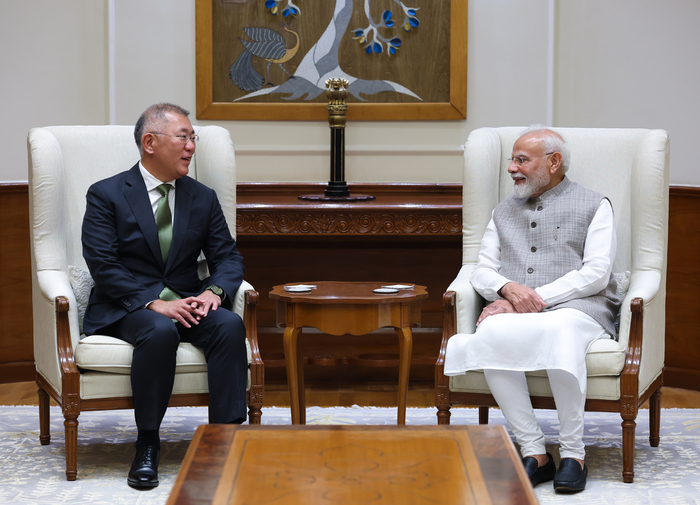
The investment, announced during a meeting between Hyundai chairman Jeong Euisun and Indian Prime Minister Narendra Modi in New Delhi, was never just about building more cars in Tamil Nadu and Maharashtra. It was a geopolitical statement disguised as an industrial strategy. India is becoming the export hub that the auto industry has been searching for since the China risk became impossible to ignore.
By 2032, Hyundai plans to have poured roughly 20.7 trillion Korean won into the country — a figure that dwarfs most foreign direct investment in India’s manufacturing sector. The centerpiece is the new Pune plant in Maharashtra’s Talegaon, which Hyundai transformed from an abandoned General Motors facility into a 1.2-square-kilometer smart factory equipped with 200 welding robots and AI-powered quality inspection systems. Initial output stands at 170,000 vehicles annually. By 2030, that jumps to 320,000. Combined with Hyundai’s two existing Chennai plants producing 824,000 units, India alone will be generating nearly one million Hyundai vehicles per year.
That is not incremental growth. That is a manufacturing empire.
Who Exports From Where
Here is the detail most English-language coverage missed: Pune is dedicated to the All New Venue, a small SUV that will ship to over 30 countries. Chennai is pivoting toward electrification. Hyundai plans to launch a small electric SUV in the first quarter of next year alongside the Ioniq 5 and Crete Electric, aiming to capture the fastest-growing segment in India before Chinese competitors can scale locally.
By 2030, 30 percent of Hyundai’s Indian output will be destined for export. That marks a dramatic acceleration from current levels and positions India as the company’s second-largest manufacturing base after South Korea — or possibly its largest, depending on how you count global production allocation.
Hyundai also announced it has now cumulatively exported 4 million passenger cars from India, a milestone reached three decades after the company first entered the market with the Sonata in 1998 during the Asian financial crisis. The company is now India’s largest passenger car exporter — a title that carries more weight than the footnote format usually suggests.
The China+1 Question
The investment arrives at a moment when every major automaker is confronting the same strategic dilemma: China is simultaneously the world’s largest auto market and the most expensive supplier relationship in history. Tariffs, geopolitical friction, and the rise of Chinese EV manufacturers like BYD have made the China-dependent supply chain look increasingly risky.
Hyundai’s India bet is the most concrete expression of the China+1 strategy yet, and it goes well beyond assembly. The company is building a local technology research institute to develop Level 2 autonomous driving features tailored for Indian conditions. It is co-investing with local parts suppliers to raise the localization rate. It is partnering with TVS Motor on an electric three-wheeler prototype targeted for late 2027 — a vehicle category that matters enormously in India and could become a template for other emerging markets.
The investment vehicle Hyundai is establishing locally will have the mandate to fund future mobility startups and ecosystem plays across India. This is the kind of ecosystem-building that separates a factory from a strategy.
The Competitive Map
Toyota has long treated Thailand and India as its Asian export hubs. Stellantis is expanding its Pune presence through its Jeep and Citroen operations. The question is no longer whether India will become a major auto manufacturing base — the infrastructure, the policy environment under Modi’s production-linked incentive scheme, and the sheer scale of domestic demand make that inevitable.
The question is who controls the export lanes.
Hyundai’s combined annual capacity approaching one million vehicles from India gives it an advantage that few rivals can match at this stage. The company’s first-mover advantage in EV localization is equally significant. Chinese manufacturers dominate the global EV supply chain right now, but they face tariff barriers in key Western markets and lack the manufacturing footprint in India that Hyundai is building today.
Supply Chain Effects
What makes Hyundai’s investment particularly consequential is the ripple effect it triggers through India’s auto supply chain. The company has committed to sourcing 85 percent of components locally by 2032, up from roughly 60 percent today. That shift has already begun reshaping supplier relationships across Tamil Nadu and Maharashtra. Companies like Minda Corporation, Sundaram Fasteners, and Bharat Forge are upgrading their facilities to meet Hyundai’s specifications for EV battery casings, motor housings, and structural components.
The investment also accelerates India’s development of a local battery gigafactory ecosystem. Hyundai announced partnerships with three Korean battery manufacturers — LG Energy Solution, Samsung SDI, and SK On — to establish cell assembly capacity in the Chennai-Maharashtra corridor. The first facility, expected to begin production in 2027, will supply cells for Hyundai’s Indian EV lineup and potentially for other global markets. That capability is critical. Without it, India remains a final assembly point rather than a true manufacturing base.
What Happens Next
The Pune facility is operational. The Chennai electrification push begins next year. The 155-billion-dollar investment unfolds over seven years. The real test will come in 2028 and 2029, when Hyundai’s India export volumes should reach the scale that makes the strategy undeniable — and when competitors will have had time to respond.
India’s ambition to become the world’s third-largest auto market is already driving policy support and infrastructure investment. Hyundai’s $15.5 billion bet aligns perfectly with that trajectory. The company is not just selling cars in India. It is building the infrastructure that will supply cars to the world.
The auto industry’s center of gravity has always shifted with capital. In 2026, that capital is flowing decisively toward India.