Inside the Trump-Xi AI Divide That Will Reshape Korea's Chip Strategy
Trump and Xi met at the White House for the first summit in four months, but their messages on AI diverged sharply — one urging acceleration, the other control. Seoul is watching closely: a US-China AI deal would redraw the rules for Korea's chip and model ecosystem.
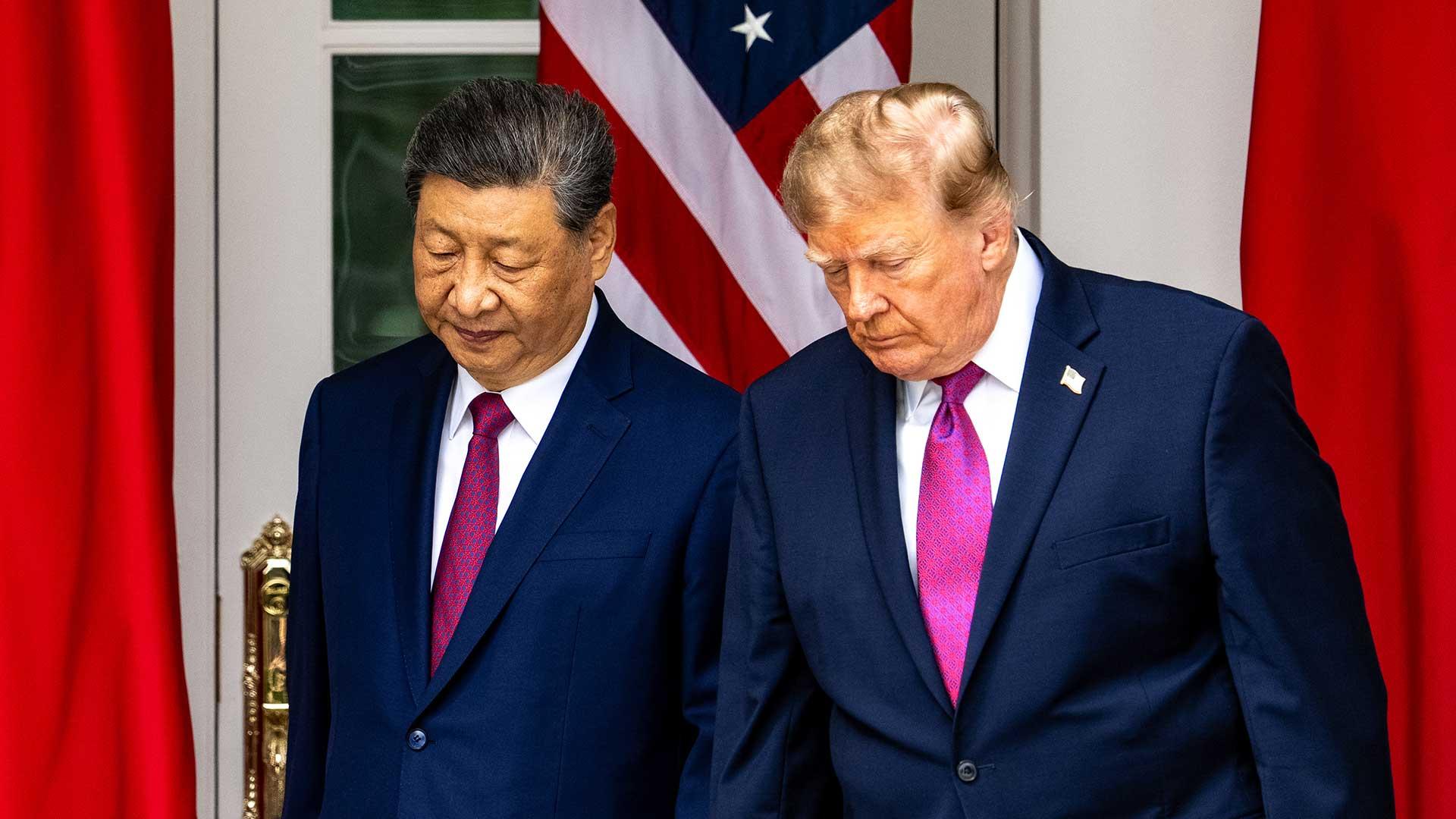
The White House meeting produced more poetry than prose — and Korea should read the gap.
Donald Trump and Xi Jinping sat down at the White House for the first face-to-face summit in roughly four months, arriving at a moment when the stakes around artificial intelligence have shifted from corporate boardroom debates into something closer to nuclear deterrence logic. Trump opened with a flourish about security, technology, and superintelligence, claiming today’s decisions could shape peace and prosperity for decades. Xi offered the measured cadence of a leader who has been managing US-China tensions since before most of Trump’s current team was born: cooperate where you can, contain the competition, and never let the ship capsize.
Then came the part everyone was waiting for — the AI divergence. And it was stark.
Trump, posting on social media beforehand, signaled he wanted to leave AI development as-is and did not intend to slow the pace, even as American voices grew louder about existential risk. Xi, by contrast, framed AI progress as something that must remain under human control and serve human happiness. One man sees acceleration as strategy. The other sees regulation as sovereignty.
Neither leader issued a joint statement after the talks. No joint press conference was held. The pattern mirrors the May summit, when the two sides produced only a brief, carefully neutered press release after Trump’s visit to Beijing. A state dinner followed tonight, where both men are expected to speak — but the absence of a formal communiqué says something honest about what was and was not agreed.
Seoul is not watching this as a distant drama.
Korea sits in the chokepoint of the very architecture both superpowers are trying to shape. Samsung and SK Hynix build the memory chips that feed both American and Chinese AI models. LG Energy Solution and POSCO feed the supply chains. Korean foundation model companies like Naver’s HyperCLOVA and LG AI Research depend on GPU clusters that are subject to US export controls — which means they are simultaneously dependent on American permission and Chinese market demand. The geometry is not simple.
A US-China AI agreement — even a shallow one — would carry consequences for Korea that go well beyond trade statistics.
Consider the chip cycle. If Washington and Beijing reach even a partial understanding on AI governance, export controls on advanced semiconductors could ease, however marginally. That would relieve some of the pressure on Korean memory makers who have been absorbing the brunt of the China restriction regime while also navigating a demand cycle that is still recovering from the post-2023 AI infrastructure buildout slowdown. It would also change the calculus for Chinese cloud providers, who have been forced to redesign their GPU sourcing strategies and are now the largest buyers of domestically produced Chinese chips from Huawei and Cambrion.
But here is what English-language coverage of this summit tends to miss: a US-China AI deal could just as easily tighten the screws on Korean autonomy. If Washington and Beijing agree to a shared standard for AI governance — whether on model alignment, safety benchmarks, or compute thresholds — Korea would face a binary choice: comply with a standard it helped write nothing, or be treated as a non-aligned jurisdiction subject to secondary restrictions. The EU’s AI Act was born from European legislative process. Korea would inherit a rulebook written in Washington and Beijing.
The panda gesture matters more than the communiqué.
Xi’s mention that two pandas would soon arrive at the Atlanta Zoo was not diplomatic filler. It was a signal of the kind of relationship both sides are currently managing: warm on the surface, structurally constrained underneath. Pandas are gifts, not negotiations. They cost China very little and project an image of generosity. The same logic applies to the substance of this summit.
Trump called their past cooperation during World War II, invoking the Flying Tigers. Xi talked about guiding the great ship of US-China relations through constructive stable waters. Both men are performing for domestic audiences. Trump needs to show he can shake hands with Xi and walk away looking strong. Xi needs to project that China remains a indispensable pole in a multipolar order, not a junior partner being managed by Washington.
The absence of a joint press conference confirms that neither side wanted to be pinned to specifics. This was a temperature check, not a treaty.
What happens next for Korea’s AI ecosystem.
Korea’s domestic AI sector is at an inflection point. Naver has been investing heavily in large language model development, while startups like Brain Corp and Zep AI are competing for talent and compute against well-funded American and Chinese rivals. Government policy under President Yoon’s successor (or whoever holds office by the time this article reaches readers) has oscillated between encouraging AI development and fretting about dependency on foreign chips.
If Trump and Xi move toward a framework on AI safety or governance — and recent rhetoric suggests they may be laying groundwork for something informal — Korea will need to decide quickly whether to position itself as a bridge or a battleground.
The bridge strategy would mean engaging with both Washington’s Executive Order framework on AI and Beijing’s emerging algorithm registration and generative AI service rules, finding overlap on issues like transparency, watermarking, and risk classification where Korean standards can align without full subordination. The battleground strategy would mean accepting that whatever Washington and Beijing agree on, Korea will implement or face consequences.
Most Korean policymakers seem to be leaning toward the bridge, but the infrastructure for that approach — coherent standards, regulatory capacity, domestic model development — remains thin. The panda delegation to Atlanta is cute. Korea’s own AI sovereignty is not.
The numbers behind the nuance.
To put this in concrete terms: South Korea imported approximately $40 billion in semiconductor equipment and related components in 2024, with a significant share flowing through US export licensing. Chinese demand for Korean memory chips accounted for roughly 20 to 25 percent of Samsung and SK Hynix revenue in the pre-restriction years, and while that share has compressed, it remains a critical revenue stream. Korean AI companies collectively spent an estimated $3 to $5 billion on US-made GPUs in 2023–2024 alone. None of this is trivial.
A Trump-Xi understanding on AI — even a vague one — would shift the variables on every one of those numbers. The direction of the shift is uncertain. The magnitude is not.
Tonight’s state dinner speeches may offer the clearest signal yet of whether this summit produced anything beyond photo opportunities. Until then, Seoul should treat the panda diplomacy as a useful thermometer and the absence of a joint statement as the real data point.