Iran's Bombing Threat Exposes the Fragility of Middle East Security Architecture
Iran's claim that the US is preparing a renewed bombing campaign reveals how quickly deterrence rhetoric is hardening in the Gulf. The real story isn't the threat itself — it's what the escalation exposes about fraying alliances, stranded energy flows, and a US military overstretched across too many theaters at once.
The Warning That Isn’t Really a Warning
Iran claims the United States is preparing a renewed bombing campaign. The Trump administration has not confirmed the allegation, but neither has it denied it. What matters is that both sides are now speaking in a register that treats military escalation as an open instrument of policy rather than a last resort.
Donald Trump cut short a weekend visit to Camp David without explanation. The State Department issued a security alert to all US citizens across the Middle East, warning of “potential for unforeseen escalation.” Trump told Fox News he was weighing options that ranged from “wiping Iran out” to letting them “rot economically” or striking a deal. Each sentence alone would be alarming. Together, they map the full spectrum of US posture toward Tehran — and the fact that all three were spoken publicly in a single interview is itself a signal.
The Islamic Revolutionary Guard Corps responded within hours, warning that any attack would trigger “continuous, effective and painful attacks” against all US bases and interests in the region, with reprisals potentially extending to US naval forces in the Indian Ocean. Iran’s leadership also accused Gulf states of “double-dealing,” claiming some leaders had given a green light to American strikes while publicly maintaining neutrality.
This is not a crisis that is building toward a breaking point. It is a crisis that has already broken and is now asking what comes next.
The Houthi Catalyst Nobody Predicted
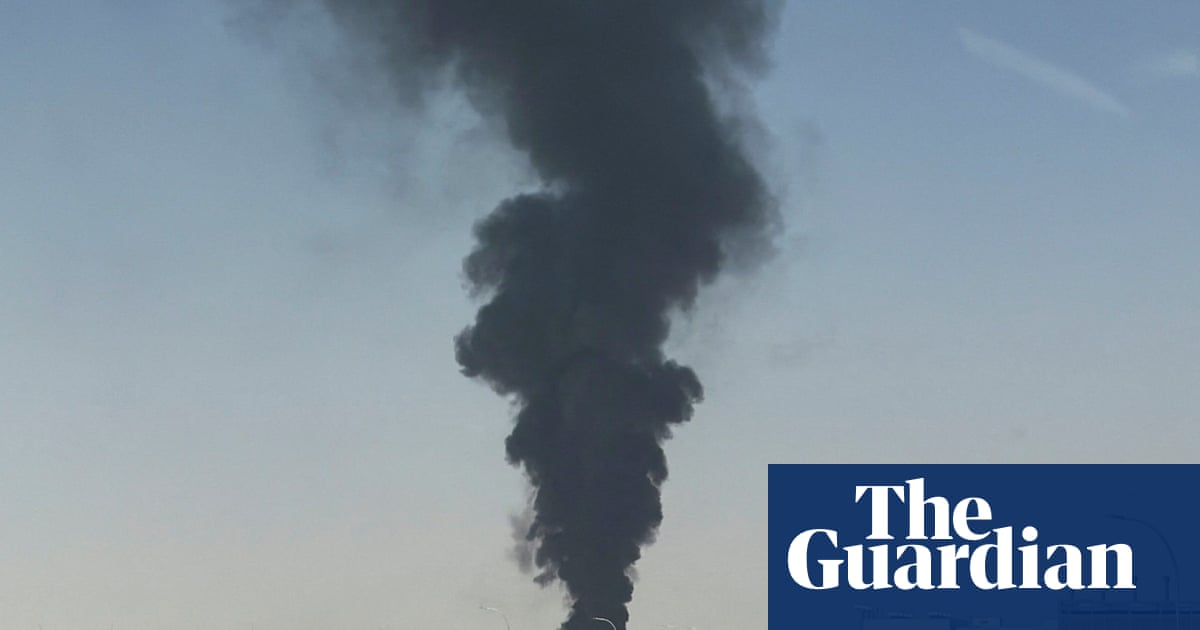
The immediate trigger for this spiral was an attack on Riyadh by Yemen’s Houthi rebels — the first sustained strike against the Saudi capital’s Aramco facilities since the Saudi-Houthi ceasefire collapsed in June. Riyadh insists it intercepted the missiles. Photographs show smoke pouring from the facility. The port of Yanbu, a vital artery for Saudi oil exports, was also targeted.
The Houthis have been patient. They captured strategic Red Sea ports last month, giving them control of the Bab al-Mandab strait — the narrow waterway through which commercial shipping passes on its way from the Red Sea to Asia. Between September 10 and 18, 318 ships transited the strait under Houthi surveillance. That is not a blockade. That is a levy.
Iran denies ordering the attack on Riyadh. The United States regards the Houthis as a proxy force and argues the strikes would not be possible without Tehran’s approval. Both claims are defensible. Both are incomplete. The Houthis have demonstrated enough strategic autonomy to act on their own calculus while remaining close enough to Iran that Tehran can claim credit or distance as circumstances require.
The Saudi Question Nobody Is Answering
The most consequential moment in this crisis may have been the quietest. Last week, Saudi Crown Prince Mohammed bin Salman asked the United States for direct military assistance. Trump declined the call.
The Saudis wanted American help after the Houthis seized the Red Sea coast, cutting off vital shipping routes and putting pressure on the kingdom’s energy infrastructure. Trump’s refusal sent a message that was received far beyond the Arabian Peninsula: the United States is no longer willing to underwrite the security architecture that Gulf states have relied on for decades.
This is not entirely new. The Trump administration has long favored transactional relationships over alliance commitments. But the timing is revealing. With the Strait of Hormuz effectively closed to Western traffic and European nations such as France implementing emergency fuel measures, the world is watching a secondary power center emerge in the Gulf — one that does not depend on Washington for its survival.
Energy Markets Already Pricing in Escalation
The pressure on European energy supplies is intensifying by the day. France has moved to prevent fuel shortages. The Strait of Hormuz — through which approximately 21 million barrels of oil per day transit globally — is under de facto Iranian control for Western vessels. The Bab al-Mandab is under Houthi surveillance and levy. Two of the world’s three most critical chokepoints are compromised.
Markets have not panicked. That is more concerning than a spike would be. Complacency in energy markets during a widening regional conflict suggests participants believe either the situation will contain itself or that alternative supply routes will compensate. Both assumptions are risky. The alternate routes — the Trans-Arabian Pipeline, the East-Mediterranean gas fields, Russian pipelines to Europe — have limited capacity and their own vulnerabilities.
What global markets cannot afford to ignore is that the current trajectory leads not to a negotiated settlement but to a series of incremental escalations, each one smaller than the last, until the threshold for a major military response has been crossed without anyone deciding to cross it deliberately.
The UN General Assembly as Stage
Trump is scheduled to meet with the six member states of the Gulf Cooperation Council at the UN General Assembly in New York this week. The meeting will cover Iran, Yemen, Gaza, and the future of the US security guarantee. Trump has also indicated openness to a meeting with Iranian President Masoud Pezeshkian — an encounter Iran is almost certain to reject, as it refuses to negotiate directly with the United States and operates largely through intermediaries.
The diplomatic theater is significant because it reveals the structure of the crisis. Iran’s chief negotiator, Mohammad Ghalibaf, stated in a lengthy parliamentary address that Iran is not interested in a “forever war” with the United States. But Mohsen Rezaei, secretary of the Supreme National Security Council and a hardliner, reiterated Iran’s seven preconditions for peace: lifting the blockade on Iranian oil ports, restoring frozen assets, and removing sanctions on Iranian oil exports.
Rezaei also expressed anger at Gulf states, recounting how Iran had invited Saudi Arabia to a meeting in Salalah, Oman, to approve a new authorized shipping route through the Strait of Hormuz. Saudi Arabia refused to attend and instead held a secret meeting in Germany with US Central Command and Israel. Whether this allegation is accurate or propaganda, it reveals the depth of Iranian grievance against its Gulf neighbors — a grievance that predates the current crisis and will outlast it.
The Budget Constraint
There is a structural factor that every public commentary on this crisis underplays: the Pentagon’s munitions inventory is depleted, and the defense budget is under pressure from conflicts across multiple theaters. Successive bombing campaigns have failed to dislodge the Houthis from their Red Sea positions. The United States has demonstrated that it can strike targets in Yemen but cannot hold them or prevent retaliatory attacks on Saudi infrastructure.
Trump appeared to recognize this constraint when he told Fox News that the United States is in “constant contact” with the Houthis and that they have agreed not to go to war with America. The implication is that the United States will tolerate Houthi control of the Bab al-Mandab so long as American shipping and interests are not directly threatened. That is a narrow definition of victory — and a risky one.
What Comes Next
The Houthi political bureau member Hizam al-Assad framed the Riyadh attacks as response to “hundreds of airstrikes that Riyadh had carried out against the people of Yemen.” Forces allied to the UN-recognized Yemeni government claimed to be pushing back against the Houthis across the country, reporting 75 Houthi fighter deaths on a single Saturday. The Yemeni conflict, already one of the world’s worst humanitarian crises, is expanding on multiple fronts.
France summoned Iran’s ambassador after Iranian authorities closed a French-language cultural center in Tehran, accusing it of conducting “illegal acts that violated diplomatic conventions.” The French foreign ministry called the closure “unjustifiable and unacceptable.” This is a peripheral dispute, but it signals that the crisis is bleeding into areas of relations beyond security and energy.
The most likely trajectory is not a decisive military confrontation but a prolonged period of escalating tension punctuated by limited strikes, proxy engagements, and diplomatic maneuvers centered on the UN General Assembly. The danger is that this pacing creates a false sense of containment while the underlying dynamics — Iranian regional ambition, Houthi momentum, Saudi vulnerability, American reluctance — continue to shift in ways that no single crisis management tool can address.
Global markets are watching. The question is whether they are watching closely enough.