Iran's 7-Day Hormuz Offer Is a Signal — Not a Surrender
Tehran has offered to reopen the Strait of Hormuz within a week if Washington eases military pressure, a move that arrives just before the UN General Assembly. The offer reveals more about Iran's diplomatic posture than its willingness to fold.
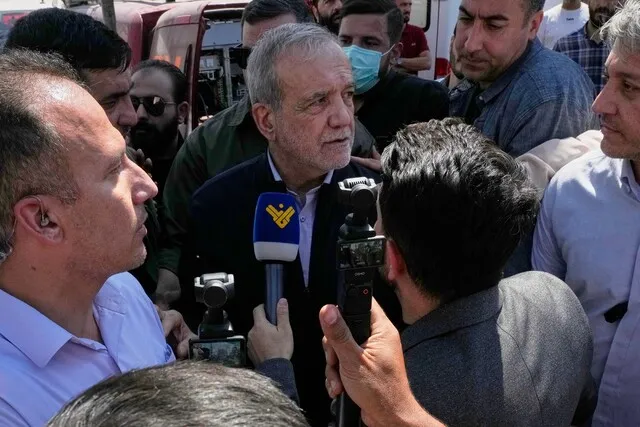
Tehran’s opening move at the UN
Iran has offered to reopen the Strait of Hormuz within seven days if the United States takes initial steps to ease military pressure. The offer, reported by Japan’s Kyodo News on the 22nd and confirmed by a senior Iranian official speaking to the publication, was transmitted through intermediary countries. It also included a request to resume dialogue aimed at ending the two nations’ hostile relationship.
The timing is deliberate. President Masoud Pezeshkian is departing for New York on the same day, where Iran will engage with mediating states and regional actors at the UN General Assembly. The move signals that Tehran intends to test whether the diplomatic corridor can be reopened — but only on terms that don’t require it to appear weak.
The mechanism of delivery matters as much as the content. Routing the offer through third parties rather than directly to Washington allows Tehran to gauge American interest without burning its own credibility. If the US responds warmly, Iran can claim a breakthrough achieved through patience and principle. If Washington ignores it, Tehran can deny responsibility for the silence without losing face.
What the 7-day window really means
A week is a tight deadline in diplomacy, which makes it either a genuine urgency signal or a calculated provocation. Either way, the offer treats Hormuz as a lever, not a bargaining chip to be surrendered lightly.
The Strait of Hormuz carries roughly 21 million barrels of oil per day — about a fifth of global consumption. Closing or threatening to close it has been Iran’s most reliable tool for translating regional grievances into economic pain. Opening it back up voluntarily, even conditionally, is a significant gesture. But it’s also one that comes with a price tag attached to Washington.
Iran’s official didn’t specify what easing of military pressure looks like — no troop withdrawals, no sanctions relief, no naval disengagement. That ambiguity is likely intentional. It gives Tehran room to declare success if the US makes any visible retreat from its current posture, while preserving the option to claim the conditions weren’t met if nothing changes.
The seven-day structure also serves a tactical purpose: it creates momentum. In diplomatic negotiations, deadlines force decisions and prevent indefinite stalling. By setting a short timeline, Iran puts Washington on the back foot, requiring a response before the UNGA proceedings fully unfold. The alternative — letting the deadline expire without action — would itself become ammunition for Tehran’s domestic audience.
The Trump-Pezeshkian question
The Iranian official ruled out a meeting between Pezeshkian and Donald Trump during the UNGA session, but left the door open for progress on a broader agreement. “There is a possibility of moving toward a deal,” the official said, adding that “the US government needs to show seriousness and willingness.”
That phrasing matters. It frames the onus squarely on Washington without committing Iran to any irreversible step. It also suggests Tehran sees value in keeping the diplomatic track alive even as it prepares to press its case aggressively on the UN floor.
The refusal to entertain a bilateral meeting between the two leaders is notable. Pezeshkian has positioned himself as a reform-minded president seeking economic relief through engagement, yet he appears reluctant to risk the appearance of a photo opportunity that hardliners could exploit as surrender. Trump, meanwhile, has consistently demanded visible concessions before offering anything in return, making any direct meeting politically hazardous for both men unless carefully staged.
Pezeshkian’s domestic script
Before leaving for New York, Pezeshkian gave an interview to state television that reinforced the dual track. Iran would “forcefully present its position” internationally, he said, raising issues of “injustice faced by the Iranian people,” past crimes, and the distrust cultivated by the international community.
He also framed the situation as one where “enemies are blocking all avenues to force Iran’s population to surrender,” arguing that military failure has pushed adversaries toward attempts at internal weakening. The prescribed response: “through unity and solidarity, we will certainly frustrate their attempts.”
Translated, this means Tehran will play diplomacy when it serves, and defiance when it doesn’t. The Hormuz offer isn’t a sign of softening — it’s a sign of calibration. Iran is testing whether the US will blink first.
Pezeshkian walks a narrow path domestically. His reformist credentials depend on delivering tangible results, but Iran’s security establishment retains veto power over any significant concession. The president needs to demonstrate that engagement produces outcomes without appearing to trade sovereignty for temporary relief. The Hormuz offer, with its ambiguity and reversibility, allows him to claim initiative while avoiding commitment to a specific deal structure.
Washington’s silence says something
The fact that this story broke through Kyodo rather than through direct US-Iran channels is itself revealing. If Washington had received the offer through formal diplomacy and chosen not to respond publicly, that silence carries its own message. It suggests the administration may be wary of legitimizing an offer that appears transactional — open the strait, we’ll ease the pressure — without securing broader concessions on nuclear activity, regional proxy networks, or missile programs.
A quiet receipt of the offer, followed by no visible response, is a negotiating tactic in itself. It forces Tehran to decide whether to follow through on the seven-day deadline without acknowledgment, risking the appearance of desperation, or to extend the timeline and look patient instead.
The Trump administration’s broader posture toward Iran has long favored maximum pressure combined with calibrated de-escalation. Any response to the Hormuz offer would need to satisfy both impulses: acknowledging Iran’s gesture without rewarding coercive tactics. The administrative challenge is finding language that leaves room for de-escalation while making clear that the strait cannot be used as leverage without consequence.
Second-order effects and market implications
Oil markets reacted to the report with characteristic ambiguity. Brent crude pulled back slightly on the news, reflecting reduced immediate risk premiums, but analysts cautioned that conditional openings carry less weight than unconditional ones. The market’s longer-term concern centers on whether Iran’s economy can sustain the costs of continued confrontation — a question that grows sharper as domestic inflation pressures mount and currency stability erodes.
Regional allies responded with measured caution. Gulf states, particularly the United Arab Emirates and Saudi Arabia, have invested heavily in alternative shipping routes and strategic reserves precisely to hedge against Hormuz disruptions. Their private relief may mask public anxiety: a reopened strait remains a reminder of how quickly regional stability can unravel, and how dependent global energy infrastructure is on a waterway only 33 kilometers wide at its narrowest point.
China and India, Iran’s primary oil customers, occupy an ambiguous position. Both benefit from continued sanctions pressure on Tehran while simultaneously relying on Iranian energy supplies. Their role as mediators reflects this contradiction — they can facilitate dialogue without fully aligning with either Washington’s or Tehran’s objectives.
Who wins, who loses
If the US responds positively, even ambiguously, Iran gains diplomatic credit and a breathing room on the sanctions front. Oil markets would likely dip, reflecting reduced immediate risk premiums. If the US stays silent, Iran faces a choice: reopen the strait unilaterally and look strong for following through, or use the expired deadline as proof that the US wasn’t serious — a narrative that plays well domestically and among regional allies.
The real losers in either scenario are the Gulf states closest to the strait and the global economy, which remains fragile under overlapping supply disruptions from Ukraine, the Red Sea, and now renewed tension in the Persian Gulf.
Iran’s revolutionary guard has long treated the strait as a strategic asset, and any perceived abandonment of that leverage could trigger institutional pushback. The question isn’t whether Tehran will follow through on its offer, but whether it can afford to without damaging the very instruments of power it relies upon.
What happens next
The UNGA session will be the immediate arena. Iran plans to raise its grievances publicly, which means the Hormuz offer is likely just the opening salvo — not the final word. Mediators, probably including China and Oman given their history of tacit Iran-US channels, will shuttle between capitals over the coming week.
Whether a deal emerges depends less on what Tehran asks for and more on whether Washington is willing to offer something visible enough to let Pezeshkian return home with a win, without appearing to reward coercion. A phased approach — limited sanctions relief tied to verifiable de-escalation — could provide the architecture both sides need, but constructing that framework requires trust neither side currently possesses.
So far, neither side has provided that opening. The seven-day clock is ticking, but in the theater of Iranian diplomacy, clocks are often part of the performance. The real test will come not from what Tehran announces next week, but from what it does after the UNGA adjourns and the intermediaries return home.