Iran Just Put a Gun to Global Oil
Iran's parliament speaker confirmed the Strait of Hormuz won't reopen until Washington meets its demands—unfreezing assets, ending hostilities, lifting the naval blockade. With the Houthis also advancing near Bab el-Mandeb, two of the world's most critical shipping chokepoints are now under threat simultaneously.
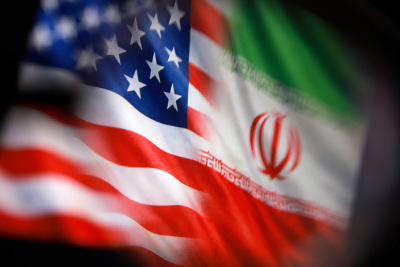
Two Chokepoints. One Crisis.
Iran’s parliamentary speaker, Mohammad Bagher Ghalibaf, posted a message on Telegram on September 20 that should have every energy trader and central banker awake at night. The Strait of Hormuz — the single most important oil chokepoint on the planet — would remain closed until the United States met three conditions: an end to warfare on all fronts, the unfreezing of Iranian assets, and the lifting of the US naval blockade.
This is not a new Iranian position. What is new is the willingness to say it publicly while US and Iranian forces appear to be on the verge of direct military engagement once again. And it is compounded by developments elsewhere: the Iran-backed Houthi rebels in Yemen have claimed an attack on what they described as a “sensitive” facility in Riyadh, and they have also seized ground around the Bab el-Mandeb strait — another vital maritime gateway through which Middle Eastern oil and goods transit.
Two chokepoints. One regional crisis. A global supply shock already being priced in.
Who Controls the Tap
The Strait of Hormuz is not a minor waterway. Between 17 and 31 million barrels of oil pass through it each day, depending on the year and whose numbers you trust. That is roughly one-fifth to nearly a third of global petroleum consumption. Japan, South Korea, and China — the three largest energy importers in the world — depend on it overwhelmingly for their supplies.
A closure, even a partial one lasting days rather than weeks, does not produce a slow creep in prices. It produces a gap. The physical infrastructure of global oil trade does not have an off-ramp. Pipelines from Saudi Arabia bypass Hormuz but carry a fraction of total throughput. The UAE’s east-west pipeline from Fujairah exists but is similarly modest. There is no quick alternative route for the volume of tanker traffic that transits Hormuz every day.
This is why markets do not wait for confirmation. Futures spikes are forward-looking, not reactive. The threat alone moves prices.
The American Dilemma
President Donald Trump told Fox News he is in “deciding mode” on a military response to Iran. He also claimed — without providing evidence — that the Houthis had agreed not to attack the United States in exchange for ongoing communication. These two statements together reveal the fundamental difficulty Washington faces: the conflict has multiple actors, multiple triggers, and no clear off-ramp that does not look like retreat.
The State Department’s travel advisory on September 19 was the softest possible early warning. It told Americans to reconsider travel to the region and to prepare for airport closures and cancelled flights. That is diplomatic language for: the situation could deteriorate quickly and there is nothing we can do to stop it in real time.
Washington also faces a constraint that goes beyond military options. The three conditions Iran has outlined — ending the war, unfreezing assets, lifting the blockade — are, in practice, a demand for the United States to reverse course on its core policies toward Tehran. No US administration, Republican or Democratic, has ever accepted those terms under threat of a strait closure. Doing so would set a precedent that coercing maritime chokepoints yields concessions — a precedent no US government can afford to set, regardless of how high oil prices climb.
The Houthis Are Already Testing This
The Houthi advance around the Bab el-Mandeb strait deserves more attention than it is getting. This is the gateway between the Red Sea and the Gulf of Aden, the route that connects Suez-bound shipping to the Indian Ocean. Yemen’s port of Mocha and nearby islands have come under Houthi control in recent operations. That is not an operational surprise — it is a strategic escalation. Control of the southern Red Sea coastline gives the Houthis leverage over a second chokepoint while Hormuz hangs in the balance.
The timing is not coincidental. Iran has an entire network of proxy forces across the region, and coordinating pressure on two separate maritime routes simultaneously is exactly the kind of asymmetric strategy Tehran has cultivated for years. The question is whether this coordination is deliberate planning or organic mutual reinforcement. Neither outcome is good for global shipping.
What Happens Next
Three scenarios are on the table, none of them comfortable.
The first is de-escalation through Qatari or Pakistani mediation. Iran’s Supreme National Security Council secretary, Mohsen Rezaei, confirmed on September 19 that Iran transmitted its conditions through Qatar and is awaiting a response from Trump. This is the narrow path back from the edge. But the conditions Iran is demanding are structurally incompatible with any US administration’s political survival. The odds of a deal that satisfies both sides are low.
The second is limited military engagement that does not escalate to a full confrontation. This is the most likely outcome in the near term. Both sides have signaled restraint even as they posture aggressively. But miscalculation is always the risk — a single mistaken strike inside Iranian territory or a successful Houthi attack on a Saudi oil facility could collapse the ceiling before anyone sees it coming.
The third is closure or near-closure of Hormuz. This is the tail risk that markets price in every time tensions rise, and it is the scenario that makes this moment different from previous episodes. Previous Hormuz crises were measured in weeks or months of low-level harassment. A deliberate, declared closure backed by Iran’s formal government is a qualitatively different event. It is an act of economic warfare against the world, not just against the United States.
The Real Cost Is Already Loading
Oil futures have not yet shown a full Hormuz-closure spike because no one knows if it will happen. But every day that the threat persists, insurers raise their war-risk premiums on tankers transiting the Gulf, shipping companies reroute where possible, and hedging costs embed into the price of everything from gasoline to petrochemicals to plastic.
The second-order effects are already visible. Airlines adjusting routes away from Middle Eastern airspace. Manufacturers in Asia scrambling for alternative feedstock supply paths. Central banks bracing for inflation reintroduction at a time when they have been fighting it for years.
Ghalibaf’s Telegram post was not a negotiation tactic. It was a signal to markets and to Washington that Iran is willing to make this real. The question now is whether Washington responds with enough speed and credibility to change Tehran’s calculus — or whether it takes a crisis to prove that some lines, once crossed, cannot be uncrossed.