Iran Claims Mines, Drone Shootdown Escalate Hormuz Crisis
Iran's IRGC claims two tankers struck mines and a US drone was shot down in the Strait of Hormuz — a direct challenge to Western naval assertions of safe passage. No independent confirmation yet, but the messaging alone signals a new phase in regional tension.
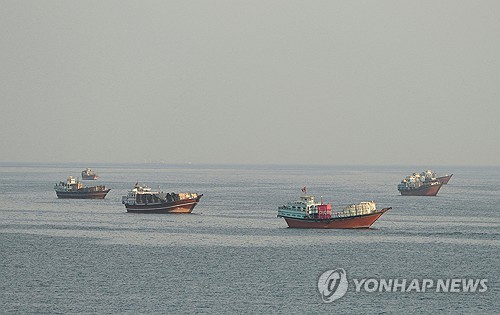
Iran’s Hormuz Claims — Unconfirmed but Not Ignoreable
On November 6, Iran’s Islamic Revolutionary Guard Corps claimed that two oil tankers struck mines in the Strait of Hormuz and that its air defense systems shot down a US MQ-1 drone over Geshm Island. A day earlier, the IRGC had said five tankers and a tugboat had suffered similar incidents. The claims came through state television, relayed by Reuters and AFP, but no independent maritime authority has verified them.
That gap — between what Tehran says and what the world can confirm — is precisely where this escalation lives.
Who Says What, and Why It Matters
CENTCOM’s Commander Brad Cooper stated on October 25 that the main shipping lanes through Hormuz remain clear of Iranian mines. The US military has consistently downgraded the immediate threat, framing past tanker incidents as routine maritime events rather than coordinated acts of war.
Tehran’s narrative is the opposite.
The IRGC framed the November 6 incident as deliberate: two vessels traveling through unauthorized routes, operating with navigation and identification systems disabled, and seeking to exit the strait with US military support. In their telling, the mines were not random acts of piracy but targeted responses to what Iran considers maritime lawbreaking.
The drone claim adds another layer. The IRGC stated it downed an MQ-1 Predator — and that this marks the sixteenth such drone they have shot down. The Pentagon has not confirmed or denied the shootdown.
No port authority, maritime safety organization, or independent satellite operator has yet corroborated either the mine strikes or the drone engagement. That absence of verification cuts both ways.
The Real Battle Is Over the Narrative
What makes this episode notable is not the damage — if any — but the information war unfolding around it.
Iran has been steadily raising the cost of operating in the Persian Gulf for months. Every claim of a mine strike, every report of a downed surveillance platform, serves a strategic purpose beyond the physical disruption. It forces shipping companies to reassess risk. It pressures insurance markets to demand higher premiums. It complicates US naval planning and forces allies to ask whether Hormuz remains secure without a heavier American presence.
The IRGC’s messaging cycle is designed to outlast the momentary facts. Even if CENTCOM’s lanes remain technically open, the mere possibility of undetected mines changes how every tanker captain, insurer, and logistics manager operates in those waters.
China and India — the two largest buyers of Iranian oil’s displaced cargo — watch these claims closely. When Tehran signals it can disrupt the strait, it is also reminding the world that it holds leverage over global energy flows.
Second-Order Effects: Insurance, Rerouting, and Market Psychology
The insurance implications alone could ripple through global supply chains even if no vessel is physically damaged. Marine war-risk premiums for the Persian Gulf already fluctuate with geopolitical temperature, but a pattern of unconfirmed incidents compresses the margin for commercial operators. Lloyd’s of London and other major underwriters monitor these signals in real time, adjusting coverage terms before any formal incident report arrives.
Shipping companies face a dilemma: comply with US assurances and risk Iranian retaliation, or heed Tehran’s warnings and incur higher costs from rerouting through the longer Gulf of Oman corridor. Either choice erodes profit margins. Fleet operators have already begun quietly adjusting departure schedules, preferring to transit during daylight hours when surveillance coverage is strongest.
Market psychology amplifies everything. Oil futures responded to previous Hormuz tensions with sharp spikes, only to collapse once the immediate threat passed. Today’s traders learn faster than yesterday’s, pricing in uncertainty before confirmation arrives. This anticipatory behavior creates self-fulfilling disruptions — insurers withdraw coverage not because mines exist, but because the rumors make coverage economically unviable.
What’s at Stake Economically
The Strait of Hormuz carries roughly 21 million barrels of oil per day — about one-fifth of global petroleum consumption. Any sustained disruption would send shockwaves through markets already sensitive to supply constraints.
A single confirmed mine strike would likely trigger a spike in freight insurance rates. Two or three would force rerouting through the longer Gulf of Oman corridor or temporary suspensions. Insurance premiums on tankers transiting the strait already fluctuate with tension levels, but a pattern of incidents — confirmed or alleged — compresses the margin for commercial operators.
The IRGC’s claims, unverified as they are, shift the risk calculus before any independent investigation begins.
Who Wins, Who Loses
Iran gains strategically from the claims regardless of their veracity. Each report reinforces the image of a regime willing and able to challenge US naval dominance in waters Washington has long treated as under its protection. It pressures allies in the Gulf — particularly the UAE and Oman, whose ports border the strait — to reconsider their security partnerships.
The United States loses credibility if its assertion that the lanes are safe proves wrong. If tankers are actually hitting mines while CENTCOM insists the area is clear, the disconnect undermines US operational transparency. The unconfirmed nature of the claims creates a trap: deny everything and look dismissive, acknowledge the possibility and alarm markets.
Shipping companies lose either way. They must navigate waters where one side says it is safe and the other says it is a battlefield.
A Clearer Close: The Fog Is the Weapon
What separates this moment from previous Hormuz crises is not the claims themselves — mining incidents and drone encounters have occurred before — but the complete absence of independent verification. In earlier decades, satellite imagery or commercial vessel data would have resolved the question within days. Today, the information environment moves faster than the evidence. Competing narratives harden into entrenched positions before investigators can confirm or deny either side’s account.
Iran has learned to weaponize ambiguity. By keeping the world guessing about whether mines actually exist or whether drones are truly being shot down, Tehran forces Washington to defend a position that may ultimately prove irrelevant — the physical safety of the strait matters less than the perception of danger. Markets react to rumors. Insurers adjust for possibility. Ships slow down for uncertainty.
The next weeks will test whether these claims harden into confirmed incidents or fade into the fog of contested information. Maritime monitoring satellites, commercial vessel tracking data, and port authority inspections should provide answers within days. If independent evidence surfaces confirming mine strikes, the escalation crosses from rhetorical to kinetic. If the claims evaporate under scrutiny, Iran may recalibrate — or double down with new allegations.
For now, the Strait of Hormuz remains a space where competing narratives hold more power than verified facts — and that is exactly where Tehran wants it. The battle is no longer just over who controls the waters, but over who controls what the world believes about those waters.