Iran lifts missile range limit, reshaping Middle East deterrence
Iran drops its 2,000km missile restriction hours after the US launches a task force to cut off Tehran's weapons flows, redrawing regional threat maps and testing ally defenses.
The Strategic Calculus Behind the Range Lift
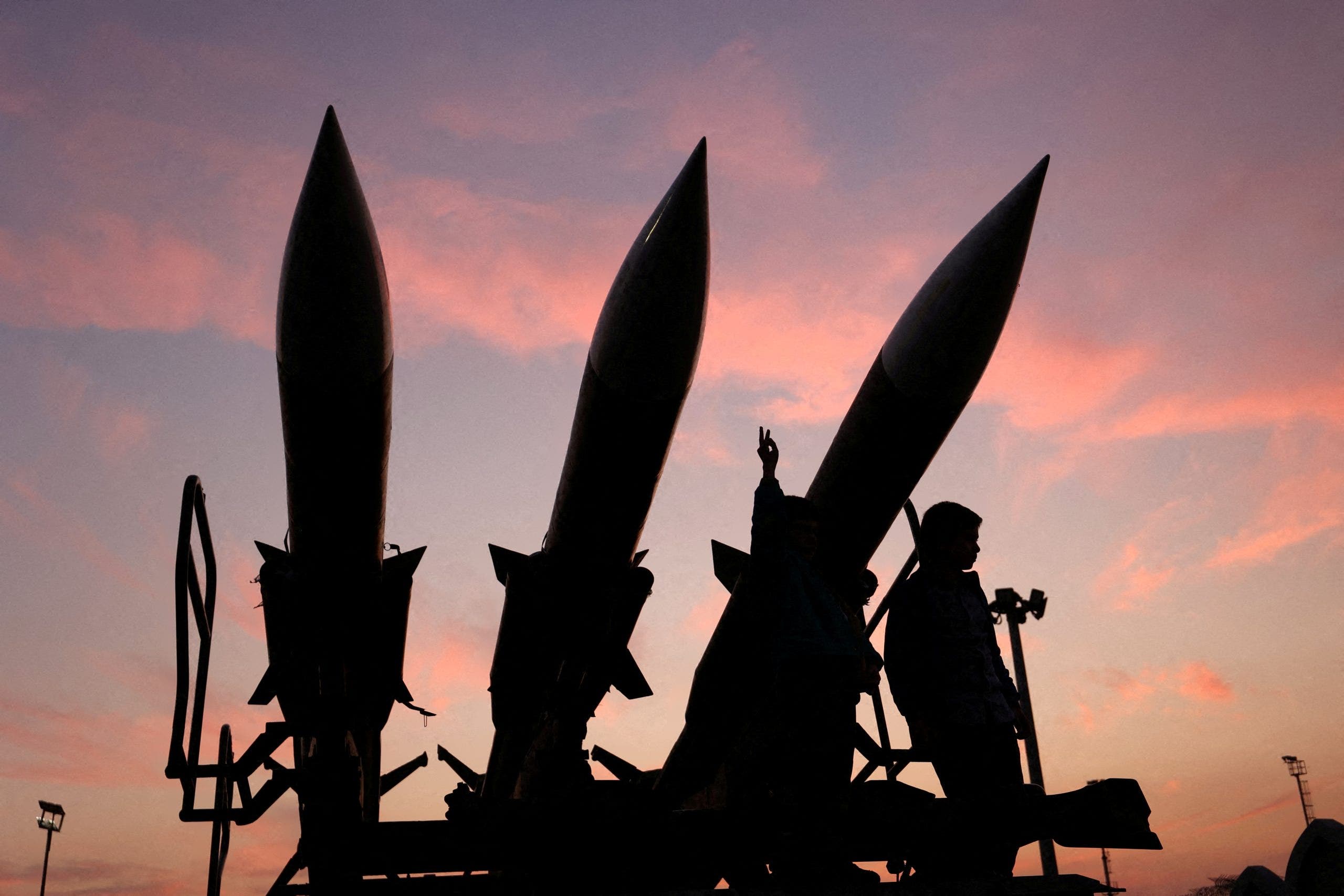
Iran’s decision to abandon its self‑imposed 2,000‑kilometer ballistic missile restriction is not merely rhetorical escalation. It is a deliberate recalibration of deterrence that coincides precisely with Washington’s effort to sever Tehran’s most vital logistical arteries.
When Islamic Revolutionary Guard Corps spokesperson Brig. Gen. Hossein Mohebbi announced that the “restriction has been lifted for us,” he was responding to the creation of Task Force Iron Gate—a US Central Command initiative designed to block the movement of advanced Iranian weapons, dual‑use materials, and illicit revenue across Iran’s land borders and the Caspian Sea. The symmetry is too neat to ignore: Tehran is stretching its deterrent umbrella exactly as the United States tightens its grip on the supply lines that have historically filled it.
The underlying logic is familiar yet underappreciated. By removing a constraint that kept Syria, Lebanon, Israel, Jordan, and much of the Arabian Peninsula already within range, Iran signals that any further US action could meet responses drawn from a broader target set. That includes potential strikes on deeper strategic assets—like the Diego Garcia base in the Indian Ocean, which Iran unsuccessfully attempted to hit in March with a missile traveling roughly 2,500 miles from its launch point. The message to Washington and its allies is simple: if you squeeze our logistics, we expand our reach.
Choking Supply Lines Versus Indigenous Production
Task Force Iron Gate represents a shift toward economic and logistical strangulation rather than purely kinetic strikes. Admiral Brad Cooper stated that the mission aims to “constrain Iran’s ability to finance terrorism, rebuild weapons factories, and replenish their military” through enhanced interagency collaboration and targeted pressure on border facilitators.
But Tehran’s narrative of self‑reliance complicates that picture. The IRGC claims its aerospace forces continued missile and drone production during recent combat operations using domestic expertise, without importing foreign systems or reverse‑engineering captured equipment. Mohebbi described this as a “very big achievement”—a claim meant to reassure both the public and regional allies that sanctions cannot easily break Iran’s war‑making capacity.
Yet experts caution against taking those assertions at face value. Behnam Taleblu of the Foundation for Defense of Democracies notes that Iran’s missile production has likely been significantly constrained by the so‑called 40‑Day War. In his view, Tehran remains dependent on imports to scale up rapidly, making the Caspian Sea basin—which has become a two‑way hub for sanctioned trade with Russia—and overland routes through Iraq essential lifelines. Restricting those flows, therefore, hits a pressure point that domestic output alone cannot immediately fill.
This tension between claimed autonomy and practical dependency defines the coming months. If Task Force Iron Gate succeeds in tightening sanctions enforcement and disrupting clandestine supply chains, Iran may accelerate its indigenous programs further—but at the cost of quality control and technological sophistication. If it falters, Tehran will have purchased valuable time to rearm and reassess its own thresholds.
The Geographic Domino Effect
Dropping the 2,000‑kilometer limit expands the map of potential Iranian strikes dramatically. While the prior restriction already placed the entire Gulf Cooperation Council, the Levant, most of Egypt, and parts of Greece and the Balkans within range, lifting it removes any remaining restraint on targeting farther‑flung military installations or economic nodes.
For regional allies, the implications are immediate and unsettling. Saudi Arabia’s oil infrastructure—for instance, pipelines that have already come under Houthi attack—is well inside the new envelope. Israeli defense planners will again weigh the vulnerability of airbases, naval ports, and population centers stretching from Haifa to Eilat. Even US bases in Qatar, Bahrain, and Kuwait now sit closer to the effective ceiling of Iranian strike capability than they did before Tuesday’s announcement.
Beyond the battlefield, the geographic expansion feeds directly into global maritime anxiety. The Houthis, Iran’s most active proxy in Yemen, continue to harass shipping in the Red Sea and Bab el‑Mandab strait, threatening a secondary chokepoint that handles roughly 12 percent of worldwide container traffic and a significant share of liquefied natural gas exports. An open‑ended missile range combined with persistent asymmetric naval harassment creates a pincer risk: commercial vessels face pressure from both the Persian Gulf and the Red Sea simultaneously, squeezing alternative routes and driving up insurance premiums.
Proxy Networks Under Pressure
Washington’s response has not been limited to declarative policy. Alongside Task Force Iron Gate, the United States is applying diplomatic and market pressure on neighboring states to tighten border controls. The Treasury Department has urged Iraq to close all crossings with Iran except two, a request that underscores how vital the land bridge remains for smuggling networks moving components, cash, and contraband.
Baghdad’s compliance has been partial. Only the al‑Shayeb crossing in Maysan province was shut down in late October, ostensibly to review security and install anti‑smuggling equipment. Intelligence from the Institute for the Study of War indicates that Iran’s ambassador to Iraq, Mohammad Kazem al‑Sadegh—a figure linked to the Quds Force—has been lobbying tribal leaders and Shiite political factions to reopen the terminal. That Iraq’s government has resisted broader closures reflects a delicate balancing act: maintaining working ties with Washington while managing the influence of Iranian‑backed parties inside parliament and security establishments.
The proxy dimension extends elsewhere. Attacks on a key Saudi oil pipeline signal ongoing coordination between Tehran and its non‑state partners, even as formal battle conditions fluctuate. Every American troop killed by such strikes—like the three service members lost earlier this year following an operation traced to Chinese‑satellite intelligence—adds political momentum for Washington to intensify interdiction efforts, which in turn fuels Tehran’s incentive to demonstrate deeper reach.
What Comes Next
No one involved in this sequence can predict with certainty how far Tehran will push its newly unlocked arsenal. Mohebbi warned that “if they once again miscalculate… Iran’s next blows will be even harder and will leave them crippled for years to come,” a phrasing that blends deterrence signaling with implicit threats of uncontrolled escalation.
Several trajectories are plausible. In the near term, expect increased probing actions—drone incursions, cyber intrusions, and occasional missile tests aimed at showcasing range without triggering full‑scale war. Medium‑term, the US task force’s effectiveness will hinge on whether adjacent governments, particularly Iraq and Azerbaijan, accept sustained secondary sanctions on their financial institutions and customs agencies. Long‑term, Iran’s drive toward “missile cities”—underground facilities designed to sustain production through bombardment—could embed a more resilient, dispersed industrial base that outlasts current punitive measures.
What is clear is that the removal of a single numerical limit alters the strategic geometry. Deterrence has always rested on perceived willingness and capability; now Tehran is publicly rewriting the parameters of both. Allies will respond by hardening sites, expanding air‑defense coverage, and diversifying energy routes. Iran itself will likely test how far it can extend its shadow without inviting a catastrophic response. The space between those two boundaries is where the next phase of confrontation will be fought—by proxy, by missile, and by economic pressure.