Iran's Nuclear Point of No Return After Khamenei's Death
Ayatollah Khamenei's death in a February US-Israel strike has shattered a decades-old religious ban on nuclear weapons in Iran. Hardliners now argue that atomic arms are essential for regime survival — and the strategic fallout reaches far beyond the Middle East.
A fatwa broken by bombs
For two decades, Iran’s nuclear program operated under a ceiling that was both theological and political. In 2003, then-Supreme Leader Ayatollah Ali Khamenei issued a fatwa declaring nuclear weapons haram — forbidden under Islamic law. The ruling was never just religious posturing. It was a strategic constraint, deliberately placed to signal to Washington and Moscow that Tehran sought deterrence through ambiguity, not a race to the bomb. That restraint held through every crisis, every enrichment milestone, every round of negotiations that collapsed and reformed.
Then came February. The US-Israel strike that killed Khamenei did more than remove a ruler. It shattered the institutional mechanism that had kept Iran’s nuclear threshold at bay. The fatwa died with him, and with it went the primary domestic argument against weaponization. No surviving ayatollah commands the same theological authority to reissue or reinterpret the ruling. The vacuum is structural, not personal.
The hardliner turn
The Financial Times reported on October 19 that hardline voices inside Iran are now openly calling for NPT withdrawal and full nuclear armament. The rhetoric has shifted fast and sharply, moving from fringe commentary to mainstream policy debate in a span of months.
Davoud Modaressian, a hardline political activist, framed it in survival terms: acquiring nuclear weapons is no longer a strategic ambition but a necessity comparable to bread. Hassan Kassabi, spokesperson for Parliament’s National Security Committee, echoed the logic, arguing that the endless cycle of negotiation and threat can only be broken by building what he called complete deterrence. Both men occupy positions where their words carry institutional weight.
Perhaps most telling was the assessment of a regime insider quoted by the FT: support for nuclear weapons within Iran’s power structure has surged from nearly zero to over 50 percent since Khamenei’s death. That is not a gradual shift. That is a fracture. The numbers suggest a population inside the system that was previously silent has been liberated to speak openly — and what they are saying terrifies their adversaries.
The North Korea comparison is being invoked deliberately inside Iranian policy circles. Hardliners point to Pyongyang as proof that nuclear weapons are the only reliable shield against foreign-backed regime change — a lesson drawn from a country that Western intelligence agencies spent years trying to topple without success. Saudi Arabia’s whispered concerns about developing its own arsenal, long denied but increasingly acknowledged in diplomatic circles, only reinforce the hardline case.
Why timing matters
This is not happening in a vacuum. The United States is moving through an election cycle in which Middle Eastern energy security is a live political issue. Iran’s hardliners understand this. A nuclear breakthrough, or even the credible threat of one, forces Washington to negotiate from a position of urgency rather than patience. Political timelines in Washington reward quick deals and punish protracted crises — a dynamic Iran’s strategists have studied carefully.
The Strait of Hormuz factor cannot be ignored either. Roughly 20 percent of global oil consumption passes through that narrow waterway. Any escalation that threatens Hormuz’s freedom of navigation would send shockwaves through global energy markets within days. Iran’s leadership knows this lever works both ways — the very vulnerability that makes Hormuz a chokepoint also makes it a bargaining chip worth more when Tehran holds cards at the negotiating table. The mathematics of mutually assured disruption are familiar to every defense analyst in the region.
What remains hidden
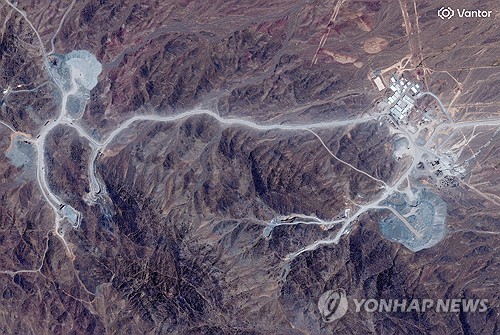
While the political debate unfolds in public, the physical evidence of Iran’s nuclear progress sits beneath the rubble of two facilities. The Natanz and Fordow enrichment plants were struck in June 2025 during earlier US-Israel strikes. What those attacks could not destroy was approximately 440 kilograms of uranium enriched to 60 percent, buried underground at both sites. That quantity, if further enriched to weapons-grade levels above 90 percent, could produce enough fissile material for roughly ten nuclear devices.
The International Atomic Energy Agency has been blocked from conducting inspections at these sites since the June conflict. Iran has made no credible disclosure of where that material went, whether it was moved, diluted, or reconstituted. The absence of verification data is itself a strategic signal — one that Western intelligence communities are treating as highly concerning. Every day without inspectors extends the shadow gap between what Iran claims and what actually exists inside its facilities.
The reformist counterweight
Not everyone inside Iran’s establishment agrees with the hardline trajectory. Reformist voices argue that prioritizing nuclear weapons development over regime survival itself is a dangerous miscalculation. Their concern is not moral but practical: weaponization would trigger unprecedented diplomatic isolation, likely invite renewed military strikes, and push regional adversaries — particularly Saudi Arabia and Turkey — toward their own nuclear ambitions.
The reformist argument is losing ground, but it has not disappeared. Its survival suggests the decision is not yet sealed. That is the narrow window in which diplomacy retains any relevance. What reforms remain within Iran’s political ecosystem depend on institutional channels that were never designed for existential decisions — they are built for economic management and social policy, not for choosing between survival and pariah status.
Two scenarios
Crisis Group analyst Ali Vaez offered a measured reading: Tehran may choose not to build a bomb outright but to preserve its nuclear infrastructure as a negotiation asset — a latent capability that extracts concessions without crossing the final threshold. This has been Iran’s strategy for years. The question now is whether the post-Khamenei environment still permits that ambiguity.
If hardliners consolidate control of the succession, the path toward actual weaponization becomes more likely. If moderates retain influence or a compromise candidate emerges, the latent-deterrent model may hold. The direction of the next Supreme Leader’s selection will determine which scenario takes shape — and the selection process itself is opaque, conducted by a body whose deliberations no outsider has ever witnessed.
What happens next
The immediate implications are threefold. First, global uranium enrichment monitoring loses another blind spot. Second, any future US administration will face a harder calculus: containment strategies that worked against a constrained Iran are far less effective against a nuclear-armed one. Third, the region enters a new security era where the prospect of an Iranian bomb is no longer hypothetical but operational.
Second-order effects are already rippling outward. Israel is reassessing its own deterrent posture, with defense planners quietly exploring options that would have been unthinkable a year ago. Gulf states are accelerating diplomatic engagement with Washington and Tel Aviv, seeking guarantees that did not need to be articulated when Iran’s nuclear ambitions were theoretically capped. China and Russia are recalibrating their economic partnerships, weighing the cost of association against a nuclear-armed Tehran against the strategic value of maintaining influence.
The fatwa that once anchored Iran’s nuclear restraint is gone. What replaces it will define the Middle East for decades. The next eighteen months — until Iran completes its succession process and the world watches whether that process produces a bomb or a bluff — will be the most consequential in the history of the Iranian nuclear program.