Iran Threatens to Seal Off the Gulf — And It Means More Than Rhetoric
Iran's military chief has declared US warships unwelcome in the Persian Gulf — a direct challenge that targets the Strait of Hormuz, where 20% of global oil passes daily. The stakes go far beyond posturing.
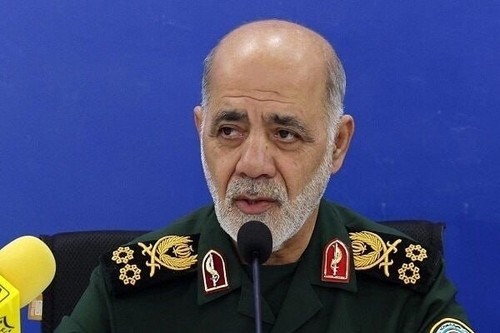
The Statement That Changes Everything
Ali Abdollahi, Iran’s Chief of General Staff, did something unusual on October 24. Rather than speaking through the usual diplomatic channels or having a foreign ministry spokesperson issue a measured rebuke, the top military officer went on state television and told the world — and Washington specifically — that US warships would not be entering the Persian Gulf, not now, not ever.
The phrasing was deliberately absolute. “Under no circumstances, at any time,” Abdollahi said. He then turned to Donald Trump directly, suggesting the American president would die dreaming of US troops sailing into Iranian waters.
This isn’t standard Iranian posturing. It’s a declaration of intent about a chokepoint that handles roughly 20% of global oil consumption and an estimated one-fifth of all liquefied natural gas traded internationally. The Strait of Hormuz sits between Iran and the UAE/Oman. Every tanker that moves Gulf energy to Asia, Europe, and beyond must pass within sight of Iranian coastline.
The Timing Isn’t Coincidental
Abdollahi’s remarks came hours after Trump publicly floated the possibility of renewed strikes on Iran following the midterm elections, and after US Ambassador to Turkey Tom Barrack warned that Washington could strike Iran as early as the coming weekend. The message from Tehran was clear: if you come, you won’t be able to leave the way you came.
What’s notable is the escalation in language. Iranian officials have historically warned about closing the strait during crises — most notably in 2008 and again in 2019 after the tanking of a merchant vessel. But those were threats issued by political leaders or the Islamic Revolutionary Guard Corps’ Quds Force, framed as contingency responses to specific provocations. This time, the Chief of General Staff of the regular military — not the IRGC — is making it a standing policy.
That institutional shift matters. The regular armed forces answer to the Supreme Leader through the standard military chain, not through the parallel IRGC structure that has historically dominated Iran’s asymmetric warfare doctrine. When the conventional military brass speaks this directly, it signals the threat is being baked into official doctrine, not kept as a negotiable deterrent.
Who This Threatens First
Japan and South Korea feel this most immediately. Both nations import the vast majority of their oil through Hormuz. Japan’s METI estimates roughly 89% of its crude passes through the strait; South Korea’s figure is similar. A disruption lasting even days would send their strategic petroleum reserves into emergency mode.
China is next. Around 60% of Chinese oil imports flow through Hormuz. India, too — over 55% — depends on the route. Europe is less exposed but not immune, particularly Italy and Greece, which have significant LNG contracts tied to Gulf suppliers.
The United States itself has become more self-sufficient in oil thanks to shale, but the global price signal doesn’t care about American geography. When Hormuz stutters, the benchmark spreads widen everywhere — including at the Cushing, Oklahoma delivery point.
What a Closure Actually Looks Like
Iran has the means. The Revolutionary Guard Navy operates hundreds of fast attack craft, anti-ship missiles, and naval mines. In 2019, Iran seized the UK-registered tanker Stuart after it allegedly entered Iranian waters near Falkeh Island — a small event that spiked oil prices by nearly 5% in a single day. The IRGC has conducted large-scale naval exercises simulating strait closures before. What’s different this time is the scope of the declaration: not a response to a single incident, but a blanket denial of access.
A full closure would likely involve layered mining, swift boat swarms, and potentially anti-ship ballistic missiles aimed at any vessel attempting passage. The US Fifth Fleet is based in Bahrain, just across the strait from Iran — making it the most exposed major naval command in the region. Denying it access to its own forward operating area would be an unprecedented reversal of post-Cold War security architecture.
The Paradox for Washington
Trump’s rhetoric about striking Iran’s nuclear facilities creates a logical trap. If the US attacks and destroys Iranian nuclear infrastructure, as some advisors have suggested, Iran’s calculus shifts sharply toward using its asymmetric advantages — and the strait is the single most effective tool in that arsenal. The harder Washington presses on the nuclear question, the more motivation Tehran has to demonstrate it can hurt global energy markets.
Abdollahi’s comment about Trump dreaming of US ships in the Gulf reads as more than bravado. It suggests Iran is preparing its population and its military for a prolonged confrontation, not a brief skirmish. “The longer this conflict drags on,” he said, “the deeper we sink our enemies into the swamp of death and decline.”
That framing — a war of attrition rather than a quick strike — changes how analysts should read the situation. This isn’t Iran bracing for a one-day crisis. It’s preparing for months.
What Happens Next
Expect more pointed rhetoric in the coming days. Iran’s military usually escalates publicly before or alongside actual moves at sea. Watch for IRGC naval drills near the strait, unusual vessel movements, or announcements about new mine-laying exercises. None of those actions alone would be surprising. Together, they’d mark a significant shift.
For markets, the baseline assumption should be that Hormuz remains open but precariously so. Oil prices already carry a modest risk premium for Middle East tensions. A verified closure threat — ships actually harassed or mined — would rewrite that premium in hours.
For policymakers, the uncomfortable reality is that Iran has turned a geographic fact into a strategic weapon. The Strait of Hormuz wasn’t created by Tehran. It exists because of geology. But Iran is the only country on earth that can close it at will, and it has just made that capability explicit in the highest-ranking military language available.