Iran's Preemptive Strike Debate Marks a Strategic Turning Point
As US-Iran military exchanges intensify around the Strait of Hormuz, hardline voices inside Tehran are arguing for a doctrine shift from retaliation to preemptive action—a debate that could accelerate regional escalation or signal Iran's narrowing patience.
The Debate That Changes Everything
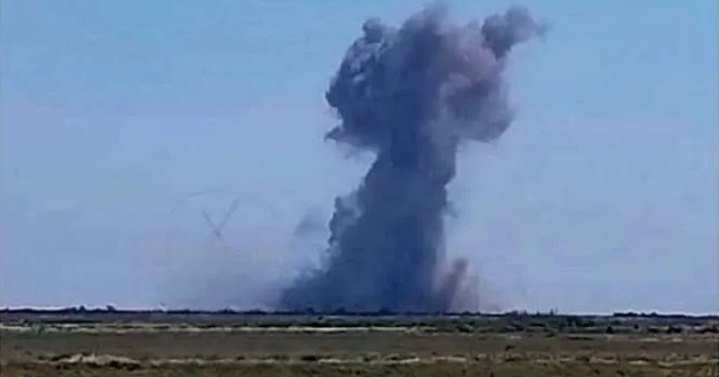
Smoke was still rising from Larak Island when Iranian politicians began arguing about something far bigger than a single US airstrike. By August 30, 2026, after Washington hit Revolutionary Guards positions on the island in the Strait of Hormuz and killed three Iranians, the question inside Tehran had stopped being whether to respond and started being whether to anticipate.
The shift is subtle but potentially irreversible. For years, Iran’s military doctrine operated on a simple logic: absorb the hit, then hit back hard enough to make the next attack costly. The calculus was reactive deterrence—punish aggression after it lands. But now a growing coalition of hardline voices is arguing that model hands Washington all the initiative. If Iran waits for American strikes before acting, it cedes control of timing, pace, and escalation management to the United States.
This is not just a doctrinal discussion. It is a struggle over who controls Iran’s strategic destiny—and whether that control remains with President Masoud Pezeshkian’s pragmatic circle or has already passed to figures like Parliament Speaker Mohammad Bagher Ghalibaf and the newly appointed Supreme National Security Council secretary Mohsen Rezaei.
The Numbers Behind the Argument
The scale of the latest exchange puts the debate in sharp relief. CENTCOM struck approximately 100 targets across Iran on Tuesday—air defenses, radar systems, maritime assets, mine-laying capabilities, and communications sites. Trump told Fox News the strikes were about destroying infrastructure Iran was rebuilding, saying, “We waited until it was almost built and then we hit it.”
Iran’s response was immediate and distributed. The IRGC targeted US bases in Jordan. Iran’s army launched explosive drones at Al Minhad Air Base in the UAE and Sheikh Isa Air Base in Bahrain. Iranian air defenses claimed to have shot down 50 US MQ-9 drones near the Strait. None of these claims have been independently verified, but the sheer geographic spread—Jordan, UAE, Bahrain, the Strait itself—demonstrates that Iran’s retaliation network is regional, not bilateral.
The US has now adopted what Axios describes as a “tanker for tanker” policy, striking two Iranian government tankers anchored north of the blockade line. This is qualitatively different from previous actions. Washington has previously interdicted shipping to enforce a blockade. Now it is hitting Iranian commercial vessels in retaliation for Iranian attacks on shipping. The escalation ladder has a new rung.
Who Is Pushing for Preemption—and Why
Ali Gholhaki, a political activist close to Ghalibaf, laid out the case publicly on Tuesday. The Larak strike, he argued, proved Washington’s “audacity” and showed that diplomacy had failed. “It seems that resolving the issues in the military field will be more feasible than diplomacy,” he wrote.
Mahmoud Nabavian, a hardline lawmaker, went further, calling openly for preemptive strikes on US interests across the Middle East. His reasoning was operational, not ideological. He argued that US war reserves are depleted, fuel prices are rising, and congressional elections are approaching—conditions that create a narrow window of opportunity. “So now is the best time for a preemptive attack on US interests in the region, forcing the enemy to retreat and breaking the blockade,” he wrote on X, calling inaction “wasting the opportunity.”
Nour News, a website close to the Supreme National Security Council, framed the shift in strategic terms. The old model was simple retaliation. The new model, it argued, should make Washington’s next decision harder and more costly. Iran’s goal is not just to punish—it is to create a dilemma for the United States, where restraint looks like weakness and escalation risks global energy markets.
Tasnim, the IRGC-affiliated news agency, noted that the gap between political decision-making and military action was already narrowing in the Larak response cycle.
The Diplomatic Facade Is Cracking
PezeShkian still insists Iran is prepared to return to the Islamabad memorandum, the June 2026 agreement that was supposed to halt the conflict and provide a framework for negotiations. He met with Pakistani Prime Minister Shehbaz Sharif at the Shanghai Cooperation Organization summit and described the memorandum as the “only viable pathway” to lasting peace. Pakistani Foreign Minister Ishaq Dar echoed that position in talks with Iranian Foreign Minister Abbas Araghchi.
But Ghalibaf, the chief negotiator, struck a harder tone. He said Iran would force US compliance through the “language of power” and warned that the Strait of Hormuz would not reopen until Washington fulfilled its obligations. “If the enemy intends to prevent Iran from exporting oil from the Persian Gulf, it should know that no one else will be able to export oil from this region either,” he said.
Trump dismissed the memorandum entirely. “An agreement with them isn’t worth the paper it’s written on,” he told Fox News, adding that Iran had been given “a lot of chances.” He warned that any Iranian retaliation would trigger attacks at a “much harder and higher level” and could leave “very little” of the Islamic Republic.
The two sides are now speaking completely different languages. Tehran says it wants the agreement implemented. Washington says the agreement is dead. Pakistan and Qatar are mediating between positions that no longer overlap.
The Strait Is the Stakes
Everything in this confrontation funnels through the Strait of Hormuz. Iran has made it clear that commercial vessels cannot transit without coordination with Tehran. Ghalibaf accused the US of falsely assuring ships they could pass safely, then watching those same ships come under attack. The IRGC reported that a supertanker caught fire after striking mines—a claim CENTCOM rejected. A Saudi tanker named Cedar reportedly stopped transiting the southern corridor.
Hormuz is where Iran’s military strategy and economic strategy converge. It is also where the US blockade, Iranian mine-laying, and the new “tanker for tanker” policy create the most dangerous intersection. Any miscalculation here does not stay regional. Global oil markets are already pricing in the risk. The Strait carries roughly 20 percent of global oil consumption.
What Happens Next
The debate over preemptive strikes has not produced an official doctrine shift. But the fact that it is being conducted openly—in state-affiliated media, by lawmakers with security clearances, by figures close to the parliament speaker—is significant. It signals that the establishment is testing whether a more offensive posture is politically viable.
The risk is self-reinforcing escalation. If Iran acts preemptively and strikes US positions before being attacked, Washington will likely respond with disproportionate force. Trump has already threatened a level of destruction that goes beyond the current exchange. If Iran holds back, it risks appearing weak to its own hardline base and ceding strategic initiative.
Pakistan’s mediation efforts are genuine but structurally hollow. Washington has publicly stated there are no negotiations underway. Tehran demands US action first. The window for the Islamabad memorandum is closing—not because of a lack of diplomatic effort, but because both sides have moved their red lines past each other.
The real question is whether Iran’s leadership believes that preemptive action strengthens deterrence or accelerates a war it is not prepared to fight on its own territory. The debate inside Iran suggests the answer is splitting the establishment along lines that may not be easily reconciled.
What is clear is that the old model—attack, Iran retaliates, pause, repeat—is ending. Whether it is replaced by anticipation or by something worse remains to be seen.