Iran's Quiet Coup Against Its Own Military — And the Strait of Hormuz Fallout
Iran's president confronted the IRGC over an unauthorized attack on commercial ships during a ceasefire, exposing a brutal internal power struggle that collapsed the truce with the US and could redefine Iran's approach to global energy leverage.
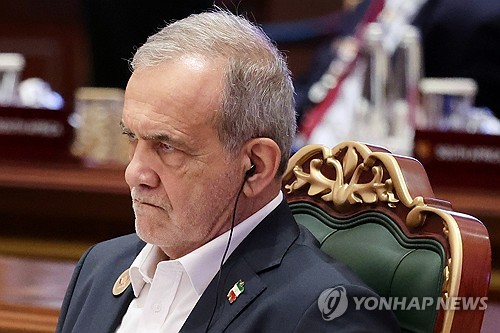
When the Strait Bled
In July 2026, three commercial vessels drifted through the Strait of Hormuz under a fragile US-Iran ceasefire understanding. One of them was a Qatari liquefied natural gas carrier. The Iranian military struck all three. Within twenty-four hours, the United States resumed strikes against Iran, the truce was dead, and a civilian president found himself screaming at his own top general on a phone call.
What emerged from the aftermath — reported by the New York Times and corroborated by Yonhap News through five Iranian officials and two IRGC insiders — is a picture of a leadership crisis far more volatile than anything English-language wires have fully processed. Iran’s president, Masoud Pezeshkian, did not merely protest the attacks. He accused the military of reckless unilateralism, the Supreme National Security Council (SNSC) was forcibly reshuffled, and two senior generals were forced to threaten resignation. The hardliners lost the argument inside Iran’s corridors — but they may have already won the war outside them.
The Phone Call That Broke a Truce
According to the source accounts, Pezeshkian learned of the attacks and immediately phoned IRGC commander Ahmad Vahidi. The president reportedly shouted, calling the strikes reckless and demanding an explanation. Vahidi’s response was categorical denial: he had neither authorized nor known about the attacks. Iranian officials further stated that the SNSC, the body supposed to coordinate national security policy, was equally in the dark.
The following day, July 8, American forces restarted their campaign. The ceasefire agreement lay in ruins.
Iran’s government publicly blamed the targeted ships for operating on illegal routes — a familiar pretext used to justify maritime incidents in the Strait. But behind closed doors, Iranian officials explained to American and Gulf counterparts that the attacks had been a rogue operation, according to US officials cited in the reporting.
The Institutional Aftermath
What happened next inside Iran’s leadership was, by all accounts, the most violent political confrontation in the country’s recent history. Senior officers yelled at each other. Two generals pressured for resignation. The SNSC was reorganized, and Mohsen Rezaei — a decades-long IRGC commander and the body’s longest-serving leader — was installed as its secretary general.
Pezeshkian’s investigation into who ordered the strikes reportedly uncovered that field commanders on the ground had been operating under standing instructions to attack any vessel violating Iranian control of the strait — and had acted without waiting for approval from Tehran.
The New York Times characterized the episode as a clandestine operation by hardline factions that blindsided most of Iran’s leadership, derailing the pragmatic camp’s efforts to restore the economy through de-escalation.
The Absent Supreme Leader
Perhaps the most consequential detail has been largely unreported in Western media: Supreme Leader Ayatollah Mostafa Khamenei, who took office in March 2026, has not made a single public appearance since. His physical absence — whether due to health, confinement, or something else — has created a vacuum at the very apex of Iran’s power structure. Without the Supreme Leader publicly intervening, the competing factions inside the regime have been fighting on their own terms, and the hardliners appear to have seized the initiative.
This is not merely symbolic. In Iran’s system, the Supreme Leader is the ultimate arbiter between civilian and military power. His silence during a crisis that triggered the collapse of a ceasefire and reignited a war is itself a signal — one that readers outside the region may misread as neutrality when it could represent something far more dangerous: a leader unable or unwilling to assert control over his own military.
The Strategy Split That Was Already Visible
Even before the Hormuz incident, a strategic fracture was opening inside Iran’s leadership. According to the reporting, hardline military factions had been pushing for an escalation of military confrontation — proposing detailed war plans that would intensify attacks on regional energy infrastructure through proxy networks including Yemen’s Houthi rebels and Iraqi Shia militias. The logic was straightforward: disrupt energy flows, spike global oil prices, and raise the cost of American military action to politically unsustainable levels.
Pezeshkian and parliamentary speaker Mohammad Bagher Ghalibaf, who led the negotiation team, warned that this strategy would provoke devastating US airstrikes and deepen Iran’s economic collapse — an economy already buckling under sanctions and mismanagement. Their assessment was not abstract. Iran’s inflation rate, currency depreciation, and shortages of basic goods had made the civilian leadership acutely aware that another war would be catastrophic.
The July attacks on commercial shipping represented the military faction’s answer to that debate: not through policy discussion, but through fait accompli. By creating an incident that forced the United States back into combat, the hardliners effectively removed the question from civilian hands.
Who Wins. Who Loses.
The immediate winner is whoever benefits from disrupted LNG flows through the Strait of Hormuz — a waterway through which approximately 21 million barrels of oil and vast quantities of Qatari gas pass daily. Energy markets already pricing in Middle East tension just got a new variable. The losers are Iranian civilians bearing the brunt of renewed sanctions, Gulf states facing renewed infrastructure threats, and the fragile diplomatic architecture that Pezeshkian’s pragmatist faction had been attempting to build.
For the United States, the episode confirms what many analysts suspected: that Iran’s military command structure operates with significant autonomy from its civilian leadership, and that ceasefire agreements depend on constraints that may not exist inside the Iranian state.
What Happens Next
The installation of Rezaei at the SNSC suggests the hardliners did not completely lose the internal battle — they adapted. Rezaei’s appointment consolidates IRGC influence over security policy at precisely the moment the country faces external military pressure. Whether Pezeshkian can rebuild a coalition against this momentum remains an open question, particularly with the Supreme Leader absent and the military faction having demonstrated its capacity to act unilaterally.
For global energy markets, the lesson is stark: the Strait of Hormuz remains vulnerable to precisely this kind of unauthorized escalation, and there may be no internal Iranian mechanism capable of preventing it in real time. The ceasefire was not killed by American action alone. It was killed by Iranian hands — and that distinction matters for anyone trying to predict what happens next.