Iran just turned South Korea's oil supply into a tripwire
Tehran has drawn a red line for Seoul over the Strait of Hormuz, threatening to treat any Korean military presence as direct participation in a US-Israel war. It is a message aimed at Washington's ally—but one that cuts straight to South Korea's economic jugular.
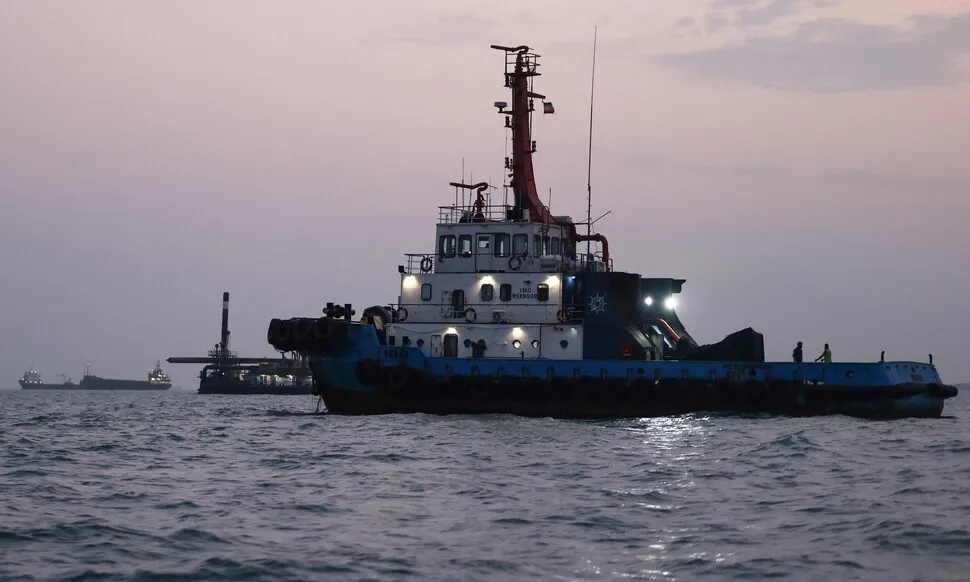
The tripwire is real
Iran has drawn a line in the water that goes straight through South Korea’s throat.
A senior Iranian security and political official told Lebanese outlet Al-Meyadeen on April 4 that any Korean military activity against Iran in the Strait of Hormuz would be treated as direct participation in a US-Israeli war of aggression against Tehran. The warning was blunt, specific, and timed to coincide with intensifying American pressure on Seoul to commit forces to the region.
The language matters. “Conspiracy in any crime against Iranians and their rights will not go unpunished,” the official said. That is not rhetorical flourish. It is a calibrated signal that Iran is watching Korean movements and has already identified the Strait as a potential flashpoint.
What makes this warning distinctive is its precision. Tehran did not issue a generic threat about any military cooperation with the United States. It named the Strait of Hormuz specifically and identified South Korea as the targeted actor. That specificity suggests the Iranian establishment has been tracking Seoul’s energy vulnerability and decided to weaponize it.
The chokepoint problem
South Korea imports nearly all of its crude oil through the Strait of Hormuz. Roughly 70 percent of the Korean Peninsula’s total energy supply passes through that 33-kilometer-wide bottleneck between Iran and Oman. It is the single most critical artery in the Korean economy. Disrupt it and the country runs out of fuel within weeks.
This dependency is what makes Iran’s warning so strategically precise. Tehran is not just addressing Washington. It is pressuring Seoul’s government by targeting its most vulnerable seam.
The scale of the exposure is difficult to overstate. South Korea ranks among the world’s largest oil importers, and virtually none of it arrives by alternative route. The Strait of Hormuz handles approximately 21 million barrels per day globally—roughly one-fifth of all consumed oil—and South Korean refineries are configured around that flow. Alternative corridors through the Gulf of Aden or overland pipelines are either negligible in capacity or nonexistent for Korean imports.
Trump has been explicit about his demand. He has publicly told South Korea and Japan—the two largest importers of Middle Eastern oil—that they must help secure the Strait now that tensions with Iran have escalated. When Seoul initially refused a request to support US military operations against Iran, the president publicly expressed dissatisfaction. US CENTCOM has since released video showing IRGC forces engaging a US warship, followed by American strikes destroying three Iranian-linked tankers near the strait.
Japan faces an identical calculus. Both countries are energy importers of comparable scale and both have received the same American summons. The difference is that Tokyo has more experience navigating US pressure in the region and maintains a slightly more diversified energy mix, giving it marginally more breathing room.
The narrow corridor
Seoul is walking a razor’s edge. A Blue House official confirmed on April 4 that consultations are underway with partner nations on practical contributions to freedom of navigation in the Strait, but insisted no decision has been made. The official added that any move would need to avoid significantly degrading the Korean Peninsula’s own defense posture—a reference to the ongoing need to maintain readiness against North Korea.
That second condition is not secondary. South Korea maintains approximately 285,000 active-duty personnel and keeps a significant portion of its naval and air assets oriented toward the Korean Peninsula. Any meaningful deployment to the Persian Gulf would require pulling those assets away, and the North Korean regime is watching closely. A depleted posture on the peninsula could invite miscalculation from Pyongyang at exactly the wrong moment.
The options being discussed inside the government are limited and deliberately calibrated. South Korea is reportedly considering sending P-8 maritime patrol aircraft, military supply ships, and mine-countermeasure personnel. These are non-combat assets. They would support navigation safety rather than engage in offensive operations.
The P-8s would provide surveillance and reconnaissance—mapping Iranian naval activity, monitoring tanker movements, and sharing intelligence with CENTCOM. Supply ships would offer logistical support rather than combat capability. Mine-countermeasure teams would address one of the most credible escalation scenarios: Iran laying mines in the Strait to block commercial shipping.
Park Gil-ju, a professor at the National Diplomatic Academy’s International Security Research Center, told Reuters these contributions fall into a “medium intensity” category—well below direct combat participation but far from doing nothing.
That distinction may be the only thing keeping Seoul in the game. Park’s assessment reflects a government trying to thread between two absolutes: not angering Washington by refusing outright, and not provoking Tehran by sending warships into contested waters.
The economic domino effect
Beyond the immediate threat to oil tankers lies a cascade of secondary risks that Seoul must weigh. If Iran retaliates against Korean shipping, it would not need to sink vessels outright. Harassment—interdiction, inspection, detaining crew members—would be sufficient to drive up insurance premiums and disrupt schedules. The Strait is narrow enough that even a few threatened transits would cause commercial carriers to reroute or delay, creating ripple effects through global supply chains.
South Korean refiners operate on thin margins and tight delivery schedules. A disruption lasting more than a few weeks would force them to compete for alternative crude supplies in an already constrained market, driving up costs that would eventually transfer to consumers. Domestic fuel prices would rise, and the government would face public backlash well before any strategic debate resolved itself.
Currency markets would react as well. The Korean won is highly sensitive to energy price shocks, and a Hormuz crisis would likely trigger depreciation pressures that complicate the central bank’s already difficult positioning between growth and inflation.
Who wins, who loses
Washington wins if Seoul deploys anything. More eyes on the Strait, more logistical support for American operations, and a clear signal that allies are sharing the burden of Middle Eastern security. Trump gets what he campaigned on: burden-sharing that reduces the perception of US unilateralism.
Tehran loses regardless of how small the contribution. The red line was drawn in advance, which means even a P-8 sent for mine detection can be framed as evidence of Korean complicity. Iran’s calculus is designed so that Seoul cannot win visibly—any contribution looks like betrayal to Tehran, and no contribution looks like abandonment to Washington.
But there is a third dimension that complicates the simple binary. China, Iran’s primary economic patron, is also South Korea’s largest trading partner. Beijing has been quietly urging Seoul to avoid actions that could widen the US-Iran conflict, partly because Chinese oil imports also flow through the Strait. A Sino-Iranian coordination on pressuring Seoul is not impossible, and it would add a layer of diplomatic complexity that Seoul’s foreign ministry is already feeling.
Seoul loses the most. There is no clean option. Sending forces risks Iranian retaliation against its oil imports. Refusing risks a strategic rift with its primary security guarantor. The government’s stated position—that nothing is decided—is less a lack of clarity than a deliberate holding pattern while it calculates whether a third path exists.
The domestic fault line
Any deployment will face immediate domestic scrutiny. South Korea’s Constitution requires National Assembly approval for overseas military operations, and the current political landscape offers no guarantee of smooth passage. The opposition parties have already begun framing the issue as another example of the executive branch subordinating Korean interests to American strategy without adequate consultation.
Public opinion is a further constraint. South Koreans have little historical sympathy for Middle Eastern conflicts and even less appetite for military deployments that do not directly protect the peninsula. Polls conducted in early April showed roughly 60 percent opposition to any military involvement in the Strait, with only marginal variation across demographic groups. The government cannot afford to look weak on alliances, but it also cannot afford to look reckless on national security.
Protests are likely regardless of the final decision. A deployment would trigger demonstrations organized by left-leaning and civic groups. Refusal would provoke counter-demonstrations from pro-alliance organizations and business associations concerned about economic fallout. Either way, the issue will dominate domestic politics for months.
What happens next
The immediate question is whether South Korea announces a contribution before the end of spring. The timing is significant because the American administrative cycle and the Iranian Revolutionary Guard Corps operational calendar both move on their own schedules, and Seoul risks being caught between them.
Iran is unlikely to escalate immediately if Seoul stays in the “medium intensity” lane. The threat was issued to deter full involvement, not to punish logistical assistance. But if Korean assets are perceived as enabling direct attacks on Iranian vessels or forces, the warning becomes self-fulfilling. The IRGC has demonstrated willingness to use asymmetric tactics—swarm boats, mine laying, anti-ship missiles—against commercial and military targets in the Strait, and South Korean vessels would be visible, identifiable, and politically significant targets.
The longer-term implication is starker. The Strait of Hormuz has become a geopolitical tripwire, and South Korea’s energy dependence means it is the country most likely to trip it. Every future crisis in the Persian Gulf will force this same choice on Seoul: comply with Washington and risk economic strangulation, or assert independence and risk the collapse of the alliance that has anchored its security for seven decades.
There is no comfortable answer. That is exactly what Iran understands. The warning was never primarily about preventing Korean naval deployment—it was about making Seoul feel the weight of its own vulnerability every time it considers acting. As long as South Korea depends on the Strait for survival, Tehran holds leverage that no amount of diplomatic refinement can fully neutralize. The tripwire is set, and South Korea is standing on it.