Iran Threatens to Cut Undersea Cables as Trump Eyes Renewed Strikes
As Trump signals a possible second strike on Iran before midterm elections, Tehran warns it will sever undersea cables and eliminate all remaining red lines — a threat with global infrastructure consequences that Western analysts are still grappling with.
The Threat That Changes Everything
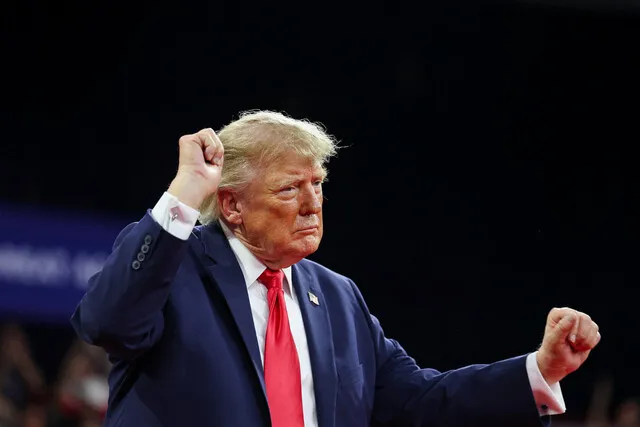
Donald Trump stood on a rally stage in Fort Myers, Florida, on March 23 and told the crowd he might launch another “Epic Fury” — a name that sounds like a blockbuster sequel but refers to the US military operation code name for what has become an unfolding war between America, Israel, and Iran that started in late February.
The timing was not accidental. Trump was speaking ahead of midterm elections, and the message carried a clear domestic signal: the war is going well, and if Americans want more before they vote, they can have it.
But layered beneath the political performance was a military reality that deserves far more scrutiny than it has received. In the same breath as the renewed strike warning, Trump also pointed to Cuba as the next target — a declaration that has circulated before but now carries the weight of an active conflict behind it. The president described positioning an aircraft carrier 50 yards off the Cuban coast.
This is the language of a president testing how much escalation the world will absorb before it pushes back.
The Cable Calculus
What matters most, however, is not the Cuba theater — it is the Iranian response.
A senior Iranian security official told Reuters on March 23 that if Iran is attacked again, “no red line will remain.” That is not vague rhetoric. The official specified targets: undersea communication cables stretching from the Persian Gulf across the Middle East, and military bases throughout the region.
The official added that Iran would not merely sever the cables — it would prevent repairs, ensuring prolonged communication blackouts.
This is a strategically sophisticated threat. Undersea cables carry roughly 99 percent of international data traffic. They are fragile, largely unguarded, and concentrated in corridors that run directly through Iranian waters. The Strait of Hormuz, the Persian Gulf, and the approaches to the Arabian Sea are already contested space. A deliberate cable-cutting campaign would not be an act of war by proxy — it would be a direct strike on the physical infrastructure of the global internet.
And Iran has something most attackers lack: complete access to the very cables they would threaten. The Persian Gulf seabed is within Iran’s effective control for significant stretches. Repair vessels would face the same anti-ship and mine threats that have already made the region dangerous for commercial shipping.
The question is not whether Iran can cut the cables. It is whether the consequences would be contained — or whether severing data corridors becomes the opening move of a wider regional destruction campaign.
The Post-Election Timing
New reporting from the New York Times on March 21 adds urgency to the timeline. American and Israeli forces, the Times reported, have developed concrete plans for resuming bombing operations against Iran after the midterm elections.
That same day, Defense Secretary Pete Hegseth traveled to Israel and met with Prime Minister Benjamin Netanyahu to discuss attack options.
The coordination between Washington and Tel Aviv is visible. What is less visible is the internal debate that these moves are likely provoking inside both governments. The Pentagon has spent the past year refocusing on the Indo-Pacific. A sustained war in the Middle East, especially one that opens a second front against Iranian infrastructure in the Persian Gulf, pulls resources, attention, and risk in the opposite direction.
Hegseth’s trip suggests the decision has already been made to proceed. But the decision to proceed and the decision on how far to go are two different things.
Who Wins, Who Loses
If Trump launches a second phase of Epic Fury and Iran responds by cutting undersea cables, the losses distribute unevenly.
Iran loses first and most visibly — it faces the full force of American airpower and a confirmed posture of escalation from Washington. But it also holds leverage that is disproportionate to its conventional military capacity: the ability to inflict economic pain on Europe, the Gulf states, and much of Asia by severing the physical pathways of global communications.
The Gulf Cooperation Council states are the most exposed. Qatar, the UAE, Saudi Arabia, and Kuwait all route significant portions of their international bandwidth through undersea cables that pass through or near Iranian-controlled waters. A sustained blackout would paralyze banking, logistics, and government operations — all before a single bomb fell on their territory.
Europe is third-order exposed but not immune. Transit cables crossing the Mediterranean and Red Sea interfaces with Persian Gulf routes that Iran could threaten. The EU’s digital infrastructure review papers have flagged exactly this vulnerability in prior years — and done almost nothing to harden it.
China and Japan, which import the bulk of their Middle Eastern oil through the same sea lanes Iran threatens to turn into a denial zone, face a compound risk: energy disruption combined with potential data corridor severance that would hit their financial systems within hours.
Trump’s calculus, meanwhile, is electoral. A successful second strike — or even the credible threat of one — provides the kind of dramatic imagery that plays in rally speeches. The cost, in this framework, is externalized: global markets, alliance systems, and the quiet infrastructure that keeps the modern world connected.
What Comes Next
The most likely scenario is not a decisive American victory or a full Iranian collapse. It is a grinding escalation cycle — limited strikes followed by measured Iranian retaliation, followed by further escalation, with each side calibrating its next move against the other’s public statements rather than hidden capabilities.
The cable threat changes the calibration. It raises the floor of what counts as unacceptable. Before this war, the implicit understanding was that Iran would target military assets and regional partners. Now Iran has publicly announced that its retaliation will include asymmetric infrastructure warfare — and it has given the world a specific example of what that looks like.
That announcement itself is a form of deterrence. The United States and Israel now have to ask whether their next bombing run is worth the risk of triggering a cable campaign that would make the energy disruptions of 2022 look minor.
But deterrence only works if both sides believe the threat is credible. And credibility, in this context, means Iran must appear willing to pull the trigger even at the cost of its own vulnerability to American airpower.
The rally-stage performance in Florida was designed to project exactly that kind of resolve — from both sides.
The midterm elections add another layer. If Trump wins a strengthened position, the window for a second Epic Fury phase narrows further. If he does not, the calculations shift in Washington and, by extension, in Tehran and Jerusalem.
No one involved seems to have a exit strategy. The only clear trajectory is upward.