Iran-US Tanker War Traps Both Sides in the Strait of Hormuz
After the US destroyed three Iranian tankers in retaliation for a missile strike on two warships, Tehran vowed to step up attacks on US navy vessels. Each escalation tightens the vice around global oil shipping through the Strait of Hormuz.
The Ladder Keeps Climbing
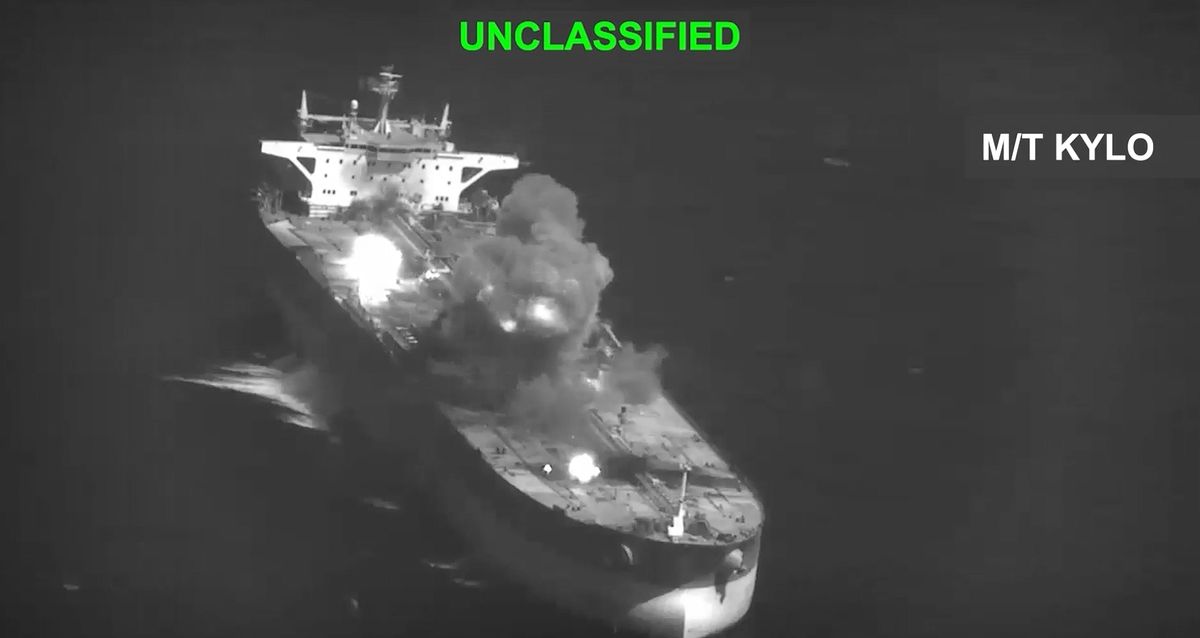
On September 5, the US Central Command struck three Iranian oil tankers near Kharq Island and off the coast near Yask. The official reason: two US Navy vessels had been targeted by Iranian ballistic missiles days earlier while patrolling regional waters. Iran’s Revolutionary Guard had fired; Washington responded by sinking three tankers it said were part of a secret IRGC funding network worth billions.
By evening, Iran’s Integrated Command had issued its own warning. Ebrahim Jolfagari, a spokesperson for the command, said Tehran would intensify attacks on US warships in the region if the harassment and what it called a maritime blockade continued. He did not mince words: the scope of those attacks could expand.
Both sides are now locked in a cycle that neither started cleanly and neither seems willing to stop.
Who Is Actually Being Hit
The details matter. CENTCOM identified the three vessels as M/T Downey, M/T Stark 1, and M/T Kailo — the latter also known as Norsen. All three were reportedly empty or being prepared for loading at the time of the strikes. Brad Cooper, CENTCOM’s commander, described the operation as proportionate retaliation: you target two of our ships, we sink three of yours. The message was deliberately quantitative, almost arithmetic, as if escalation could be controlled through simple math.
Iran’s Foreign Ministry went further, calling the strikes a war crime under Article 2(4) of the UN Charter and framing them as part of a broader campaign of economic warfare and blockade. The ministry placed the blame squarely on Washington and its regional partners, warning that any consequences would be their responsibility.
What both sides are actually doing, however, is targeting assets that sit in the gray zone between military and commercial use. The IRGC has long operated parallel commercial shipping networks to fund its operations and those of allied militias. Striking those tankers is a way of hitting Iran’s war economy without firing on a uniformed soldier. But the precedent is dangerous: every nation with a quasi-military maritime apparatus now has to ask whether its commercial fleet is fair game.
Why This Keeps Getting Worse
The escalation logic is brutally simple. Iran fires missiles at US ships. The US sinks Iranian tankers. Iran threatens to target more US ships. The US has not yet escalated further, but the threat is implicit in Cooper’s language — limited but exposed, a phrase that suggests the door is open.
This is not a new dynamic. The US and Iran have been trading strikes and counter-strikes in the Persian Gulf and Gulf of Oman for months. What is different now is the visible linkage between military action and economic infrastructure. The three tankers destroyed were not warships. They were floating assets tied to a smuggling and funding apparatus, yes, but also part of the broader oil trade that moves through the Strait of Hormuz.
That linkage is precisely what makes this cycle so volatile. When a US strike destroys a tanker, Iran does not retaliate by attacking another tanker. It retaliates by threatening to attack a warship. The next exchange will not necessarily stay in the same category. Someone will miscalculate.
The Strait as a Trap
The Strait of Hormuz is the bottleneck. Roughly 20 percent of global oil shipments pass through it. Any sustained disruption sends shockwaves through energy markets within hours. That is why both Washington and Tehran keep their eyes on it, and why both also keep stepping closer to the edge.
The US has made clear it will defend its naval presence in the region. Iran has made clear it will not accept what it calls a blockade. The middle ground — a stable, rules-based maritime corridor — exists only on paper.
The current exchange shows how quickly things can spiral. Two missiles fired. Three tankers sunk. One spokesperson’s warning amplified on state media. A foreign ministry statement invoking international law. Then silence, and the waiting. That silence is where the next move will happen.
Who Wins, Who Loses
No one wins this cycle. The US demonstrates its ability to strike back with precision, but it also confirms that Iranian forces can and will target American ships. Iran shows it can project power and frame the narrative as defensive, but it also reveals that its commercial fleet is vulnerable to the same kind of strikes it condemns. Every side claims victory in its own capitals. The real casualty is predictability.
Regional partners — Kuwait, Bahrain, the UAE, Saudi Arabia — are the ones most exposed. Their ports and energy infrastructure sit within range of whatever comes next. Global markets will feel the pain through insurance rates and freight costs long before any missile crosses a border.
What Comes Next
The most likely scenario is not de-escalation but managed tension: more verbal warnings, more targeted strikes on low-value assets, more incidents in the water that stop just short of a major crisis. Both sides have shown they can calibrate. That skill is also what makes accidental escalation more likely, because each side assumes the other will also calibrate.
The next trigger could be anything — a missile that misses its intended target, a tanker that drifts into contested waters, a patrol boat that fires first. The infrastructure for chaos already exists. The question is whether anyone blinks first.
For now, the Strait of Hormuz remains open. But the water between Iran and the US fleet is getting shallower by the day.