Iran's Aviation Isolation Shows How US Sanctions Reshape the Middle East
Flights from Tehran to Baghdad and Muscat have been grounded not by Iran itself but by neighboring countries bowing to US secondary sanctions pressure — a clear signal of how extraterritorial penalties are physically reshaping regional transit networks.
Grounded at the Gates
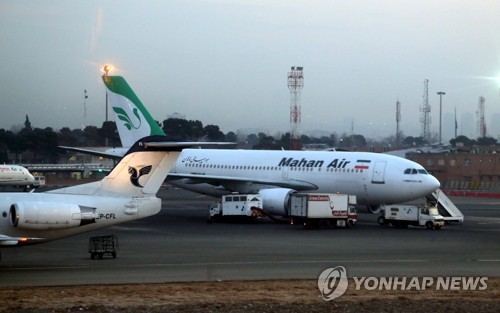
Iran did not cancel its own flights to Baghdad and Muscat. The ban came from the other side — Iraqi and Omani authorities, respectively, refusing to let Iranian aircraft touch down at their major airports after midnight on September 22. Iran’s Civil Aviation Organization confirmed the groundings and said it is now negotiating to divert Baghdad-bound flights to Najaf, an alternative Iraqi airport roughly 160 kilometers southwest of the capital. Services to Istanbul and a handful of other routes continue uninterrupted.
On its face, this is a minor disruption for airline passengers — hundreds of canceled seats across a network of thousands. But the mechanics behind it reveal a far more consequential shift: the United States is weaponizing secondary sanctions to physically excise Iran from regional transit corridors, and neighboring states are complying with growing uniformity.
How the Pressure Works
The mechanism is secondary boycott — penalties that target third-country entities doing business with Iran, even when those transactions have no direct link to the United States. Washington has been applying this lever aggressively against Iran’s aviation sector, arguing that civilian aircraft and airspace are being used by the Islamic Revolutionary Guard Corps and its regional proxies to move weapons, components, and personnel.
According to the Iran-based Tasnim News Agency, the US has been pressing Gulf and Near East governments through a combination of diplomatic channels and financial threat to deny Iranian flights airport access and airspace clearance. Iraq and Oman, both heavily dependent on US security guarantees and integrated into American-dominated financial systems, appear to have folded under that pressure. Several airlines in the region — including carriers in Kuwait and Qatar — have also tightened enforcement, canceling or rerouting flights preemptively rather than risk being tagged by US regulators.
The result is an aviation cordon sanitaire being drawn around Iran by its neighbors — not by Iran’s own choices, and not through any formal coalition agreement. It is coercion achieved through incremental, case-by-case pressure that leaves each government believing it made an independent decision, while the cumulative effect is strategic containment.
From Hub to Island
Tehran’s geographic position has long made it a natural aviation bridge between the Persian Gulf, Central Asia, the Caucasus, and South Asia. For years, airlines in the region routed connections through Imam Khomeini International Airport, taking advantage of competitive landing fees, relatively open airspace, and Iran’s central location. That role is now unraveling in real time.
The loss of Baghdad and Muscat as stopover points is particularly sharp. Baghdad handles significant passenger and cargo traffic flowing between the Gulf and Mesopotamia, serving as a critical node for both commercial travelers and humanitarian supplies. Muscat serves as a gateway to the Indian Ocean corridor, linking Iran to East African and South Asian destinations that previously relied on Omani connectivity. Rerouting to Najaf is a partial workaround, but it adds complexity, reduces capacity, and signals that even alternative Iraqi airports face scrutiny under US pressure — Najaf is smaller, has fewer runway hours, and lacks the customs infrastructure to handle the volume that Baghdad once absorbed.
This is not happening in a vacuum. The US has simultaneously pursued a broader strategy of maritime port blockades, insurance restrictions, and financial strangulation aimed at collapsing Iran’s logistics chains. Aviation is simply the newest frontline in a campaign that spans sea lanes, sky corridors, and banking networks.
The Domino Effect
What happens next matters well beyond the ticket counters. When a country loses its runway access, it loses more than connectivity — it loses leverage in trade negotiations, its ability to project soft power, and its role as an intermediary in regional disputes. Iran’s diplomatic communications with Baghdad and Muscat now travel fewer miles and carry less weight, because the physical presence that underpins influence is being eroded.
There is also an energy dimension that English-language coverage has barely touched. Saudi Arabia has long worried about Iranian drone strikes on its oil infrastructure — a threat that has materialized repeatedly over the past decade, including the 2019 Abqaiq attack that temporarily knocked half of Saudi production offline. If Iran becomes more isolated and more desperate, the risk calculation shifts. Constricted trade routes and diminished economic alternatives could push Tehran toward asymmetric strategies that destabilize the entire Gulf energy corridor. Riyadh is paying attention, and its defense posture is already adjusting.
Who Wins, Who Loses
The immediate winners are the US sanction-enforcement machinery and the Gulf states that have aligned their aviation policies with Washington’s demands, gaining leverage in bilateral negotiations even as they absorb some economic cost. The losers are ordinary Iranians seeking to travel for work, family reunification, or medical treatment — routes that had no viable alternatives before and still do not. Regional logistics companies that built services around Iranian connectivity are also hurting, particularly those operating in perishable goods and pharmaceutical supply chains where hub-and-spoke efficiency mattered.
Airlines face a growing puzzle. Turkish carriers, which continue flying to Tehran, will feel the pain of reduced connecting traffic and slower turnaround times as their Iranian partners lose revenue streams. Gulf carriers already avoided Iran for years; now they can point to sanctions compliance as proof of good judgment while quietly benefiting from rerouted traffic that never materializes through Iranian hubs. Cargo operators who relied on Iranian hubs for transshipment will need to rebuild their networks — a costly and time-consuming exercise that could take years and still yield less efficient routes.
What Comes Next
Iran has hinted at contingency planning. The Civil Aviation Organization’s statement about coordinating with Najaf suggests the government is looking for gaps in the enforcement perimeter, testing whether secondary airports can absorb traffic that major hubs no longer handle. Iranian officials are also exploring arrangements with Syrian and Afghan airports, though those routes come with their own political and security complications. The underlying trend, however, is clear: every time a neighboring state closes its airspace or an airport declines an Iranian landing, the isolation deepens, and the cost of reconnection rises nonlinearly.
The broader question is whether this strategy achieves its stated goal of curbing Iranian military activity — or whether it simply drives Iran further underground, making verification harder and escalation more likely. Washington would argue that containment, even imperfect, is preferable to the alternative of a well-connected Iran with unconstrained access to regional networks. But history suggests that choking off a country’s external links does not neutralize it. It makes it unpredictable, and unpredictability favors adversarial strategies over negotiated ones.
The grounded flights out of Baghdad and Muscat are a small event with large implications. They mark the moment when US sanctions stopped being paper restrictions enforced by regulators and started being physical barriers drawn across maps — one airport at a time, one neighborhood at a time, until the geography of the Middle East looks fundamentally different from what it did five years ago.