Iran's Axis Wins Again—And Asia Feels the Shock
Houthi forces now control Yemen's entire Red Sea coast while Iraq-based militias shut Saudi Arabia's eastern oil pipeline. With two export routes blocked, the pressure falls on Asian buyers who can no longer assume Gulf stability.
The map just shifted under Saudi Arabia’s feet
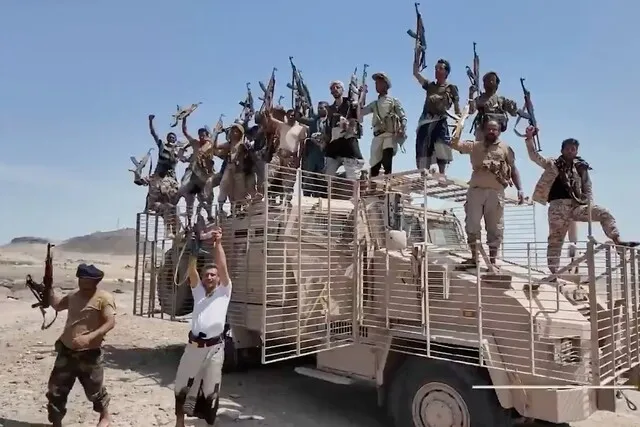
On November 11, the Houthi movement announced it controlled the entire Red Sea coastline of Yemen — from Mocha in the north to Dubab in the south, including the island of Mayun that watches the Bab el-Mandeb strait. The statement was not framed as a military update. Yahya Sarri, the Houthi spokesperson, described it as a fait accompli: other nations’ ships could still pass, but Saudi shipping was blocked.
Two days earlier, Iranian-backed militias in Iraq had struck Saudi Arabia’s East-West Pipeline with drones, damaging exposed pumping facilities and forcing the country’s energy ministry to halt operations. That pipeline — the only route Saudi Arabia had relied on after Iran closed the Strait of Hormuz to commercial traffic — was now offline.
Iran’s Supreme Leader’s adviser, Mohammad Mokhber, called the combined operation a “brilliant victory” on social media. He added, somewhat more pointedly, that the United States and its allies were trapped in a tactical and strategic stalemate, and that America’s domestic consumers would bear the economic cost.
What happened in 72 hours matters far more than the rhetoric.
How Saudi Arabia got here
Saudi Arabia produces roughly 12 million barrels per day. The Strait of Hormuz, through which most of that oil historically flows, has been effectively closed to commercial shipping since the US-Iran confrontation escalated. Riyadh pivoted quickly, rerouting its export through the East-West Pipeline, which carries crude from the eastern fields to the Red Sea port of Yanbu.
Kepler data shows Saudi Arabia shipped an average of 4 million barrels per day through that pipeline in June and July, dropping to 2.4 million in August as conflict intensified. That represented a meaningful share of the kingdom’s export capacity — and the only functioning alternative to Hormuz.
With the pipeline damaged and the Red Sea coast now under Houthi control, Saudi Arabia has no viable overland or sea route for new crude. It can only export from pre-positioned stockpiles already at Red Sea terminals, a strategy with a limited runway.
Bab el-Mandeb is now the chokepoint that matters
The Houthi capture of Mocha, Dubab, and Mayun Island is not simply territorial bragging. These positions give the movement direct line-of-sight artillery and naval drone coverage over the Bab el-Mandeb strait — the narrowest point between Yemen and Djibouti, only about 30 kilometers wide.
Previously, the Houthis had declared a blockade of Saudi shipping on July 20 and attacked tankers from inland positions using anti-ship missiles with roughly 500-kilometer range. That required precise targeting and carried risk of interception. Now, with coastal batteries and maritime drone stations established along the shoreline, the group can engage vessels at close range from multiple directions simultaneously — and does not need to rely on long-range missiles.
Al Jazeera reported that Saudi Arabia no longer appears willing to approach ports near Bab el-Mandeb at all. Aramco’s infrastructure in the area is a standing target. The Houthi objective, as one operative stated plainly, is to prevent Saudi crude from reaching East Asian markets entirely.
The Trump timing problem
President Donald Trump told reporters in Dublin on November 12 that he expects the Middle East conflict to end soon — specifically around the time of the US midterm elections in November — and that oil prices would fall sharply once it does. The remark was calibrated for a domestic audience.
It may also reflect a miscalculation. The Iranian proxy network now controls more territory and strategic chokepoints than at any point since the conflict escalated. An exit from the region under these conditions would cede leverage to Tehran, not reclaim it. Iranian negotiators returning to the table would have every incentive to extract concessions — particularly on sanctions relief — from a position of demonstrated strength.
Alex Batanka, a senior fellow at the Middle East Institute, noted on social media that the Houthi advance on Bab el-Mandeb and the sustained pressure on Saudi shipping lanes are “more than useful” for Iran’s strategic positioning.
What happens next
Iran plans to host or participate in a meeting of Middle Eastern foreign ministers in Oman on November 14 to discuss the future of navigation through the Strait of Hormuz. Foreign Ministry spokesperson Esmail Baghai told Al Jazeera that Iran would share the results of its negotiations with Oman on safe passage and invited Gulf states and Iraq to attend.
That meeting is a signal. Iran is not asking permission to control the strait — it is presenting its control as an established fact and inviting regional actors to negotiate around it.
For Saudi Arabia, the immediate consequence is an export ceiling. Without the East-West Pipeline and with the Red Sea coast contested, the kingdom’s daily oil shipments will contract sharply until either the pipeline is repaired, a new route is opened, or the military situation changes. None of those are likely in the near term.
Why Asia should be paying attention
This story is usually covered through a Washington or London lens — as a US-Iran proxy clash, a question of American credibility, or a European shipping insurance crisis. The Korean outlet Hankeore’s framing of the events as an Iranian victory is not merely propaganda; it reflects a calculation that is now shared by governments across East Asia.
South Korea, Japan, and China together import roughly 70 percent of the oil that passes through the Strait of Hormuz. That dependency is not new. What is new is the realization that the United States may no longer be able or willing to guarantee freedom of navigation in the Gulf on its own terms.
When Trump speaks of an imminent exit, Asian energy ministries hear something different than his domestic audience. They hear a timeline that runs parallel to, not against, the Iranian and Houthi advance. They hear that the security guarantee behind their oil supply is being renegotiated without them in the room.
South Korea’s government has already begun stress-testing its supply chains against prolonged Gulf disruption. Japan’s METI has accelerated discussions with Saudi Arabia about alternative routes and longer-term supply contracts that do not depend on Hormuz. China, meanwhile, has deepened its economic ties with Iran and appears to view Tehran’s regional expansion as a structural advantage rather than a destabilizing event.
The recalibration is already happening
The Houthi capture of Yemen’s Red Sea coast and the strike on Saudi Arabia’s East-West Pipeline are not isolated incidents. They are the visible tips of a broader shift: Iran’s network of allied militias now exercises de facto control over multiple strategic waterways and export infrastructure simultaneously.
The Strait of Hormuz is closed. Bab el-Mandeb is contested. Saudi Arabia’s overland pipeline is damaged. Each development individually would warrant emergency planning. Together, they represent a fundamental change in the geometry of global oil supply.
Asian importers are not waiting for Washington to resolve the situation. They are pricing the possibility that the current configuration — Iran controlling the straits, proxies controlling the coastline, Saudi Arabia managing what it can from stored reserves — could persist for months. That pricing is already showing up in freight rates, insurance premiums, and the terms of long-term supply agreements.
The “brilliant victory” Iran is celebrating is not just a propaganda achievement. It is a structural one. And the countries most exposed to its consequences are not in Europe or the Middle East. They are in Seoul, Tokyo, and Shanghai.