Iran's Strike on US Bases Rewrites Middle East Rules
A Pentagon inspector general report reveals Iran damaged hundreds of US military buildings and destroyed dozens of aircraft across eight countries — a blow that forces Washington to reconsider its entire force posture in the region.
The $184 Million Bill That Doesn’t Tell the Whole Story
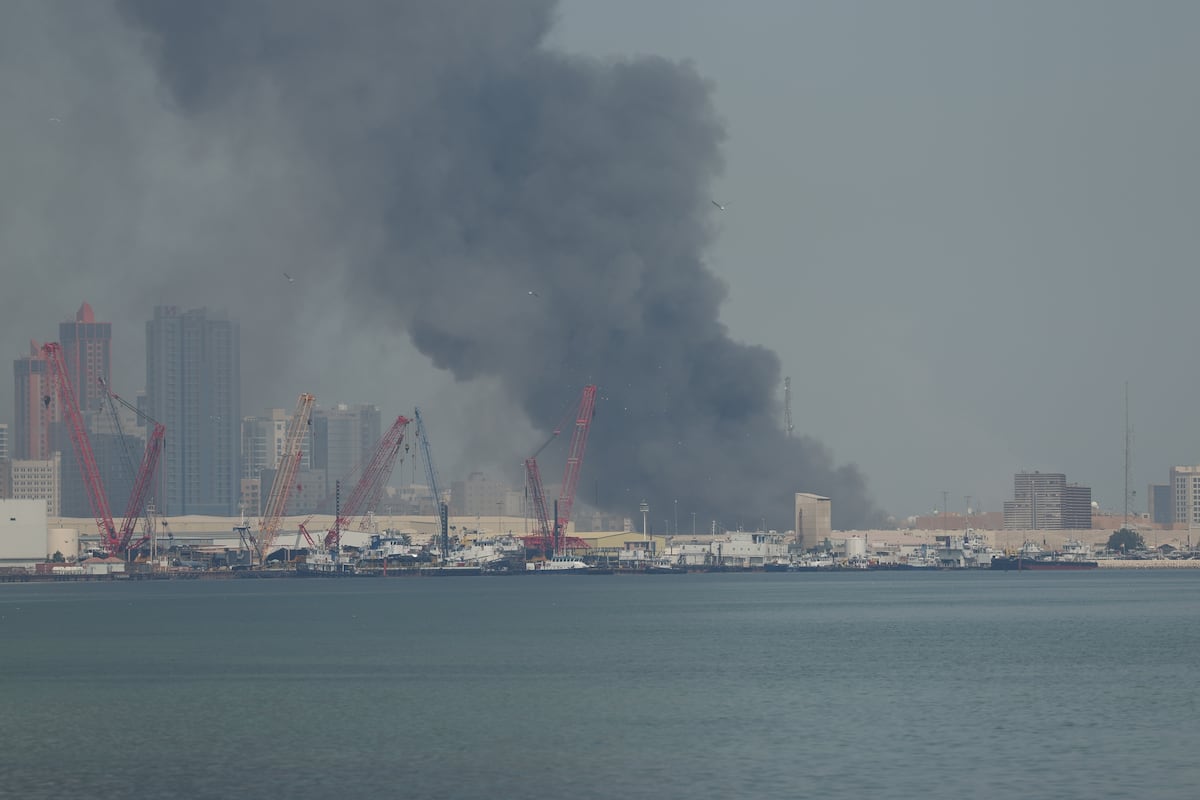
A Pentagon inspector general report released in mid-September confirmed what many analysts had feared but official sources had sidestepped: Iranian missile strikes have physically damaged hundreds of US military and diplomatic buildings across eight countries in the Middle East. The number alone is staggering. The political implications are worse.
The US State Department put the cost of damage to diplomatic facilities at approximately $184 million. But that figure covers only embassies and consulates in Iraq, Kuwait, Qatar, and Saudi Arabia. It does not include the damage to military infrastructure — runways, hangars, command centers, barracks — which the Pentagon declined to estimate because it has not yet decided what its future posture in the region should look like.
That refusal to estimate is itself a signal. The US is still trying to figure out whether its existing base network in the Gulf can survive a determined Iranian strike, and if it can’t, what comes next.
Diplomats on the ground describe a different kind of cost that won’t appear on any spreadsheet. In Baghdad and Erbil, Iraqi officials have grown increasingly reluctant to host US operations from their soil, even as they publicly reaffirm alliance commitments. The damage to the US Embassy compound in Baghdad — including blast walls, power generation systems, and residential quarters — has forced a partial reduction in diplomatic staffing. That creates a vacuum Iranian proxies are quick to fill. In Kuwait, where damage to Camp Arifjan has been extensive, the emir’s government has quietly requested accelerated discussions on burden-sharing, a shift from years of unstinting cooperation. Qatar and Saudi Arabia face similar pressures, each calculating how much American presence costs them politically with their own populations and regionally with Iran.
Operation Epic Fury’s Hidden Costs
Operation Epic Fury began on February 28, 2026, as a US-Israeli response campaign. By late June, the Pentagon estimated it had already consumed $33.4 billion. Twenty-two point three billion went to expended munitions. Three point seven billion covered equipment losses. Another $7.4 billion was spent on costs beyond normal CENTCOM operating expenses.
None of that includes infrastructure repair. The reason is bureaucratic as much as strategic: Congress never appropriated a dedicated fund for the Iran conflict, so the money has been pulled from normal operating budgets — training accounts, maintenance reserves, readiness funds. That means the true cost of the operation is almost certainly higher than $33.4 billion, and the Pentagon is now struggling to fund follow-on operations because its own house is being cannibalized to pay for the war.
The US Transportation Command provides a microcosm of the problem. It flew more than 1,500 missions supporting the operation, surging to 30 or 40 daily flights into the CENTCOM area of responsibility at peak times, plus another 20 to 30 daily flights pushing into the European command for transload operations. That airlift campaign cost nearly $2.4 billion. Most of it has been reimbursed by the military services — so far. The IG report warned that delayed payments are coming as service funding dries up without a supplemental appropriation from Congress.
The second-order effects are already visible. Several Army brigades scheduled for rotation to the region have been postponed as their pre-deployment training budgets were redirected to pay for airlift costs. The Marine Corps has deferred maintenance on its amphibious fleet, a decision that will compound over the next two fiscal years. The Air Force has canceled or reduced training sorties at bases from Nevada to Italy, creating gaps in pilot readiness that cannot be closed by flying more hours later — some training cycles, particularly for complex formations and adversary tactics, must occur in sequence.
Perhaps most consequential is the signal this sends to potential adversaries. China’s military observers have noted that the US is fighting a major conflict without a dedicated congressional appropriation, drawing uncomfortable comparisons to Soviet-era practices where the armed forces competed for resources through ad hoc budgeting rather than strategic planning. Russia has accelerated its own defense production, interpreting American fiscal improvisation as a sign of systemic strain rather than flexibility.
The Aircraft Losses
The most concrete numbers in the report come from CENTCOM’s vetting of Congressional Research Service data, which confirmed dozens of US aircraft destroyed or damaged in Iranian strikes.
Four F-15E Strike Eagles. One A-10 Warthog. Four AH-6 Light Attack Helicopters. One AH-64 Apache. One MH-60 Black Hawk. One MQ-4C maritime surveillance drone. And as many as 30 MQ-9 Reapers.
Thirty Reapers. That is the kind of loss that would normally be impossible to sustain. The MQ-9 is the workhorse of US ISR and precision-strike operations across the Middle East, and the loss of a significant portion of the fleet in a single conflict — mostly on the ground, hit by Iranian missiles rather than in combat — suggests Iran has developed a credible anti-access capability against forward-deployed US forces.
The image of a damaged F-15E on the tarmac at Prince Sultan Air Base in Saudi Arabia, widely circulated, became an uncomfortable symbol. These bases were assumed to be relatively secure. They are not.
The Reaper losses carry implications beyond the immediate operational gap. Each drone represented roughly $3 million in airframe costs and an additional $10 million when factoring in ground control stations, training, and support infrastructure. But the irreplaceable loss is the institutional knowledge embedded in the operator pipeline. The squadron commanders who had built relationships with intelligence assets across the region, the technicians who understood the specific maintenance quirks of aircraft acquired at different times, the tactics officers who had refined strike protocols through years of cumulative operations — these represent a form of capital that cannot be purchased back quickly.
Iran’s ability to target aircraft on the ground also forces a fundamental rethinking of how the US projects power from forward bases. The concept of dispersed operations — spreading forces across smaller, harder-to-target sites — moves from theoretical preference to urgent requirement. But dispersal itself creates new vulnerabilities: longer response times, reduced mutual support, increased logistics burdens, and the need for host-nation permission in multiple locations rather than concentrated access through a few key agreements.
Casualties and the Politics of Counting
The Pentagon reported 18 US military deaths as of late August, with 774 wounded. Those are not battlefield casualties in the traditional sense. They are the result of strikes on fixed, known positions — the same positions whose vulnerability the US had long assumed was manageable. The wounded figure, which nearly quadrupled between June and August, underscores the ongoing nature of the threat. This is not a single exchange. It is a sustained campaign against installations that were never designed to withstand it.
The trajectory of wounded numbers carries political weight. The fourfold increase from June to August coincides with Iran’s shift toward targeting logistics and support elements rather than just combat units — a deliberate strategy to maximize casualties while avoiding the political escalation that would come from hitting command structures or nuclear-related facilities. Medical personnel report that roughly 40 percent of the wounded sustained traumatic brain injuries from blast overpressure, injuries that will require years of rehabilitation and create long-term dependency on the VA system.
Families of service members have begun organizing outside the Pentagon, drawing parallels to Vietnam-era movements but with a crucial difference: this conflict has no clear exit strategy because it has no formal declaration. Veterans Affairs officials are already projecting a surge in disability claims that will strain an system struggling with existing backlogs. The human cost, currently concentrated in military communities across Texas, California, and North Carolina, will reverberate through school districts, local economies, and congressional districts for years.
What Comes Next
The IG report is among the first official assessments of the Iran conflict, and its most important finding may be the one it cannot yet state: America’s base architecture in the Gulf is exposed.
For decades, the US strategy relied on forward presence — large, fixed installations in Bahrain, Kuwait, Qatar, the UAE, and Saudi Arabia that project power and reassure allies. Iran’s strikes have demonstrated that these bases are vulnerable to a coordinated missile campaign. The question now is whether the US can maintain that posture or must redistribute, disperse, and harden its forces — none of which is cheap, and all of which require decisions that are politically difficult.
Gulf allies are watching closely. The damage to US facilities on their soil may make hosting them politically toxic for host governments, even as Iranian aggression makes them fear withdrawal more than they fear Iran. Europe, already stretched by other commitments, will face pressure to fill gaps. And Congress, which has not authorized or funded this war through a dedicated appropriation, will eventually demand answers about what the damage means and what the strategy is supposed to be.
The report’s silence on infrastructure repair costs is not an oversight. It is a placeholder for the strategic reckoning that has not yet happened. When that reckoning comes, it will likely produce one of two paths: a continued but increasingly brittle forward presence that requires constant reinforcement and risks further escalation with each new strike, or a gradual contraction to sea-based and more dispersed land positions that sacrifices the symbolism of presence for the reality of survivability. There is no middle ground that preserves both the old posture and the old assumptions about its security. The $184 million is just the beginning of the bill, and the interest rate is measured in strategic credibility.