Japan Denies Entry to South Korean Scholar Over History Politics
South Korean reformist Cho Kook was turned away at Tokyo airport while en route to a university seminar. The incident reveals how history disputes quietly shape border policy — and who pays the price.
A Scholar Turned Away at the Border
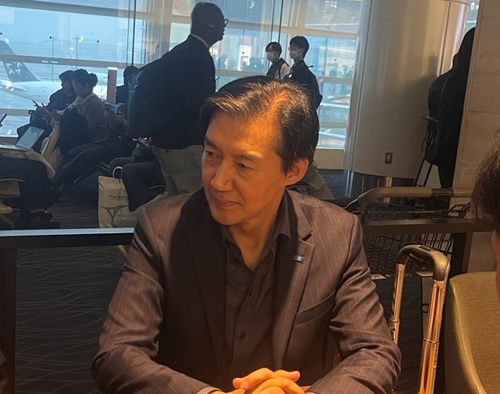
Cho Kook touched down at Tokyo’s Haneda Airport on November 17 intending to participate in a joint seminar with Meiji Gakuin University. He left without having entered the country.
Japanese immigration authorities told him he fell under “grounds for denial of landing under Japanese law,” a phrase deliberately vague enough to avoid scrutiny. No specific citation was offered publicly. His party, the Innovation Party, called the decision arbitrary and demanded an immediate apology from Tokyo. Within hours, three members of the Innovation Party’s parliamentary caucus issued a joint statement condemning the move as “a direct attack on scholarly exchange and a violation of the spirit of mutual respect that both governments have publicly championed.”
The Korean consul general arrived at the airport to protest. Immigration officials did not budge. Cho was escorted back through the same terminal he had arrived through, his boarding pass for the return flight handed to him by an officer who did not make eye contact.
What makes this moment notable is not just that a South Korean academic was blocked at the border. It is that the mechanism of exclusion tells us everything about how history operates in contemporary East Asian diplomacy.
The Unstated Reason
The most widely discussed explanation in Japanese media points to Cho’s May 2024 visit to Dokdo — the islets known as Takeshima in Japan. At the time, Cho was serving as party leader and criticized the Yoon Suk Yeol administration’s Japan policy as “surrender diplomacy.” Japan’s foreign ministry responded within days, calling his remarks “extremely regrettable” and reaffirming its sovereignty claim. Japanese outlets including the Asahi Shimbun and MainichiShimbun noted that the timing of the visa denial — nearly two years after the original incident — suggested a delayed or procedural rather than reactive calculus, though no official timeline was provided.
No one in either government has linked that 2024 incident directly to the 2026 border decision. But in diplomatic practice, causation rarely needs to be stated aloud.
A secondary theory — raised by some observers but never confirmed — is that Cho’s prior criminal record may have factored into the assessment. Japanese immigration law allows denial of entry for individuals deemed to threaten public order or national security, and past legal troubles can qualify. Whether this played a role here remains unclear, and speculation should be treated as such until Tokyo provides details. What is worth noting is that this is the first time the prior criminal record angle has surfaced in any credible reporting; it originated in a single Japanese-language outlet and was not picked up by English-language correspondents based in Tokyo or Seoul.
Who Wins, Who Loses
The direct loser is straightforward: Cho himself. He traveled thousands of miles for an academic engagement and returned home empty-handed. Universities on both sides lose credibility when scholarly dialogue becomes contingent on political compliance.
But the deeper loser is institutional trust between the two governments. South Korea had signaled, in various diplomatic channels, that it wants to move past decades of historical friction toward a more pragmatic partnership. Blocking a scholar mid-transit sends the opposite message — one that says historical grievances remain operational tools, not archived concerns.
Japan gains nothing measurable from this. There is no domestic political audience impressed by a visa denial issued on ambiguous legal grounds. If the goal was to signal disapproval of Cho’s positions, the method was disproportionate and poorly calibrated. A travel advisory, a public rebuke, even a quiet conversation between ministries would have carried the same signal without the theatricality of a turn-away at the gate. For Japan’s own academic community, the precedent is unwelcome: if South Korea begins matching selective visa denials, researchers from both sides will find their ability to collaborate constrained not by funding or policy preference but by the political temperature between capitals.
The Summit Context Matters
Reports indicate this incident occurred ahead of planned high-level discussions between Seoul and Tokyo. When governments speak of building a “future-oriented relationship,” they are usually referring to trade coordination, intelligence sharing, or trilateral cooperation with the United States. None of those conversations survive intact when one side demonstrates that academic and cultural exchanges can be weaponized at will.
If Cho’s seminar was part of a broader academic exchange framework, its cancellation removes a low-stakes confidence-building measure and replaces it with a diplomatic friction point. That is not accidental. It is structural.
University administrators on both sides have reportedly begun internal reviews of upcoming collaborative events with counterpart institutions. One source at a Seoul-based research center said invitations to Japanese partners now routinely include clauses about “contingency planning” should travel restrictions intervene — language that did not appear in similar agreements six months ago. The practical effect is a slow contraction of intellectual interchange that no treaty text captures and no press release mentions.
Why Academics Become Target Practice
This is not the first time a South Korean has faced border complications in Japan over historical disputes. Japanese immigration authorities operate with wide discretion in visa adjudication, and there is no independent judicial review process comparable to what exists in other democracies. A decision to deny entry can stand simply because the burden of proof rests on the applicant — who is already outside the border.
The consequence is a system where scholars, journalists, and cultural figures find themselves navigating a landscape in which their professional identities offer no protection. Academic invitations do not guarantee admission. Public profiles that include positions on disputed territories can become permanent markers in immigration databases.
For English-language readers unfamiliar with the specifics of the Dokdo/Takeshima dispute, the practical implication is simpler: cross-border intellectual exchange between Japan and South Korea now carries a political risk that has no equivalent in similar relationships elsewhere in the region. Scholars working on Northeast Asian security, colonial history, or maritime law are the groups most likely to encounter this form of administrative friction. The ripple extends beyond history scholars — economists tracking supply-chain dependencies, public health researchers coordinating pandemic response frameworks, and climate policy analysts studying regional emission standards all operate in an environment where political goodwill, however fragile, acts as informal infrastructure for professional collaboration.
Second-Order Effects
The incident will likely produce consequences that outlast the news cycle. First, South Korean academic institutions may begin requiring students and faculty traveling to Japan to sign declarations acknowledging the political risks involved — a precautionary measure that signals how normalized this kind of friction has become. Second, Japanese universities that maintain active partnerships with Korean counterparts may face pressure from domestic nationalist groups to reassess those ties, particularly if the visa denial triggers retaliatory measures from Seoul. Third, third-party countries and multilateral organizations that rely on Japan-South Korea academic collaboration — including U.S.-funded research initiatives and UNESCO-affiliated programs — will need to recalibrate expectations about the reliability of bilaterally sponsored scholarly exchange.
None of these outcomes are dramatic on their own. Together, they represent a gradual deprioritization of people-to-people contacts in favor of state-managed diplomacy, a shift that favors ministers and foreign ministry bureaucrats over professors, graduate students, and independent researchers.
What Happens Next
The Innovation Party’s demand for an apology puts pressure on Tokyo to respond. If Japan issues a clarification — even a narrow one explaining the legal basis — it could defuse the immediate diplomatic spasm. If it refuses or doubles down, the incident becomes a recurring reference point in bilateral rhetoric, repeated each time tensions rise.
Either way, the path forward requires acknowledging what this episode revealed: that scholarly engagement between two governments can no longer be assumed neutral. Researchers, universities, and conference organizers should expect political vetting to become a routine part of any proposal involving officials with documented stances on sensitive historical questions.
And diplomats on both sides should consider whether the symbolic cost of these border decisions outweighs whatever strategic messaging they intend to send. The next time a South Korean scholar faces a similar blockade — or vice versa — the precedent set today will already have been cited twice before the story fades from memory. Academic borders, once hardened by administrative fiat, rarely soften on their own. The question is not whether history will keep reshaping who gets through the gate. It is who decides when the gate should stay open.