Japan Finally Lifts Rates. Where Does the Yen Carry Trade Go Next?
The BOJ's 31-year-high rate hike to 1.25% signals the end of cheap yen for good. Asian investors are scrambling to redeploy capital — and the yuan and Swiss franc may be the next beneficiaries.
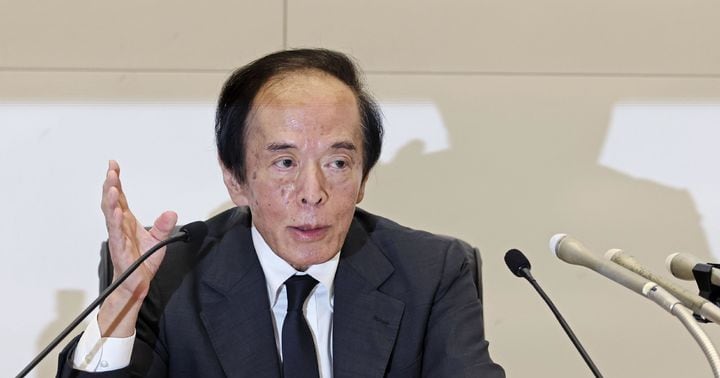
The Boy Has Spoken
The Bank of Japan finally did what everyone expected and nobody truly prepared for. On September 18, it raised its base rate to 1.25% — a level not seen since April 1995. Thirty-one years. That is the kind of timeline that defines monetary eras.
The vote was 7-2. Two dissenters — Asada Toichiro and Sato Ayano, appointees of the Takachi administration — held out for a hold. But the direction is unmistakable. The BOJ now sees structural inflation closing in on its 2% target, wage growth spreading into prices, and import costs rising faster than anyone anticipated.
What happened next is the part that matters for the rest of Asia.
Yen Was Never Free
The yen carry trade was always a bet against the future. Investors borrowed in a currency the BOJ had pledged to keep subzero, then deployed those proceeds into higher-yielding assets across emerging markets, commodities, and equities. It worked because the BOJ believed it could print forever. It worked because the world needed cheap funding more than it needed Japanese monetary normalcy.
That bet is now unwinding.
The yen dropped 0.6% against the dollar immediately after the announcement, trading around 156.70. Markets had priced in the hike. What they had not priced in was the speed — this was the second increase in three months, compressing the interval from the previous six-month cadence to half that. The BOJ is accelerating, and the market is watching for the next move.
What makes this particularly jarring for institutional players is the erosion of the yield spread that sustained the strategy for decades. A yen borrowed at 1.25% and deployed into Thai baht bonds yielding 3.2% still offers a positive spread, but the margin is thinner than the 200-plus basis points that defined the previous era. That compression hits leverage models directly. Investors running 10x or 15x leverage on carry positions see their returns halved overnight, and some of those positions simply cannot be sustained at the new cost of capital.
Where Capital Flows Next
For Korean investors, the implications cut two ways. First, the carry trade that funded yen-denominated borrowing is facing its most aggressive unwinding cycle since the global financial crisis. Traders who built positions on the assumption of prolonged yen weakness are now recalibrating. Second, the regional spillover is real: KRW assets that benefited from cheap yen funding are seeing their cost of capital rise almost overnight.
The question is where the displaced capital lands.
The yuan is the most obvious candidate. Chinese bonds offer yields above Japanese rates while the People’s Bank of China has no intention of tightening. For a Korean fund manager who needs to redeploy yen proceeds, the offshore yuan market is the logical next stop — higher yield, lower political risk, and a currency the BOJ can no longer undercut. The 3-year China Development Bank bond currently yields around 2.4%, compared to the 1.25% cost of yen funding. After hedging costs, which have widened dramatically following this week’s volatility, the net spread is still attractive — and the PBOC’s accommodation of yuan-denominated borrowing keeps the floor lower than anything Tokyo will offer for the foreseeable future.
The Swiss franc is less obvious but equally telling. It is the other traditional safe haven that has been sleeping through the entire low-rate era. As the BOJ signals continued tightening, the Francophone corridor becomes a destination for risk-off capital that was previously stuck in yen-funded positions. The SNB has already signaled it will not follow the BOJ into further tightening, leaving the CHF-JPY spread in uncharted territory. This is not a high-yield play — it is a preservation play. And in a moment like this, preservation is the thesis.
Korea’s Real Exposure
The Korean won itself is not the primary beneficiary or victim here. What matters is the institutional positioning — how much yen funding sits behind Korean bond portfolios, how deeply domestic asset managers have relied on the carry trade to boost reported returns.
That leverage is being repriced. Korean investors who borrowed yen at 0.5% to buy Korean bonds yielding 3.5% are now facing a 1.25% funding cost with expectations of further increases. The yield differential has shrunk from 300 basis points to roughly 225. That gap compression is not abstract — it is what drives allocation decisions across every major pension and insurance fund in Seoul.
The BOJ’s own assessment that financial conditions remain accommodative despite the hike is precisely the kind of signal that forces portfolio rebalancing. “Accommodative” in Tokyo means something different than “accommodative” anywhere else. The message is clear: the epoch of free yen money is over, and the adjustment will be incremental but relentless.
A detail worth flagging: Korean corporate borrowers with yen-denominated debt are facing a second-order squeeze. Companies like Samsung Electronics and Hyundai Motor, which have historically issued yen bonds to fund expansion and working capital, now face refinancing at materially higher rates. Hyundai’s latest yen bond issuance at the start of 2024 carried a coupon near 0.6%. Any replacement issuance in the coming months will likely price at 1.8% to 2.2%, adding hundreds of billions of won in annual interest costs across the corporate sector. The KOF rating on these obligations has not changed — but the cash flow hit is immediate.
The Acceleration Risk
The most underappreciated aspect of this decision is the pace. The BOJ has compressed its tightening cycle from six-month intervals to three-month intervals in a single move. If the next hike comes in December at the same cadence, the base rate could reach 1.75% by early 2027. That trajectory changes everything about how Asian investors price regional risk.
The yen’s immediate weakness against the dollar — rather than a rally that many expected from a hawkish surprise — tells the real story. Markets are not worried about the hike itself. They are worried about what comes next.
What worries markets most is not the rate level but the implied path. A 1.25% base rate is high by Japanese standards. A path that leads to 2% within a year is a paradigm shift — and paradigm shifts are where capital moves fastest. The question for traders is not whether the BOJ will hike again, but how quickly the next one arrives and how far the curve extends.
What to Watch
The BOJ governor’s press conference at 3:30pm JST will set the tone. Every word about data dependence, inflation expectations, and the path forward will be decoded by portfolio managers across Seoul, Tokyo, and Hong Kong.
The key variable is not the current rate but the implied path. Watch for any language suggesting the BOJ views the 2% inflation target as achievable within a single calendar year — that would be the clearest signal yet that further acceleration is baked into the outlook. Also monitor the JGB yield curve: if the 10-year yield突破s 1.2%, the BOJ’s quantitative tightening is gaining traction, and the carry trade unwinds accelerate rather than drift.
The Nikkei is already giving us a readout. The index dropped 1.4% in afternoon trading after the announcement, with export-heavy names leading the decline. This is not panic — it is repricing. But the direction is clear.
For now, the carry trade is looking for a new home. The yuan, the franc, and perhaps even some emerging market bonds are on the receiving end of a lot of repositioning. The question for Korean investors is not whether to adjust — it is how much of their portfolio was built on the assumption that cheap yen would last forever, and how painful that correction will be when it doesn’t.
The ones who adjust first will have the better positions when the dust settles. The ones who wait will be selling into the very liquidity they’re hoping to find.