Japan's First AI Voice Ruling Draws a Line — Without Saving a Voice Actor
Tokyo District Court became the first in Japan to recognize voice as a protectable publicity right — but still dismissed voice actor Tsuda Kenjiro's lawsuit against TikTok. The narrow reasoning creates a framework that will reshape how platforms, voice-cloning startups, and creators operate across Asia and beyond.
The ruling that isn’t what it looks like
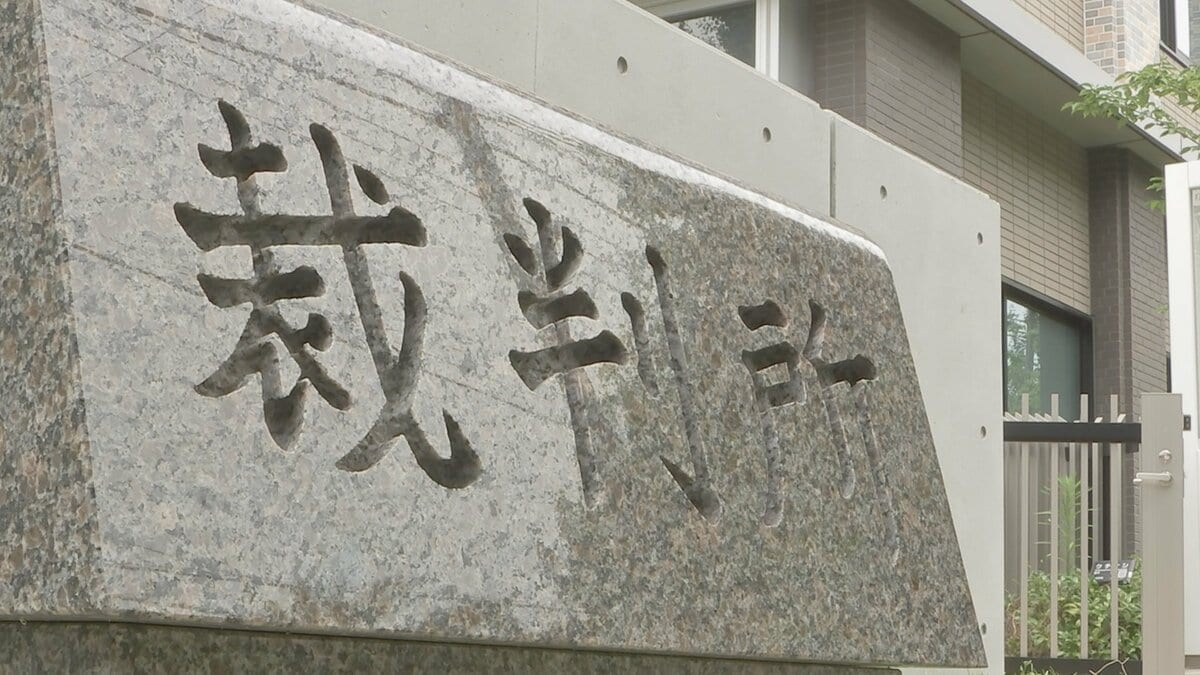
Tokyo District Court just issued its first-ever decision on whether a person’s voice qualifies as a protectable publicity right in the age of generative AI. That alone makes it a landmark. But the case also dismissed the specific lawsuit brought by famous voice actor Tsuda Kenjiro against TikTok’s operating company — a detail that will be twisted in every direction over the coming months.
The nuance is the point. The court said voice can be protected. It then said Tsuda didn’t meet the bar in this particular case. That gap — between recognition and remedy — is where the real legal architecture of the AI era is being drafted, and it will echo far beyond Japan’s borders.
Who Tsuda Kenjiro is and why this case landed
Tsuda is one of Japan’s most recognizable voice actors. His career spans decades of anime, video games, and narration work. A voice like his is essentially a brand — audiences identify characters and products through timbre, cadence, and texture the way Western audiences identify a singer’s tone. That cultural reality matters when you’re asking whether the law should protect it.
He sued TikTok’s Japanese operating company after discovering videos that used generative AI to replicate his voice without permission. The videos appeared on a platform where short-form content moves fast and attribution is thin. Tsuda asked the court to order their deletion.
TikTok, as the platform operator, raised the standard defensive arguments: it was a conduit, not a publisher, and Japanese law had no explicit precedent for treating voice as a standalone intellectual property right. The court had to answer a question no Japanese tribunal had formally confronted before.
What the court actually decided
The Tokyo District Court held that voice falls within the scope of publicity rights — a legal concept in Japan that protects the commercial value of a person’s identity, including name, likeness, and persona. The court’s reasoning treated voice not merely as an audio recording but as an identifiable attribute of a person’s public persona, one that carries economic value when used commercially without consent.
That is the part legal scholars will cite for years. Japanese courts have long protected image and name under the broader publicity-right doctrine. Extending that logic to voice is a meaningful step, especially in a jurisdiction where copyright law has historically been structured around fixed expressions rather than personal attributes.
But the court then found Tsuda’s claim insufficient on the facts. The judgment did not rest on a narrow reading of “voice” as unprotected; it rested on the specifics of how the alleged infringing content was presented, the degree of identifiability, and whether Tsuda could demonstrate that a reasonable viewer would associate the AI-generated clips with him personally. Those are evidentiary questions, not theoretical ones — and they matter enormously for what comes next.
Why the dismissal matters more than the recognition
A headline that reads “Court recognizes voice as publicity right” sounds decisive. It is not. The dismissal means no injunction was granted, no damages awarded, and no platform obligation was created for this case. Platforms can read the ruling and conclude they still have operational breathing room — provided they respond to takedown requests when identifiability is clear.
For creators, the opposite risk is equally real. Voice-cloning startups that have been waiting for legal clarity now have a signal: the door is open, but the threshold is higher than many assumed. Replicating a voice in isolation may not be enough to trigger liability. The content must make the original persona sufficiently identifiable to a reasonable audience member.
That identifiability standard is both the ruling’s greatest contribution and its greatest ambiguity. It mirrors approaches in other jurisdictions — the EU’s emphasis on personality rights, the United States’ evolving right of publicity cases — but it is being applied in a context where generative AI can produce voice-like output that is technically accurate yet perceptually ambiguous. Courts will spend the next several years sorting out what counts as “sufficiently identifiable.”
What this means for TikTok and other platforms
TikTok’s position in this case was straightforward: it operates a hosting platform, not a creation tool. The court did not rule against that framing. It did, however, implicitly acknowledge that voice is within the class of protectable attributes. That shift changes the calculus for every platform that hosts user-generated content in Japan.
The practical effect will likely come through enforcement, not through the judgment itself. If rights holders can point to this decision and argue that voice deserves the same protective posture as image and name, platforms will face more takedown requests and, eventually, more litigation testing the identifiability line. Expect content-identification systems for voice to move from experimental to essential over the next 18 months.
Creators using voice-cloning tools on the platform should also expect increased friction. The ruling does not ban voice replication. It makes clear that replication carrying sufficient identifiability risk can be challenged. That distinction will drive both product design and legal strategy across the creator economy.
The global ripple
Japan does not set global precedent the way some jurisdictions do, but its civil-law tradition and its market size give its decisions outsized influence in Asia. South Korea, Taiwan, and Singapore all face the same underlying question: does a person’s voice deserve legal protection equivalent to their image? A Japanese district court saying yes — while carefully narrowing the remedy — provides a template that other Asian courts can adapt without adopting foreign common-law doctrines.
In the United States, right-of-publicity cases are already splintering along state lines. The Texas and California approaches differ, and federal proposals have stalled. Japan’s reasoning offers a middle path that some US advocates may find useful: protect the attribute, but require demonstrable identifiability before triggering liability. That framework could appear in American filings within months.
The European Union is moving in a different direction through the AI Act and its ongoing personality-rights discussions, which emphasize consent and transparency rather than the identifiability standard this case employed. The contrast between the EU’s preventive approach and Japan’s remedial one is already shaping how multinational companies structure their compliance strategies for Asian markets.
The longer arc
This ruling is not the end of the voice-protection debate in Japan. It is the beginning. A district court decision can be appealed, and the identifiability standard it adopted will be tested in higher courts. Lower tribunals across the country will now cite it whenever voice-related disputes reach them. Rights-holders will bring new cases with stronger evidentiary records. Platforms will adjust their policies in anticipation.
What makes this moment worth watching is not the outcome for Tsuda Kenjiro. It is the framework the court built around him — a framework that acknowledges voice as a protectable interest while demanding proof that the public would actually connect the AI output to the real person. That standard is harder to meet than a blanket prohibition, but it is also more durable. Blanket bans struggle against technological change. Identifiability standards evolve with the technology.
The AI voice question is no longer theoretical in Japan. The courts have spoken, and they have spoken narrowly. Everyone who builds, hosts, or performs with voice in the AI era should be listening closely to what that narrowness means.
The takeaway
Japan’s Tokyo District Court drew a line. Voice is protected. But protection requires identifiability. The dismissal of Tsuda’s claim was not a contradiction of that principle; it was its application. The real story is the standard the court chose — one that prioritizes how audiences perceive AI-generated output over how technically accurate the output may be. That standard will shape litigation, product design, and platform policy for years. And it will be studied by courts and policymakers worldwide who are watching how Japan navigates a problem every other jurisdiction is also struggling to define.