Japans First-Mover Play on AI Education Isnt Just About Schools
Japan will mandate AI and information education from elementary school starting in 2030, aiming to fill a projected shortfall of 3.4 million tech-savvy workers by 2040. The move is a quiet but decisive repositioning of Japanese human capital — one Western edpolicy watchers are largely ignoring.
A quiet curriculum overhaul with loud implications
Japan just laid out the most aggressive national AI education plan among major developed economies — and almost no one outside Tokyo is paying close attention.
The Central Council for Education released a draft curriculum revision on August 31 that would make AI literacy and information education mandatory from elementary school onward. The timeline is specific: elementary school implementation begins in fiscal 2030, middle school in 2031, and high school in 2032. Information education — the broader category that includes AI — starts rolling out as early as fiscal 2026, two years before the full AI curriculum kicks in.
The driving number behind this isn’t pedagogical idealism. It’s a workforce gap. The Ministry of Economy, Trade and Industry estimates Japan will face a shortage of approximately 3.39 million workers capable of developing and deploying AI and robotics by 2040. That figure alone should signal that this isn’t about adding a computer science elective. It’s about recalibrating an entire generation’s relationship with digital infrastructure before that generation enters the labor market.
Why this matters beyond Japans borders
Most Western education analysis treats AI curriculum debates as domestic issues — concerns about screen time, teacher readiness, or digital equity. That framing misses the strategic dimension Japan is explicitly invoking.
The draft itself states that mobilizing all resources including digital technology for every child is essential to the nations future. The language is deliberate. Japan is treating AI literacy as national infrastructure, comparable to how the United States rebuilt its science curriculum after the Soviet satellite launch in 1957, or how China has quietly embedded coding and AI fundamentals into provincial education standards over the past decade.
Here is what English-language policy circles routinely overlook: Japan is not playing catch-up. The 2030 start date for elementary AI education predates any similar mandate in the European Union, the United States, or the United Kingdom. While Brussels debates the AI Act and American states fragment over classroom technology rules, Japan is implementing a unified, nationally standardized program spanning four decades of schooling.
What students will actually learn
The curriculum details reveal a progression that is more sophisticated than a simple coding-for-everyone approach.
Elementary students in grades three and above will encounter an information domain within the comprehensive exploration period, covering generative AI characteristics, internet risks, and basic programming. The decision to start at grade three rather than grade one is notable — it reflects a judgment that foundational digital literacy must precede AI interaction, not replace it.
Middle school restructuring is where the plan gets substantive. Technical and home economics will split into two distinct subjects, with a new information and technology discipline created. Weekly instructional time for information studies will approximately double to around two class periods. Students will study data analysis, algorithms and their social impact, and physical AI — machines controlled through AI systems, a category that bridges software literacy with the robotics manufacturing sector Japan still leads globally.
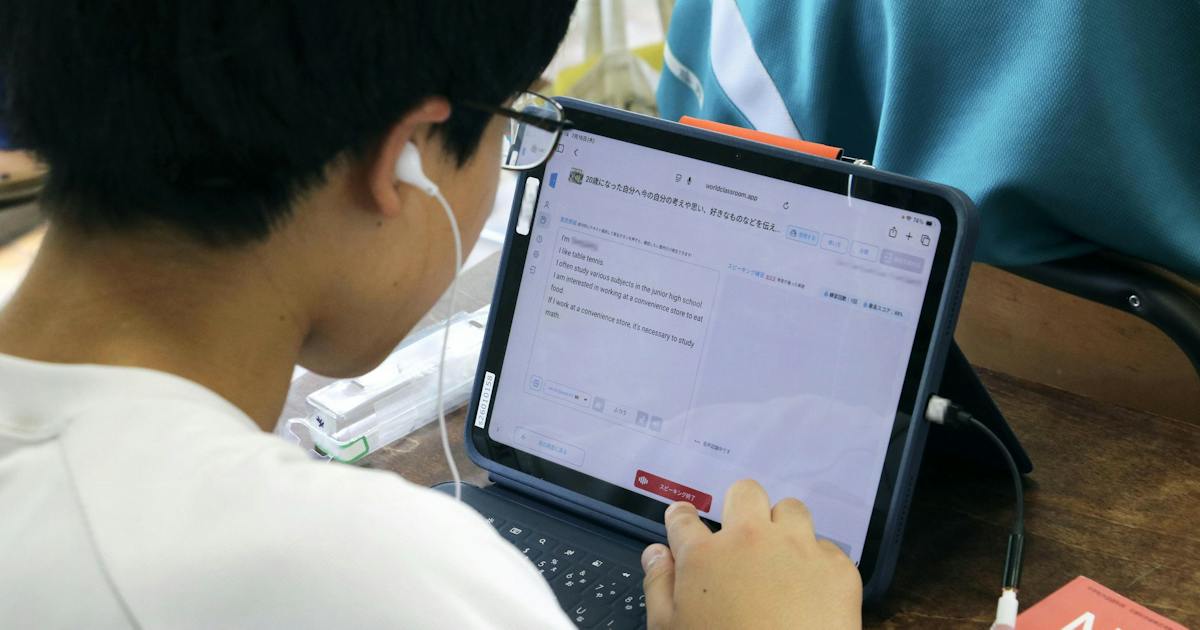
High schools will expand the information I and information II courses already made compulsory in 2022. For the first time, the curriculum explicitly addresses using AI as a learning tool itself — for example, employing generative AI in English language research tasks and inquiry-based learning. This is a subtle but important shift: AI moves from being merely the subject of study to functioning as an instrument of study.
The Japanese language component also warrants attention. The draft restructures high school Japanese courses to ensure STEM-track students engage with literature. Officials frame this as developing empathy and emotional understanding in an age when AI can process text but not meaning. Whether that philosophical argument translates into pedagogical effectiveness remains unproven, but it reveals a government trying to define what human-specific skills matter most.
The flexibility architecture
Perhaps the most interesting element of the draft is not what it mandates but how it allows deviation. A new adjusted class hour system permits schools to reduce instruction in any subject by up to 15 percent, redirecting that time toward priority areas or new disciplines. This grants unprecedented local autonomy within Japans traditionally centralized education system.
Additional provisions address populations normally absent from curriculum planning. Non-attending students will receive individualized curricula enabling credit recovery, online participation, and social skills training. Gifted students can skip portions of regular classes to pursue university-level research or coursework in their area of talent.
These accommodations suggest Japan is designing a system meant to absorb demographic reality — declining birthrates, irregular school attendance, and uneven student ability — rather than fighting against it.
Who wins and who loses
The winners are clear. EdTech companies operating in Japan will face guaranteed demand for AI-native learning platforms, assessment tools, and teacher training materials. Robotics firms benefit from a pipeline of students familiar with physical AI concepts. Metropolitan schools with existing digital infrastructure will adapt faster than rural counterparts, potentially widening an equity gap that Japans education system already struggles with.
Teachers are the implicit losers in the near term. The draft acknowledges the need for extensive instructor training and material development but provides no new staffing or funding commitments. Japans teaching workforce, already strained by long hours and low prestige, will bear the implementation burden without a corresponding increase in capacity.
The curriculum will also privilege students with home internet access and digital devices, potentially deepening the advantage enjoyed by urban families who can supplement school instruction with private tutoring in coding and AI literacy — a pattern well documented in South Korea and China.
What happens next
The Council for Education will conduct public comment and aim to submit its final advisory report by the end of 2026. The Ministry of Education plans to promulgate the elementary and middle school guidelines by late 2026 and high school guidelines by late 2027. Implementation follows on the previously noted schedule beginning in 2030.
That timeline creates a tight window. Two years separate the final advisory report from full elementary implementation. Teacher recruitment, textbook approval, device procurement, and parent communication must compress into a period that Japans bureaucratic process typically treats as leisurely.
The broader question is whether Japan can sustain this initiative against competing priorities. The same government that drafted this curriculum is also grappling with a shrinking workforce, an aging population, and intensifying technological competition from China and the United States. Education reform moves slowly. Demographic decline does not.
What makes this plan historically notable is not its ambition — many countries have announced AI education goals — but its specificity and its lead time. Japan is committing to a fifteen-year classroom transformation before the technology it teaches about has fully matured. That either reflects strategic foresight or institutional momentum divorced from technological reality. Only the next decade will determine which.