Japan Game Studio Cuts Staff to 1/30th With AI — Here's What It Means
A Tokyo startup says it cut its game development headcount to one-thirtieth using coordinated AI agents, with humans moving into oversight roles and a three-day workweek. The claim is an early concrete data point for creative-sector labor displacement.
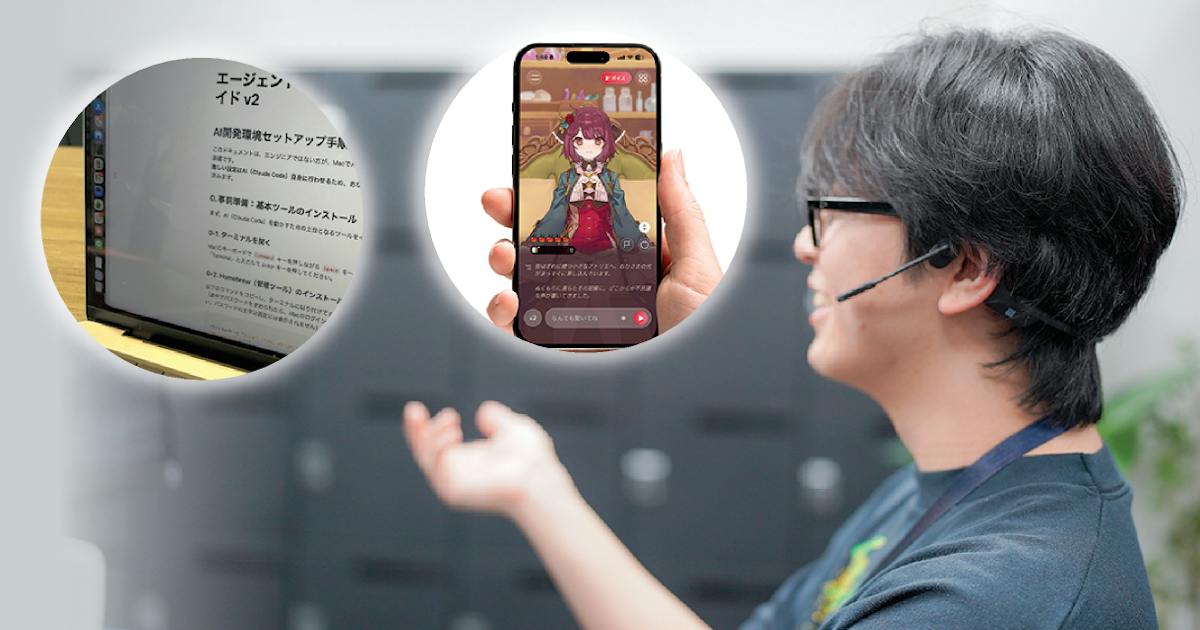
A Tokyo studio says it ran its game developers out the door. Thirty of them were left for every one that stayed.
SpiralAI, a startup in Tokyo’s Chiyoda ward, has reportedly cut its game development headcount to roughly one-thirtieth of its prior size after deploying coordinated AI agents across its production pipeline. The move also unlocked a three-day workweek for the remaining staff — a dramatic restructuring that landed in the Nikkei on October 21, 2026, and arrives as one of the sharpest concrete data points yet on how fast AI is displacing creative-sector labor.
The headline number is what makes this story worth watching internationally. For years, discussions about AI in game development have stayed abstract: tools that assist with concept art, generate placeholder assets, or speed up coding by some marginal percentage. Nobody has published a before-and-after headcount ratio this stark outside of internal investor presentations. If the claim holds up under scrutiny, it reshapes the timeline for creative labor disruption from a gradual transition into something closer to an event.
How they did it: AI agents, not AI assistants
The distinction matters. Most companies experimenting with AI at work today use human-in-the-loop models — an AI generates output, a human reviews it, corrects it, and approves it before the next step. The human remains the bottleneck. Productivity gains are incremental because the workflow hasn’t fundamentally changed; it just has a faster first draft.
SpiralAI is describing something structurally different: a human-on-the-top architecture. Multiple AI agents coordinate with each other autonomously, completing individual work segments without waiting for human sign-off at every stage. Humans shift into management and final-approval roles rather than execution roles. According to the report, director Murakami Yusuke, 29, begins his day by speaking tasks into a headset microphone — less a creative process than an orchestration one.
This is the architecture most AI consultants predicted for 2025 and 2026. What’s unusual is seeing a company put it into production at this scale and publish the result publicly rather than keeping it as a proprietary advantage.
Why the three-day workweek matters
The three-day workweek isn’t a benefit addition. It’s structural proof that the work volume has genuinely collapsed. Companies that reduce headcount but keep the same workload simply work their survivors harder until turnover replaces the departed. SpiralAI’s ability to sustain reduced hours while maintaining output signals that the AI agents are carrying the production pipeline end to end — not just accelerating parts of it.
Japan is particularly significant here because the country’s game industry has been culturally resistant to this kind of restructuring. Japan’s development studios are known for dense teams, long hours, and seniority-based hierarchies. The same industry that produces globally dominant IPs — from Nintendo to Square Enix to FromSoftware — has operated on the assumption that creative quality requires proportional human input. SpiralAI’s claim directly contradicts that assumption on its home turf.
Who wins, who loses, and what happens next
The winners are clear: SpiralAI’s investors, if the production quality hasn’t degraded alongside the headcount. Consumers who get games faster and cheaper. The remaining employees who gain time, assuming the three-day week is real and not a temporary retention gesture.
The losers are harder to see from Tokyo but will be felt globally. Game development is one of the largest creative employment sectors in Japan, employing tens of thousands of artists, animators, programmers, and QA testers. A single studio’s move doesn’t bankrupt the industry, but it sends a pricing signal. If one startup can deliver at 1/30th the headcount, every competitor faces pressure to do the same or lose on cost. The competitive dynamic shifts from creative differentiation to efficiency differentiation — a dangerous turn for an industry whose product is, by definition, creative.
Mid-career developers in execution roles are the most exposed. Junior developers who enter the industry expecting to learn craft through iterative production work may find the on-ramp disappears entirely. There is no equivalent career ladder if there are no production roles to climb.
The verification problem
This is where international coverage should apply appropriate skepticism. The Nikkei article is behind a paywall for full access, and the specific details — team sizes before and after, revenue figures, release schedule, player reception — aren’t fully public. One industry commentary in the same piece frames SpiralAI as a typical pioneer example of autonomous AI agent transformation, which reads like promotional positioning rather than independent audit.
The 1/30 figure could be accurate, inflated, or selectively defined. “Development staff” might exclude artists contracted through agencies, QA teams, or live-ops personnel. It might count only full-time employees at a specific point in time. Without independent verification, the number should be treated as a directional claim rather than a settled fact.
That said, the direction is what matters. Whether the real ratio is 1/10, 1/20, or 1/30, the structural shift is already happening. Several other Japanese companies are testing similar models: Honda reported AI agents debating each other to shorten development cycles, Terumo deployed AI for personnel reassignment proposals, and the fashion company World claimed AI-designed clothing sold out. These aren’t game companies, but they’re all creative or knowledge-work domains where the same agent-based architecture is being tried.
The global implication
What Japan is doing here is often a quarter ahead of the rest of the world in adopting workplace AI precisely because labor shortages — not abundance — are the primary driver. Japan’s shrinking population makes labor-saving automation a survival strategy rather than a cost-cutting luxury. That urgency accelerates adoption curves that reach the rest of the world later, often with less institutional preparation.
English-language coverage has tracked AI’s impact on coding, customer service, and legal research. It has not yet quantified the impact on game development, which is the canary in the coal mine for all creative work. Visual design, narrative structure, sound engineering, animation — these are the skills AI is now touching in production pipelines, and the labor-market consequences will ripple outward into advertising, film, animation, and publishing.
SpiralAI’s claim is a single data point. But it’s the first publicly stated one that gives the abstract discussion a precise shape. Whether it holds up to scrutiny or turns out to be an outlier, it marks the moment when the creative-industry labor question stopped being theoretical and became operational.