Japan Hikes Foreign Residency Fees 20x — and Ignores Its Own Labor Crisis
Japan is raising residency fees by up to 20 times, a move critics call punitive just as companies scramble for foreign workers. Western readers will miss why this matters far more than the headline number suggests.
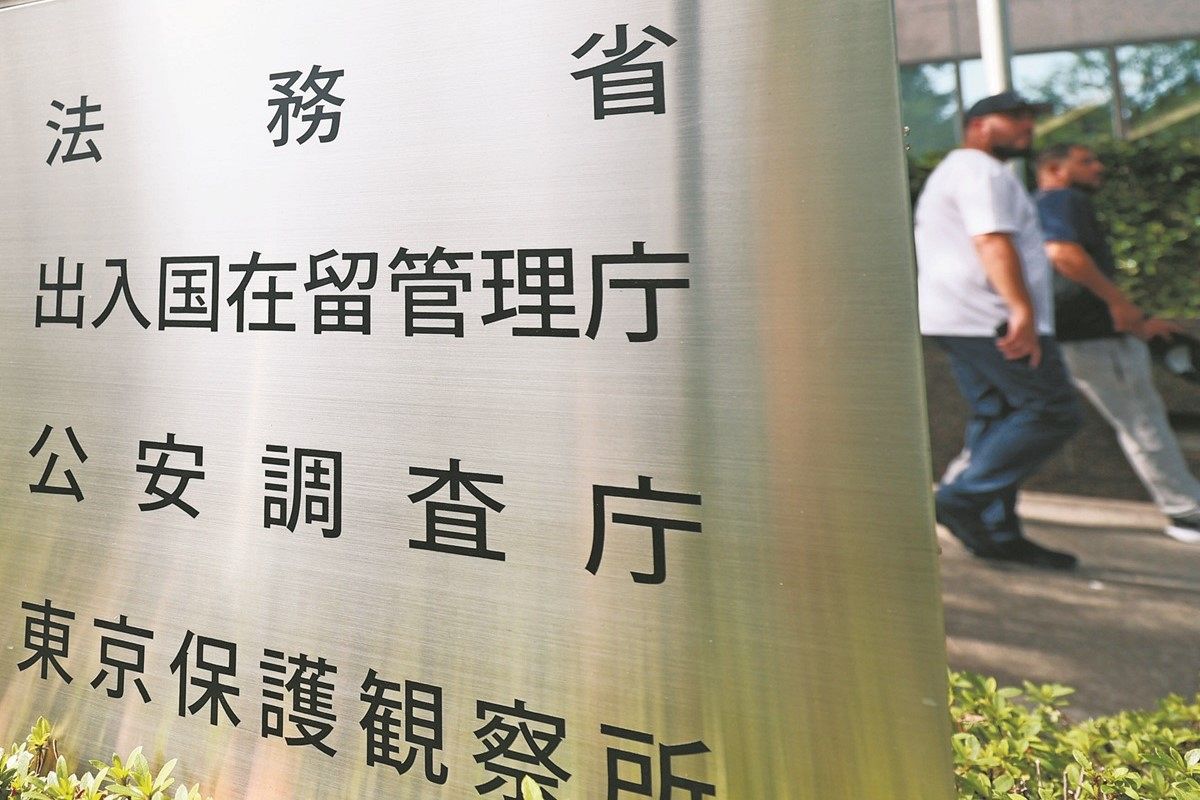
The Number That Should Alarm Every Recruiter in Tokyo
Japan raised the fee for permanent residency from 10,000 yen to 200,000 yen — a twentyfold increase — starting October 1. That is the single most dramatic move in a broader package of fee hikes that also raised routine visa renewal charges by up to 12.5 times, depending on how long your stay is authorized.
On its face, this looks like bureaucratic housekeeping. On closer inspection, it is a policy signal that deserves scrutiny, especially from anyone who thinks Japan can solve its demographic crisis by simply inviting more foreign workers to fill vacant positions.
The government says the increases fund immigration administration and Japanese-language instruction. The law that authorized them, passed in May, sets maximum caps of 100,000 yen for status changes and 300,000 yen for permanent residency. The final amounts fall below those ceilings but still represent a stark escalation from what foreigners have paid for decades.
Critics are calling it punitive. “It feels like policy designed to bully people out of staying,” said Motoko Yamagishi, director general of the National Network for Solidarity with Migrants. “We are raising unavoidable fees to excessive levels while ignoring the voices of those affected. We worry that people will lose their legal status because they simply cannot pay.”
What the critics are underscoring is not merely fairness — it is the mechanical reality that these fees are collected by the state from individuals who have already accepted low-wage positions in sectors where profit margins are thin. The timing suggests a government more interested in filling administrative coffers than solving a structural problem.
Why This Matters Beyond Borders
The irony is sharp. Japan is simultaneously running campaigns to attract overseas IT workers and care providers. Government agencies and private recruiters spend millions on English-language advertisements promising opportunity. Companies face worker shortages so acute that construction firms turn down contracts and hospitals delay elective procedures.
And yet the cost of remaining in Japan legally just rose sharply — not once, but for the second year in a row.
Consider the math for someone on a standard visa. Many foreign residents must update their status every one to three years. Under the new tiered system, a three-year update now costs 75,000 yen. Multiply that by four or five updates over a twenty-year span, and the cumulative burden approaches the price of permanent residency itself. For low-wage workers in care, hospitality, or logistics, those numbers are not abstract. They are existential.
There is a second-order effect that deserves equal attention. Workers facing recurring fees may prioritize short-term income over long-term settlement. That means higher mobility, more frequent job switches, and greater incentive to accept informal arrangements — the very outcomes the government claims to want to prevent. Employers who invested in onboarding foreign staff will find that retention becomes a financial calculation, not a loyalty question.
The Refugee Reduction Clause That Isn’t Much of One
The government did create a partial relief mechanism for refugees and others in humanitarian need. Those receiving public assistance pay reduced fees: 10,000 yen for routine updates over three months, 20,000 yen for permanent residency. Eligible categories expanded from ten to twelve cases.
But the condition for relief — receiving public protection benefits — is narrow. In countries that grant broader humanitarian exemptions, refugees qualify automatically. Japan requires proof of financial destitution first. And even then, the fee is reduced, not waived.
This reflects a deeper posture. Japan’s refugee recognition rate remains among the lowest in the developed world. The fee structure reinforces a system that makes staying difficult even for those who have nowhere else to go.
The political calculus here is clear: the government can point to a marginal expansion of relief while maintaining the appearance of fiscal discipline. But the practical result is a system where only the most desperate receive accommodation, and even that accommodation falls short of what international best practice would suggest.
The International Comparison That Does Not Hold Up
The Immigration Services Agency justified the hike by pointing to fees in the United States, the United Kingdom, and Canada — where work-related visa fees can exceed one million yen equivalent.
That comparison is misleading. In those countries, employers typically cover visa costs. In Japan, the foreign worker pays. Comparing a system where the company foots the bill to one where the individual does is not a comparison at all.
A fairer frame is Germany, Italy, and South Korea — countries with demographics and labor-market dynamics similar to Japan’s. Their permanent residency fees top out around 20,000 yen. The European Court of Justice recently ruled that Italy’s attempt to raise its own residency fees to disproportionate levels was unlawful. Japan’s twentyfold increase would struggle under the same standard.
The deeper asymmetry is institutional. In peer nations, fee structures are designed to be frictionless — the state recognizes that smooth immigration pathways serve economic interests. Japan’s approach treats immigration fees as revenue generation rather than facilitation. That distinction matters enormously for retention rates and the willingness of skilled workers to commit long-term.
What Happens Next
The immediate effect will be felt by the most vulnerable residents — people on the margin between legal status and irregular stay. Those who cannot afford the new fees may let their visas lapse, pushing them into the informal economy the government claims to want to regulate more effectively.
Medium-term, the policy sends a contradictory message. Recruiters abroad will encounter resistance from candidates calculating the true cost of moving to Japan, including recurring government fees that eat into take-home pay. Employers who already complain about the difficulty of retaining foreign staff will face higher turnover as workers reconsider whether long-term residency is financially viable.
There is a third layer to consider — one that has received little public discussion. The fee hike affects not only new arrivals but also long-term residents who have already contributed taxes, learned the language, and built lives. Permanent residency holders who seek to renew or who previously held time-limited status now face a cost that was predictable and manageable and is now shockingly elevated. This creates a chilling effect on integration. People who were planning to stay for decades may reassess whether Japan is a place that wants them to stay at all.
The government insists it acted after a proper public comment period. It also insists the fees are necessary to fund integration programs. What remains unaddressed is the central contradiction: Japan cannot simultaneously declare a labor shortage and make legal residence materially more expensive for the people it needs.
The twentyfold hike is not just a fee change. It is a statement about who Japan wants to welcome — and who it is willing to price out. As the demographic clock continues to tick downward, the question is whether Tokyo will double down on barriers or recalibrate toward the pragmatic recognition that a shrinking population cannot afford a shrinking willingness to let people in.