Japan's iPS Heart Breakthrough Changes Everything
Japan has performed the world's first transplant of iPS cell-derived heart muscle sheets into a human heart failure patient, marking the first clinical use of an iPS-derived product anywhere. The milestone raises fresh questions about cost, accessibility, and the race for global regulatory approval.
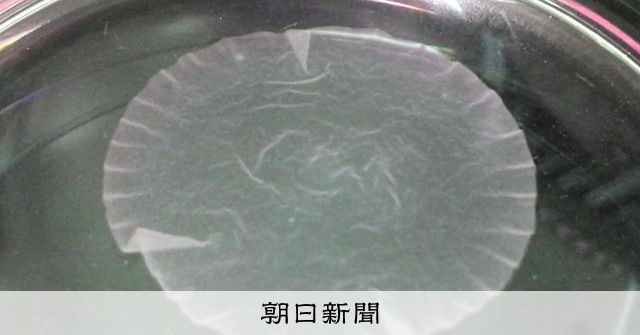
The sheet that changed cardiology overnight
On March 29, a woman in her fifties from Kanagawa Prefecture lay on an operating table at Osaka Keishitsu Hospital. Yoshiki Sawa, the professor who spent decades pushing this technology toward reality, was at the forefront. A thin membrane of heart muscle cells — grown from induced pluripotent stem cells — was placed directly onto her damaged heart. The procedure took roughly fifty minutes.
She will likely leave the hospital in two to four weeks.
What makes this moment historic is not just that it happened in Japan. It is that it happened at all. This is the first time an iPS cell-derived product has ever been used to treat a patient anywhere on Earth. Twenty years have passed since Shinya Yamanaka at Kyoto University published his breakthrough paper in 2006, earning him a Nobel Prize and setting off a global race. Today, that race has a clear leader — at least in the clinic.
How ReHeart actually works
The product is called ReHeart. It was developed by Quorippus, a start-up spun out of Osaka University. The concept is deceptively simple: take iPS cells, coax them into becoming heart muscle cells, arrange them into a thin sheet, and graft that sheet onto a failing heart.
The sheet does not regenerate contractile tissue the way a carpenter might replace a rotten beam. Instead, it secretes factors that stimulate blood vessel growth and improve the surrounding heart muscle’s function. The aim is to boost exercise capacity and slow or reverse the decline of cardiac function in patients with severe ischemic cardiomyopathy — the kind of heart failure caused by blocked arteries and prior heart attacks.
Sawa’s team has been working toward this moment since long before ReHeart had a name. His earlier work with single-cell suspensions of iPS-derived cardiomyocytes showed promise but also limitations. The sheet approach, they argue, solves several of those problems: better survival of the transplanted cells, more controlled delivery, and a structure that integrates with the existing heart tissue rather than dispersing randomly.
The cost is steep. Five point three two million yen — roughly thirty-six thousand US dollars — for the product alone. That number will dominate the conversation outside Japan.
Who wins, who loses
Japan wins immediately. It holds the first approved iPS-derived therapy in the world. That is a prestige advantage, a data advantage, and a commercial advantage. Other countries — the United States, European Union members, South Korea — are racing toward similar products, but none have crossed the finish line yet. Japan’s Pharmaceuticals and Medical Devices Agency authorized the therapy, and the clinical application proceeded under that approval framework.
Patients with severe ischemic heart failure win too, at least in theory. The candidate in this case had a prior heart attack and severe pump dysfunction. Options for someone in that position are limited: medications, device implants, and eventually heart transplantation — if a donor is available. ReHeart offers a biologically active alternative that does not require an organ match.
The losing side is harder to name precisely, but it is everywhere outside Japan right now. Healthcare systems, insurers, and governments that watch this development will face immediate pressure to follow. The precedent is set. A live human patient has received a living tissue product grown from reprogrammed stem cells and grafted onto a beating heart. That image — even in thumbnail — travels faster than any peer-reviewed paper.
The global implications
The broader significance stretches far beyond cardiology. If an iPS-derived sheet can be transplanted into a human heart, the same platform can be adapted for other organs. Kidney, liver, pancreatic tissue — the biology is transferable. What ReHeart proves is that the pipeline from cell line to functional tissue to clinical use is no longer theoretical. It is operational.
That changes the calculus for every pharmaceutical company, biotech start-up, and university lab working in regenerative medicine. The question is no longer whether iPS therapies can work in principle. It is who can bring them to patients fastest and at what price.
Quorippus faces that question directly. The company needs to scale production. Growing custom iPS cell lines for individual patients is expensive and time-consuming. If the therapy moves toward broader use, some form of off-the-shelf product will be necessary — either pooled iPS cell lines matched to common immune profiles or engineered cells designed to evade immune rejection. Neither problem is unsolvable, but both are hard engineering challenges.
What happens next
The patient is expected to be discharged within a month. Monitoring will continue. Long-term safety data — the kind regulators require — will take years to accumulate. That is standard for any novel cell therapy. But this case establishes a reference point: a living iPS-derived tissue product can be transplanted into a human heart without immediate catastrophic rejection.
Other trials are already in motion worldwide. In the United States, several groups are pursuing iPS-derived cardiac cell therapies through FDA pathways. In Europe, similar programs exist. None have reached the stage of commercial clinical use that Japan has today.
The pricing will draw scrutiny. Thirty-six thousand dollars per treatment is not absurd for an orphan regenerative therapy, but it is far from inexpensive. Insurance coverage decisions will shape whether this reaches more than a handful of patients.
What is clear is that the era of iPS-derived clinical products has begun. Twenty years after Yamanaka’s discovery, the first patient walked out of a Japanese hospital with a sheet of lab-grown heart muscle fused to her own. The technology that once lived only in petri dishes and mouse models is now in people. That changes everything — and nothing, really, until the next patient arrives.
But the trajectory is set.