Japan's missile pivot changes the deterrence calculus in the Indo-Pacific
Tokyo is pursuing long-range strike weapons it once swore never to develop, signaling a strategic rupture. The AARGM-ER purchase and expanded missile ambitions mark the most aggressive defense shift since 1945.
Beyond the budget line
Japan does not usually announce its military intentions this bluntly. The $55.6 billion defense budget request, which is actually 8.89 trillion yen, arrived with a different kind of restraint this time: the numbers were omitted. The Ministry of Finance had yet to approve it, and the three foundational policy documents — the National Security Strategy, the National Defense Strategy, and the Defense Buildup Program — were still being drafted. What remained, though, was unmistakable. For the first time, Tokyo flagged a dedicated interest in acquiring a long-range anti-radar missile.
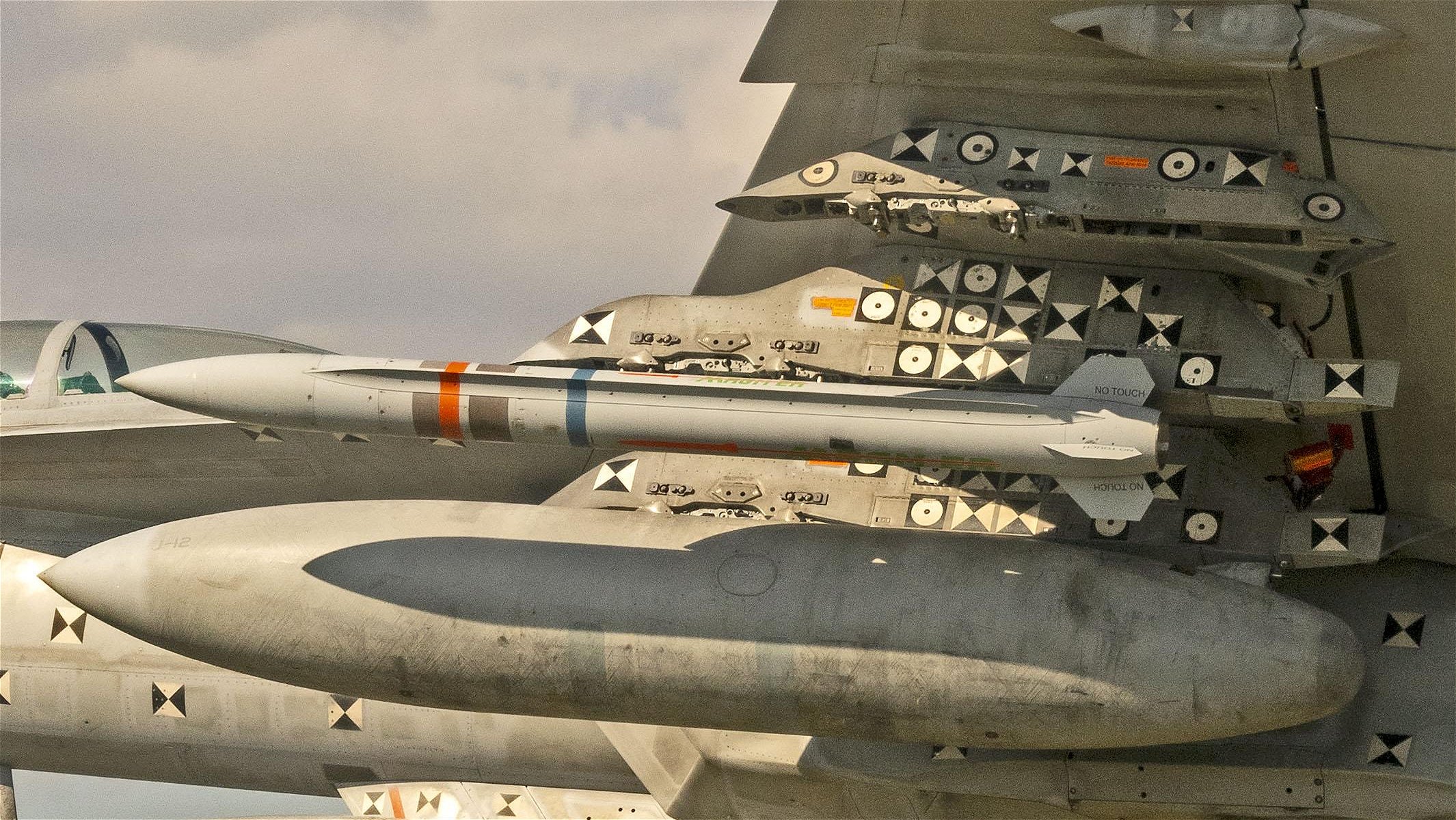
Northrop Grumman’s AGM-88G AARGM-ER appeared in the request. It is not just another system on a procurement list. It represents a qualitative shift in how Japan intends to fight, and more importantly, how it intends to deter. The AARGM-ER is built to track and destroy enemy air defense radars at extended ranges. It is the kind of weapon designed to blind a battlefield, and it has been a staple of US and NATO strike packages for years. Japan asking for one suggests a calculation that the status quo is no longer adequate.
The strategic gap this fills
The logic behind the AARGM-ER purchase is not secret. China has been building up its integrated air defense networks around Taiwan, in the East China Sea, and across the South China Sea. Russia has demonstrated anti-access and area-denial capabilities in Syria and Ukraine. Japan sits directly in the path of these strategies. Its self-defense forces have traditionally relied on a defensive posture: intercepting incoming threats rather than destroying them before they launch. That doctrine has a name — the Japanese call it active defense — and it has constrained the kinds of weapons the country acquires.
The new request signals that active defense is no longer enough. Japan wants standoff capability, meaning it can strike without entering contested airspace. The AARGM-ER is one piece of that puzzle. Another is an unspecified low-cost cruise missile that will be acquired overseas before Japan develops its own version. A third is a submarine-launched guided missile, with 16.3 billion yen already earmarked. These are not incremental upgrades. They are the components of an offensive strike capability that Japan has debated but never fully committed to until now.
There is also a fourth item worth noting: the plan to convert the ASM-3 supersonic anti-ship missile into a long-range air-to-air weapon. This would allow Japan to target high-value support aircraft like airborne early warning platforms and tankers — the sort of assets that have been critical to US force projection in the Pacific. Only three countries currently field such weapons: the United States, China, and Russia. Japan wants to join them. If successful, this would extend the reach of its F-35 fleet well beyond its traditional anti-ship role.
Drones and artificial intelligence
The unmanned side of the budget is substantial. The Maritime Self-Defense Force will receive 17 more MQ-9B SeaGuardian drones, bringing its total to 17. The Coast Guard already operates three. An additional 7.6 billion yen is targeted at interceptor drones, likely the TerraDrone Terra B1, which won a rapid acquisition contract on August 25. These are not speculative programs. They are operational purchases, signaling that Japan views unmanned systems as central to its future force structure rather than experimental add-ons.
Perhaps more interesting is the artificial intelligence component. Japan plans to build a command-and-control system that uses AI to integrate and analyze data rapidly, aiming to secure a decision-making advantage over adversaries. The second phase calls for a classified cloud-based platform resistant to disruption. In practical terms, this means Japan is preparing for a war where the speed of information processing could be as decisive as the speed of missiles. China and the United States are investing heavily in the same direction. Japan is no longer content to lag.
What this means for the alliance
The AARGM-ER and the other systems Japan is pursuing are largely American-made or American-designed. This is not accidental. The United States has long wanted its allies in the Indo-Pacific to acquire interoperable weapons, and Japan’s choices reinforce that goal. But there is a subtler dynamic at work. Japan’s procurement of American systems locks in a dependency that benefits US defense contractors and sustains production lines at companies like Northrop Grumman and Lockheed Martin. At the same time, Japan’s push toward domestic development — the unspecified cruise missile, the modified ASM-3, the AI-driven command system — shows that Tokyo is serious about building indigenous capability over time.
This dual track could reshape the alliance. The United States gains a more capable partner that can share the burden of regional deterrence. Japan gains access to advanced technology and a deeper industrial relationship. But there is also friction potential. If Japan develops too much independence in weapon design and AI systems, Washington may see a partner that is less dependent on American logistics and more willing to act on its own strategic timeline.
Regional implications
Beijing and Moscow will read this budget request the way they read every Japanese policy document: as evidence of strategic intent. Japan’s past gestures toward military normalization have been cautious, often framed as responses to specific threats. This request is different because it is systematic. It covers air, sea, and underwater domains. It spans manned and unmanned platforms. It blends foreign acquisition with domestic development. The overall picture is of a country that has concluded its postwar constraints are holding it back from the deterrent it believes it needs.
The question is whether the budget will pass and how quickly. The Ministry of Finance will review it, likely later this year. Approval is not guaranteed — Japan has a history of trimming defense requests, particularly when economic conditions are uncertain. Even if approved, the procurement timeline for systems like the AARGM-ER stretches out over years. But the signal matters on its own. It tells allies and adversaries alike that Japan is moving beyond rhetoric into planning and spending.
The longer arc
Japan’s constitutional constraints on collective self-defense have shaped its military posture since 1945. The current government, led by Prime Minister Shigeru Ishiba, has pushed to reinterpret those constraints incrementally. The AARGM-ER request is the latest step. It is not a constitutional amendment, but it functions like one in practice. By acquiring a missile designed to destroy enemy air defenses, Japan is adopting a capability that goes well beyond the defensive posture its postwar identity was built on.
Whether this leads to a broader reassessment of Japan’s role in the Indo-Pacific remains to be seen. What is clear is that the direction of travel has shifted. The $55.6 billion request is a number, but it is also a statement. Japan is no longer asking permission to strengthen its hands. It is laying out the tools and letting the region figure out what they mean.