Japan's Phobos mission shifts the space race beyond the moon
Japan has launched its first attempt to return samples from a Martian moon, a historic move that could redefine who leads interplanetary exploration — and what the race is actually about.
Japan just did something no one else has tried
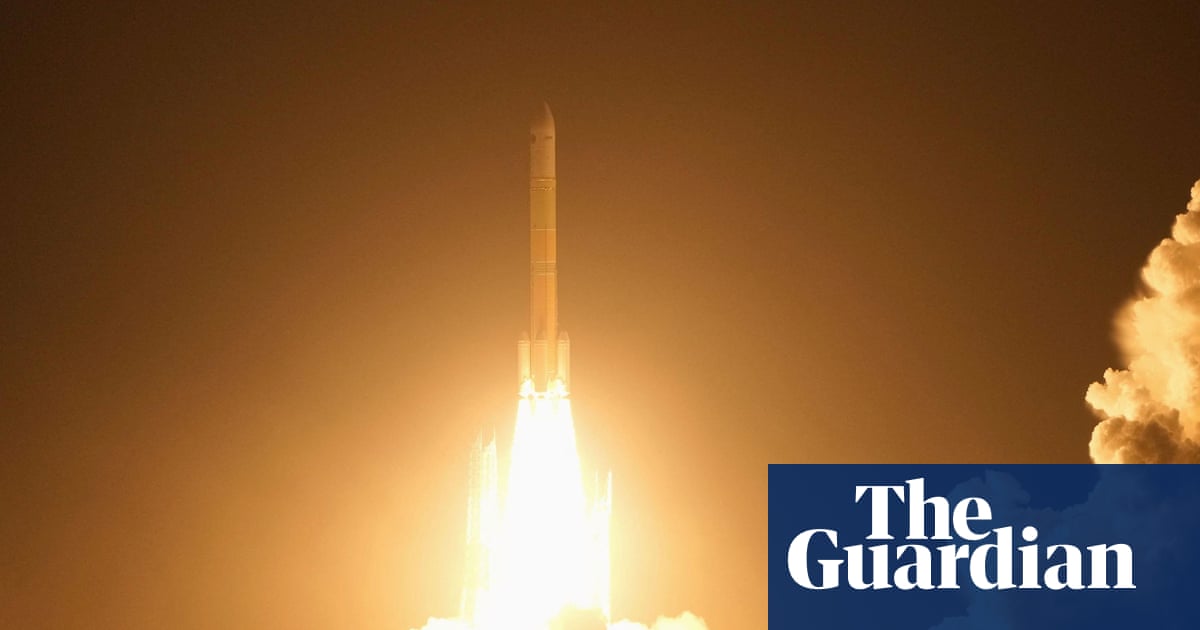
Japan lifted off before dawn on Wednesday from Tanegashima Space Centre, sending the MMX spacecraft toward Phobos — one of Mars’s two small, pockmarked moons. The H3 rocket, Japan’s own heavy-lift vehicle built after years of delays and cost overruns, performed perfectly: stage separation confirmed, trajectory insertion nominal.
What makes this historic is not the rocket. It is the destination. No spacecraft has ever landed on a Martian moon, collected material, and attempted to return it to Earth. That is what MMX is going to try to do. If it works, Japan becomes the third nation — after the US and China — to achieve an interplanetary sample return, but the first to do so from a body orbiting another planet.
The $578 million mission is five years in the making, involving five space agencies, and it carries French-German, Japanese, and American instruments. It is also, quietly, a statement that the space race is no longer only about who reaches the Moon first or who plants a flag on Mars. The race is expanding — and Japan is positioning itself at the frontier.
Why Phobos matters more than you might think
Phobos is roughly 22.5 kilometres across — a potato-shaped rock that completes three orbits of Mars every Martian day, hugging the planet at just 6,000 kilometres. It is small, dark, and gravitationally feeble: surface gravity is about one-thousandth of Earth’s. That is why the French-German rover Idefix, named after the terrier in the Asterix comics, is designed to bounce rather than roll across the surface.
But the science case is enormous. Scientists cannot yet agree on how Phobos and Deimos formed. The two leading theories are the giant-impact hypothesis — that a celestial body smashed into early Mars and debris coalesced into moons — and the capture hypothesis — that these are captured asteroids from the outer solar system, dragged in by Mars’s gravity. The answer to either question would reshape understanding of how the terrestrial planets evolved, and whether habitable environments are common or rare.
Sample return is the only way to answer this definitively. Orbiters and landers can make educated guesses from spectroscopy and imagery. Rocks brought to Earth can be dated, analysed for isotopic signatures, and studied with instruments no probe will ever carry. The samples could also contain organics — or trace elements inherited from the early solar nebula — that speak directly to how water and prebiotic chemistry arrived on the inner planets.
As Markus Grebenstein, Germany’s rover chief, put it: “It is a once-in-a-lifetime chance.”
The US and China are distracted
NASA has landed nine spacecraft on Mars over half a century. China touched down on the Red Planet in 2021 with Tianwen-1 and has been operating rovers and landers ever since. Both nations are pursuing Mars sample return — but their timelines are complicated.
NASA’s Perseverance rover collected sealed samples on Mars starting in 2021. The plan was to return them with the Mars Sample Return campaign, a joint NASA-ESA effort. In January this year, however, a congressional vote halted the programme. The samples remain on Mars. No one knows when or whether they will be retrieved.
China’s Tianwen-3 mission is scheduled to launch around 2028, with a potential sample return as early as 2031 — roughly the same window when MMX is expected to arrive back on Earth. If Tianwen-3 succeeds, China would be the first nation to return samples from the Martian surface. Japan would be first from a Martian moon.
The distinction matters strategically. A surface sample return demonstrates the ability to land, operate, and launch from Mars itself — an exceptionally difficult feat. A moon sample return requires a different skillset: deep-space navigation, precision orbit insertion around a distant planet, soft landing on a body with near-zero gravity, and a launch from that tiny world. Both are hard. Neither is easy.
By choosing Phobos over the Martian surface, Japan sidesteps direct competition with China and NASA while claiming a domain no one else has touched. It is not a retreat from the race. It is a reorientation.
Japan as a space power
The H3 rocket’s successful launch is significant in its own right. Japan’s previous heavy-lift vehicle, the H-IIA, was reliable but aging. H3 was designed to be cheaper and more flexible, but development was plagued by engine issues, cost overruns, and two failed launches. This mission proves the rocket works — and proves JAXA can still execute complex interplanetary missions.
Japan has a tradition of precision space engineering: the Hayabusa missions returned samples from asteroids Itokawa and Ryugu, demonstrating touch-and-go sampling technology that no other nation had mastered. MMX is the next step — moving from asteroid sampling to a full interplanetary round trip, with a lander, a rover, and a sample-return capsule.
The international collaboration is also noteworthy. France and Germany supplied the rover. The US provided scientific oversight through NASA astrophysicist Tom Statler, who described the launch as “a lot of adrenaline and a lot of excitement.” Japan led the spacecraft integration, trajectory design, and sample-return architecture. Five agencies, one mission.
In a year when space cooperation is fracturing along geopolitical lines, this kind of distributed leadership is unusual — and worth noting.
What happens next
MMX arrives at Mars in August 2027. The spacecraft enters orbit and releases Idefix, the bouncing rover, which spends 100 days surveying the surface for safe landing sites. The stationary lander then touches down, spends approximately two hours drilling and vacuuming soil and rock, and launches back into space — all before departing Mars orbit in November 2030 for the return journey to Earth.
If every milestone holds, the sample capsule splashes down in 2031. The rocks will be the first ever brought from a Martian moon. They will be studied for decades.
The more immediate question is whether this mission changes the narrative around the space race. For years, coverage has focused almost exclusively on who lands on the Moon first — a competition largely defined by the US Artemis programme and China’s crewed lunar ambitions. MMX reminds us that there are other destinations, other kinds of missions, and other nations playing the long game.
Japan may not be racing China to the Moon. But it may be the first nation to bring back a piece of another world’s moon — and in doing so, claim a new kind of leadership in interplanetary exploration.
The rocks from Phobos will tell us something about the solar system’s origin. They will also tell us something about who gets to decide what the future of space looks like.
This analysis is based on reporting from The Guardian and JAXA. Timeline details and mission parameters are subject to change as the spacecraft approaches Mars.