Why Japan's Potato Opening Is a Trade-and-Security Flashpoint
Japan is pushing to allow US fresh potatoes into its market, igniting fierce opposition from Hokkaido farmers and exposing a blind spot in the bilateral trade deal: the potato cyst nematode risk.
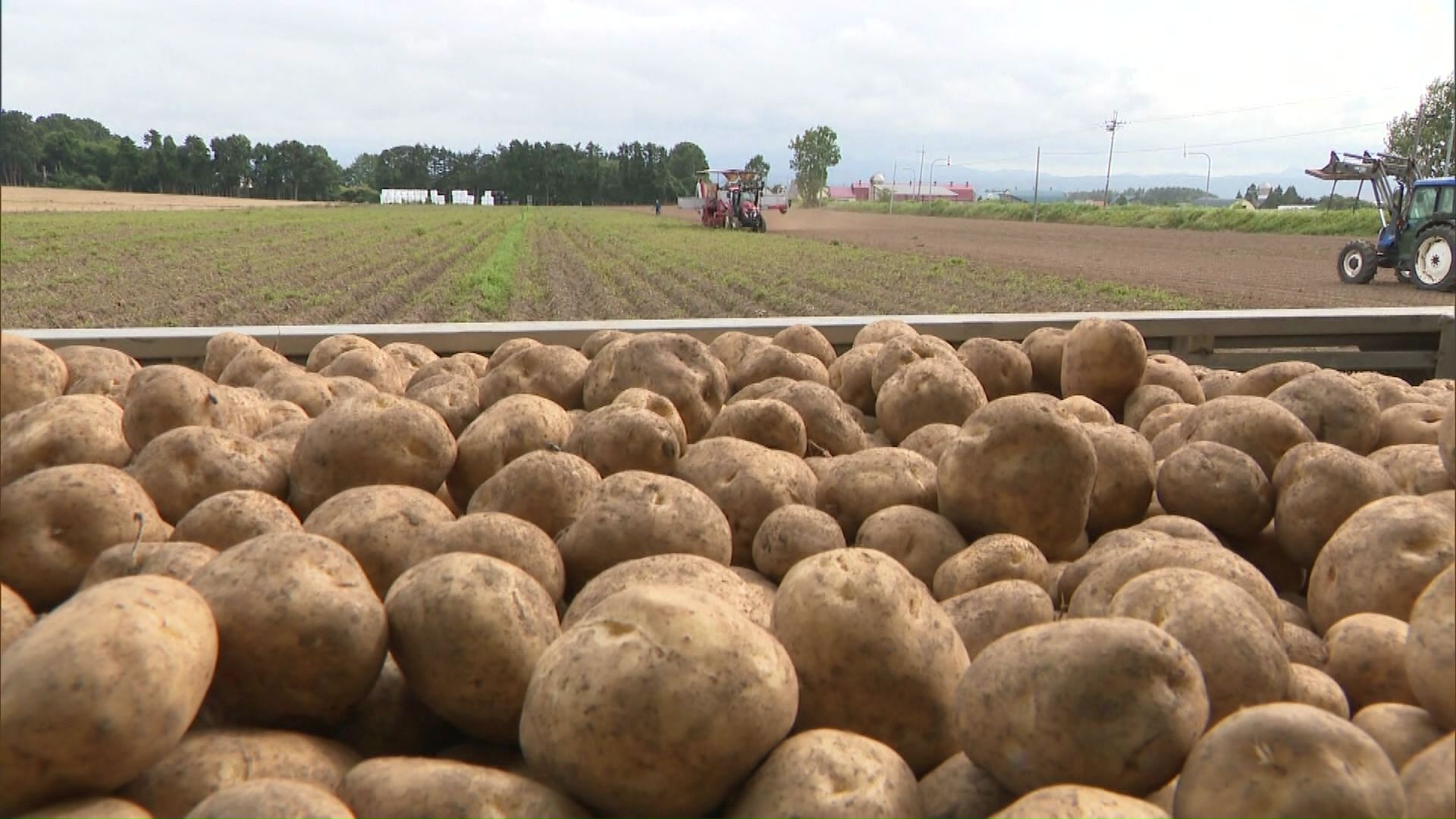
The Quiet Battle Over Japan’s Spud Bowl
On September 1, inside a conference hall in central Sapporo, officials from Japan’s Ministry of Agriculture, Forestry and Fisheries laid out a plan that made the room cold: the government is moving decisively to allow US fresh potatoes into Japan’s domestic market. Until now, only processed US potatoes — chips and the like — have been permitted, since 2006. The new push targets the grocery store shelf, where American tubers would compete head-on with Hokkaido’s harvest.
The message from the farmers was unambiguous. “The atmosphere was one of opposition to import liberalization,” said Hiroyuki Yamaguchi, secretary general of the Hokkaido Farmers Federation. It was not a polite disagreement. It was a warning shot.
Why Hokkaido Can’t Absorb Another Shock
Hokkaido produces roughly 80 percent of Japan’s potatoes. The region’s volcanic soil, cool summers, and long farming tradition have made it the undisputed heartland of Japanese tuber production. Brands like Imoinai Oshek — a premium variety harvested at peak season in town after town across southern Hokkaido — command price premiums that keep local economies alive.
Masakatsu Yūka has grown potatoes in Imoinai for more than fifty years, taking over from his father. His concern is brutally practical. Fertilizer costs have climbed sharply in recent years. Revenue per hectare is already under pressure. “If cheap potatoes flood in, I can’t support it,” he said. The broader fear is demographic: fewer young people are entering farming each year. An influx of cheaper imports, farmers argue, will accelerate the exodus.
This is not abstract protectionism. It is a sector that is already thin on margins, thin on labor, and now facing what its producers see as an existential price threat from a competitor with vast scale and lower production costs.
The Real Enemy Isn’t Price — It’s a Microscopic Worm
The more alarming dimension of this debate has received almost no coverage outside Japan: the potato cyst nematode, Globodera species, a soil-borne pest that attaches to roots, drains nutrients, and can devastate yields. Once established, it persists in the ground for years — sometimes decades. Eradication is extraordinarily difficult and expensive.
Takamasa Susudo farms roughly 260 hectares of seed potatoes in Hokkaido. Seed potatoes are the most sensitive category in the industry because infected seed spreads the problem regionally. “We don’t know in what form pests might enter,” Susudo said. “If they do get in, it could be catastrophic.”
The nematode threat reframes the entire debate. This is not simply a question of who sells potatoes cheaper at the supermarket. It is a question of whether Japan’s phytosanitary borders can hold against a pest that, once through, could irreversibly compromise Hokkaido’s potato belt.
What the US Export Infrastructure Looks Like
The United States is one of the world’s largest potato producers. Major growing states — Idaho, Wisconsin, Washington — ship enormous volumes annually. The US already exports potatoes to numerous countries, but its phytosanitary footprint includes regions where cyst nematode is present. That is the core tension: Japan has historically maintained strict quarantine zones for this pest, and opening fresh imports requires a negotiated phytosanitary protocol that many farmers doubt exists in sufficient detail.
The 2006 agreement that allowed US potatoes for processing only sidestepped the issue — processed products are heat-treated and inspected in ways that reduce biological risk. Fresh potatoes are a different category entirely. They arrive with soil attached, in fields, in packaging that can harbor cysts. The risk pathway is materially broader.
The Trade-Agriculture Trade-Off Tokyo Is Making
Japan has been pursuing broader trade liberalization for years, signing the Comprehensive and Progressive Agreement for Trans-Pacific Partnership (CPTPP) and more recently the Japan-US Trade Agreement. Agricultural goods are among the most politically sensitive categories in every Japanese trade negotiation. Rice, beef, wheat — these are the usual flashpoints. Potatoes have flown under the radar, which is precisely why the current move is surprising.
The government’s likely calculus is straightforward in diplomatic terms: concessions in agricultural goods can unlock progress on industrial and services trade, and the United States has long pressed Japan to open its food markets. But the political cost in Hokkaido — a region with outsized influence in Japanese agriculture policy — is substantial.
Who Wins, Who Loses, and What Comes Next
Consumers may win in the short term if US potatoes undercut domestic prices at the supermarket. Retailers gain sourcing flexibility. US exporters gain access to a high-value market. Farmers in Hokkaido lose on price, on land viability, and potentially on the long-term biological integrity of their soil.
The phytosanitary risk is the hinge. If Japan negotiates a deal that includes robust inspection protocols, heat treatment requirements, or geographic restrictions on which US growing regions can ship, the nematode threat could be managed. If it does not — and there is no public indication yet that such safeguards are in place — the consequences could outlast any single administration.
Farmers like Yūka and Susudo are not Luddites. They are asking for a deal that does not gambles with a pest that has no known cure, only containment. The ministry’s explanation session in Sapporo was supposed to lay out the government’s position. Instead, it laid bare a fault line that runs through Japanese trade policy itself: the gap between the diplomatic language of liberalization and the grounded reality of soil, seed, and seasonal harvest.
Hokkaido’s potato season is underway. The harvest will come in regardless of Tokyo’s negotiations. What happens after that — to prices, to pests, and to the farmers who have tended these fields for generations — is still unwritten.