The 'I Assumed' That Killed Four: Japan's Railway Safety Crisis Exposed
A lookout's fatal assumption on Japan's Tobu Nikko Line reveals systemic gaps in private railway maintenance safety that extend far beyond one tragic accident.
The Three Words That Cost Four Lives
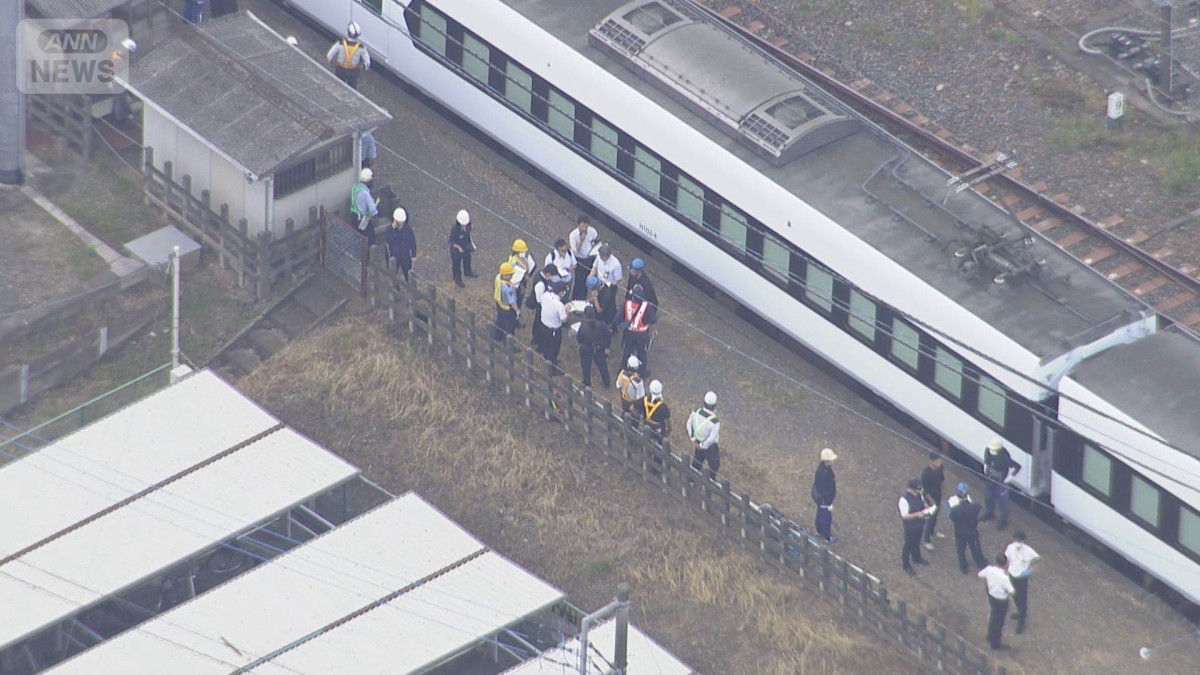
“I thought they had retreated.” That is what the lookout told investigators after his failure to confirm the position of four weed-clearing workers on the Tobu Nikko Line killed them when the Spacia X express train struck them at Shin-Kanuma Station on August 20th.
The Japanese phrase carries a devastating specificity. It was not that the lookout never checked. It was that he did not check at all and filled the void with an assumption. In safety engineering, this is called a “normalization of deviance” — the gradual acceptance of shortcuts until they become invisible until something dies.
The Subcontracting Ladder
The workers were not Tobu Railway employees. They were dispatched through a chain that begins with Tobu Construction, the station-level maintenance subsidiary, and likely extends further into smaller third-tier contractors — a structure that is standard practice across Japan’s private railway network.
The investigation revealed that multiple walkie-talkies were seized from the scene. This detail matters more than the number. When four people on a worksite are using different communication devices, the probability of a radio going unanswered, a frequency mismatch, or a momentary dead zone increases exponentially. The lookout may have spoken. He may have believed he was heard. Neither necessarily means he knew their physical location.
Police also discovered traces of herbicide sprayed on the tracks shortly before the collision. The workers were not merely clearing weeds. They were applying chemicals — a task that requires sustained presence on the tracks, not quick sweeps that allow for immediate evacuation. This changes the risk profile entirely.
The Lookout System’s Hidden Vulnerability
Japan’s railway lookout system is among the most detailed in the world. Every work zone requires a designated signalman positioned at a predetermined point. Their sole responsibility is to watch approaching trains and warn workers to clear the tracks. It is a binary job: see train, sound alarm, everyone moves. Nothing about it requires judgment or assumption.
Yet the lookout’s statement reveals the system’s greatest vulnerability — it depends on perfect compliance, and perfect compliance depends on human attention sustained across potentially hours of monotony.
The additional revelation that work began “before reaching the designated position” suggests the lookout was either delayed, distracted, or had already left post. All three possibilities point to the same structural problem: private railway companies in Japan rely on dispatched labor for maintenance tasks, and dispatched workers are not embedded in the safety culture of the railway operator they serve.
What Happens Next in Japan
Japan’s Ministry of Land, Infrastructure, Transport and Tourism will likely issue revised guidelines within weeks. The questions will focus on three areas: mandatory GPS tracking for all track workers, real-time radio interconnects that prevent frequency mismatches, and direct employment requirements for any worker within 500 meters of an active line.
The political pressure will be intense. Japan’s railways are a national symbol of precision and safety. A private operator allowing four deaths in a routine maintenance task cannot stand as an example. Tobu Railway’s president will face diet testimony. The transportation minister will announce interim safety inspections across all private lines.
But history suggests these measures will address symptoms rather than cause. The subcontracting chain that produced this accident is not unique to Tobu. It is the default model for track maintenance across Japan’s nine major private railway groups, serving over 60 million daily commuters.
The Global Question
This accident should alarm transit operators worldwide, not because Japan’s railways are unsafe, but because the structural conditions that produced it exist in every network that relies on subcontracted maintenance labor.
n
The United States faces the same dynamic through its Track Safety Standards regime, which allows railroads to contract track inspection and maintenance to third parties with limited oversight. Europe’s privatized rail networks routinely deploy maintenance crews across borders with varying safety certifications. India’s expanding rapid-transit projects rely on subcontractors whose workers frequently enter active tracks without adequate warning systems.
The common thread is economic pressure to reduce maintenance costs through labor dispatch, combined with the physical reality that railway work zones require continuous, active vigilance that is difficult to sustain under any employment model.
The Real Issue
The lookout’s statement — “I thought they had retreated” — will become the defining quote of this accident. But it is not the quote that should define the policy response. The quote that should drive reform is the one the lookout did not say: “I confirmed they had retreated.”
There is a difference between assumption and verification, and that difference is the entire gap between a close call and a funeral. Every transit system in the world operates on the assumption that the person responsible for warning workers about approaching trains will be present, attentive, and able to confirm the work zone is clear.
When that assumption replaces verification, the system has already failed. The question is whether it fails loudly, as it did on the Tobu Niku Line, or quietly, in the next maintenance window somewhere else.
The four workers who died were not anonymous statistics. They were people who showed up for a Tuesday shift, sprayed herbicide on railway tracks, and did not hear a warning they should have received. The lookoutr who survived this accident will have to live with the knowledge that his assumption was wrong.
Safety systems exist to make assumptions irrelevant. This accident proves that Japan’s private railway sector has not yet succeeded in doing that.