Japan's Rate Hike Is the Trigger the World Was Waiting For
The Bank of Japan is poised for its second rate hike in three months, pushing policy to a 31-year high. But the real risk isn't Japan—it's what happens when $360 trillion in yen borrowings rush for the exit.
The Unlikely Shock Absorber Just Started Squeaking
The Bank of Japan sits down today to decide whether its policy rate climbs from 1% to 1.25%. The betting is already over: 89% of survey respondents, per CNBC, expect the hike. What matters isn’t the decision itself—it’s the pace attached to it. This would be the second increase in three months, the tightest spacing since the 1990s, and a clear signal that the BOJ is no longer trying to time the cycle. It’s trying to catch up to it.
Jefferey Recchia at Commonwealth Research recently noted that BOJ Governor Kazuo Ueda has been more hawkish than most markets anticipated. That gap between expectation and reality is where the carry trade gets dangerous. When central banks move faster than positioned markets expect, the adjustment isn’t gradual—it’s sequential and violent. The carry trade is built on stability. It collapses under acceleration.
The Number That Should Keep Traders Awake
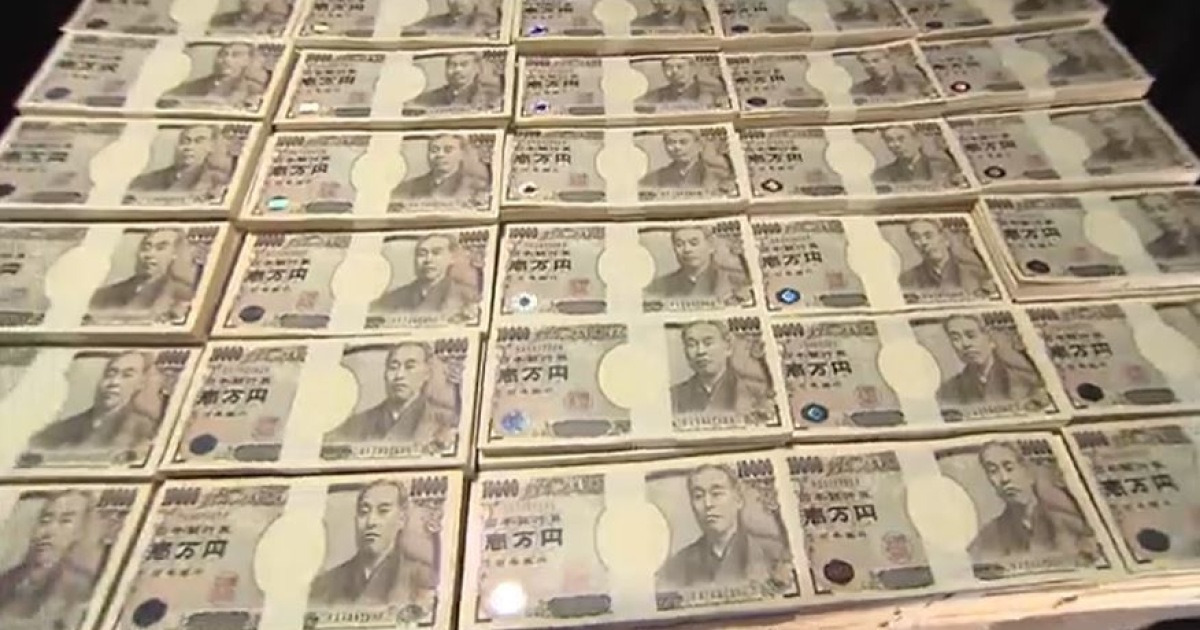
Here is the figure that doesn’t get enough attention. Bloomberg reported that off-balance-sheet yen borrowing by overseas institutions hit a record 360 trillion yen—roughly $2.4 trillion—as of March. That was the fastest expansion in three decades, driven largely by investors who assumed the new Kishida administration’s fiscal stance would keep monetary policy accommodative for years. The assumption is now wrong. And the positions built on it are enormous.
Reuters cited experts warning that a meaningful portion of those yen-carry trades haven’t actually unwound yet. The market is still sitting on a large residual of yen short positions. If the BOJ signals more than a single incremental step—and analysts at Bloomberg note 93% expect another hike by December or January—that assumption unravels fast.
What makes this figure particularly alarming is the structure of the borrowing itself. A significant share flows through offshore entities and special purpose vehicles, meaning the true exposure may be underreported on official balance sheets. Hedge funds, sovereign wealth funds, and pension managers across Asia, Europe, and the Americas have all participated in the trade. The distribution is wide, which is precisely what makes a sudden unwind systemic rather than contained.
Why Now? Three Converging Pressures
The yen’s path to 150 against the dollar earlier this month triggered an intervention-level panic. The currency has since retreated toward 155, but the damage to policy credibility was done. The BOJ faces a triad of constraints:
First, the US Federal Reserve raised rates for the first time in over three years this cycle. The yield differential between Tokyo and Washington was already suffocating the yen. Letting it widen further wasn’t an option the BOJ could afford, regardless of domestic conditions. The Fed’s restraint in cutting has only compounded the pressure—a stronger dollar paired with a stubbornly weak yen creates a pincer movement that leaves little room for maneuver.
Second, import prices are already under pressure. The Middle East conflict and elevated oil costs are feeding directly into a July consumer price increase of 1.9%—the highest reading of the year. Ueda himself acknowledged earlier this month that core inflation has come “considerably close” to the 2% target. That wording isn’t casual. It’s a precondition being checked off. For the first time in decades, the BOJ can credibly argue that inflation is home-grown rather than import-driven, which strengthens the case for normalization even as it complicates the messaging around future pace.
Third, and perhaps most uncomfortable, the 10-year Japanese government bond yield has climbed back above 3%, the highest level since 1996. Raising the policy rate makes that trajectory harder to manage. Longer-term yields could jump further if the BOJ moves too aggressively, and that creates a fiscal problem for a government already carrying one of the developed world’s largest debt burdens. Japan’s debt-to-GDP ratio exceeds 250%. At 3% on the 10-year, debt servicing costs are approaching levels that crowd out discretionary spending. The BOJ is walking toward a cliff it cannot see clearly.
The Real Risk Isn’t Japan—It’s Everyone Else
The yen carry trade isn’t a Japanese story. It’s a global one. The mechanism is simple: borrow cheaply in yen, convert to another currency, deploy into higher-yielding assets—emerging market bonds, Latin American stocks, commodity exporters, anything with a yield premium. When the yen strengthens, that trade gets squeezed. Borrowers must buy back yen to repay loans. Selling pressure on the underlying assets amplifies the move.
This is how a decision made in a Tokyo conference room becomes a margin call in São Paulo, Lagos, or Mumbai. The 360 trillion yen in offshore borrowing represents capital that moved outward looking for returns. When the cost of funding that capital rises sharply, the reverse flow begins. And it tends to happen faster than anyone plans for.
Scott Bessent, the US Treasury Secretary, has publicly pressured Japan to raise rates. That’s unusual for one government to weigh in on another’s monetary policy and suggests Washington sees a firmer yen as serving broader geopolitical and trade interests. It also means the BOJ isn’t moving in isolation—it’s moving under observation. American pressure adds a political dimension to what should be a technocratic decision, potentially compressing the timeline and reducing the BOJ’s flexibility to pause if conditions deteriorate.
The second-order effects are already visible in smaller markets. Thai and Indonesian rupiah positions have grown more expensive to maintain. Colombian peso hedging costs have spiked. Even European equity managers with no direct EM exposure are feeling the ripple—Japanese institutional investors, traditionally steady buyers of Western bonds, are beginning to redirect capital home as domestic yields become competitive. That withdrawal of demand hits emerging issuers hardest, because they rely on foreign capital to roll over deficits.
What Happens Next
Markets are pricing in a 0.25 percentage point move today. But the sequence matters more than the step. If Ueda signals a faster tightening path than expected—if the language around future hikes sharpens—the carry trade’s remaining positions will face immediate pressure. The 93% who expect a December or January follow-up are already pricing in momentum. The question is whether asset managers have the liquidity to exit without accelerating the very moves they’re trying to avoid.
Consider the feedback loop: as traders sell risky assets to raise yen, those asset prices fall. Falling prices trigger margin calls. Margin calls force more selling. More selling strengthens the yen further. The loop closes faster than portfolio risk models account for, because those models assume orderly execution. They don’t model the moment when everyone tries to exit at once.
The 10-year JGB at 3% is a warning light. If long yields continue climbing alongside the policy rate, the BOJ could find itself walking a narrow corridor: enough tightening to stabilize the yen, not so much that it breaks the sovereign debt market. That balance is fragile by design. A misstep on either side—too slow and the yen collapses again, too fast and Japan’s fiscal position destabilizes—could force a sudden policy reversal that itself becomes a market shock.
For investors outside Japan, the takeaway is straightforward. The era of free yen funding is ending. Portfolios built on that assumption need re-examination—not because Japan is shifting its economic trajectory, but because the cost of the money that powered global risk-taking is finally reflecting reality. The question isn’t whether the unwind happens. It’s whether you’re positioned for the speed at which it arrives.