Japanese Tech Press Gets Sharper on Apple's Post-Cook Era
While U.S. outlets covered the new Apple CEO's first keynote as a routine leadership transition, Japanese tech journalists asked harder questions — about AI strategy, a rumored foldable iPhone, and whether Apple can still innovate under engineers.
The New CEO Who Isn’t an Apple Person
Tim Cook stepped down on September 1, 2026, replaced by a man named Turner — someone the Japanese tech press is calling an engineer through and through, a hardware builder of 25 years with no marketing pedigree. That detail alone should matter to anyone watching Apple’s trajectory. The company has spent the Cook era optimizing for margins, supply chains, and ecosystem lock-in. Turner’s appointment signals a return to product-first thinking, but it also raises questions that U.S. media has been slow to ask.
Turner’s background is distinctive in an era when most tech CEOs emerge from finance or operations. He spent the early part of his career on the industrial design team, working directly under Jony Ive before Ive’s departure. He then moved into hardware engineering, overseeing the M-series chip integration and the transition to Apple Silicon. His rise was quiet — no memoirs, no podcast circuit appearances, no board seats at peer companies. When Cook announced his exit, the choice of someone so deeply embedded in Apple’s engineering culture felt deliberate: a statement that the company was moving away from operational excellence toward product ambition.
That shift carries risk. Turner has never had to field questions about quarterly guidance from Wall Street, and his first earnings call will test whether his engineering instincts translate into investor confidence. Japanese journalists, perhaps sensing this tension, have been probing the boundaries between Turner’s vision and the financial realities of running a $3 trillion company.
What Japanese Journalists Are Asking
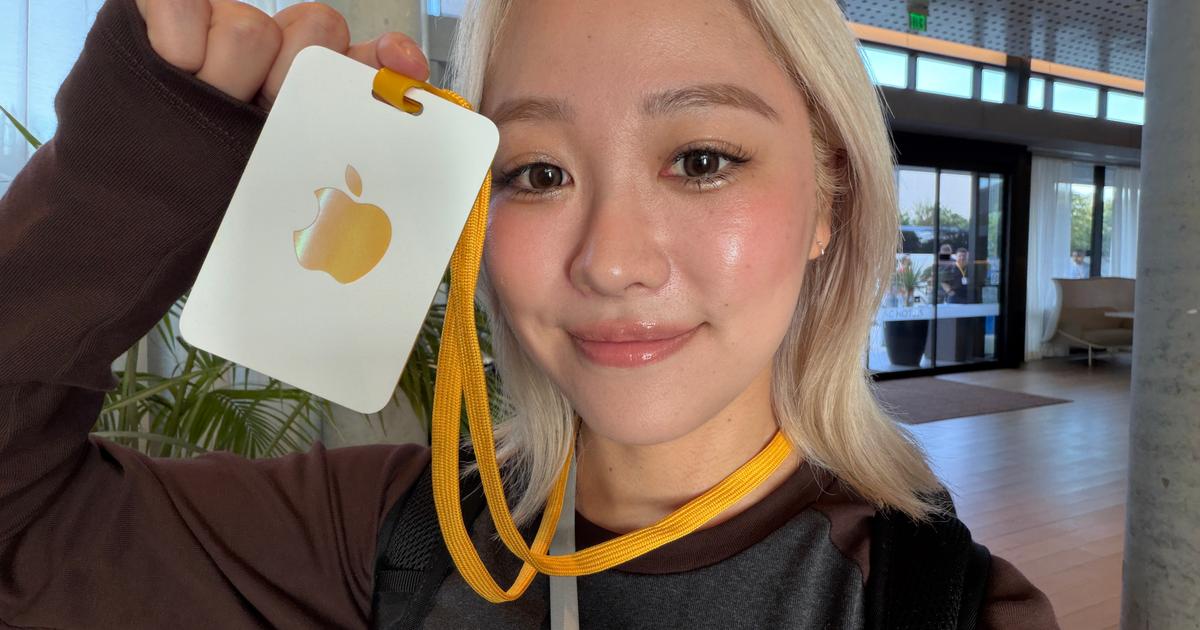
Gizmodo Japan’s Chisato Kuroda filed a dispatch from Apple Park that read less like a product recitation and more like a strategic autopsy. Her article wove personal detail — packing 11 Apple devices before flying out, receiving Apple-branded cookies at the hotel, finding Greg Joswiak for a selfie at the press queue — into a broader observation: Apple is entering its first post-Cook keynote under a CEO whose primary instinct is engineering, not operations.
Kuroda’s piece stood out not for its access but for its frame. Rather than cataloging specs, she opened with a question that most U.S. coverage sidestepped: what does a CEO who thinks like an engineer actually do differently? Her reporting suggested that Turner’s presence on stage — fewer anecdotes, more technical depth, a willingness to walk through architecture decisions in real time — was itself a signal of where Apple is heading.
The more interesting thread runs through the speculation that Apple plans to unveil a foldable iPhone dubbed the Duo. Japanese coverage treats this as a genuine strategic question, not a novelty hit piece. Is this a turnaround bet? A necessary catch-up move against Samsung and Huawei? Or a signal that Apple has lost its ability to set the market agenda and is now chasing it? The second-order implications are where the analysis sharpens. A foldable iPhone would represent Apple’s first major form-factor departure in over a decade. If it succeeds, it opens the door to a new product category and validates Turner’s engineering-first approach. If it fails — and early reviews of competing devices suggest significant durability and software adaptation challenges — it could become an expensive liability that distracts from Apple’s core business.
U.S. outlets are running launch-day coverage on format and price. Japanese outlets are asking what the company’s strategy was before today and what it will be tomorrow.
The Cultural Gap in Tech Coverage
This divergence isn’t accidental. Japan’s tech press operates in a market where Apple has always been a status commodity as much as a utility. iPhones are expensive relative to average incomes; owning one carries social weight. The foldable iPhone conversation in Japan isn’t just about form factor — it’s about whether Apple can reclaim relevance in a market where consumers are already skeptical of its innovation pace. Japanese tech blogs have spent years documenting a pattern: Apple products often arrive late to trends but execute them with polish. The concern now is whether that late-entrant strategy still works when the trends themselves — foldable displays, AI-native interfaces, spatial computing — require a different kind of risk tolerance than iterative camera upgrades.
American coverage, by contrast, tends to treat Apple events as catalog updates. The question isn’t whether Apple can innovate — it’s whether this year’s model is worth upgrading to. That difference in baseline assumption shapes everything: which stories get chosen, what questions get asked of executives, how deeply reviewers dig into strategy. U.S. outlets cover Apple as if it’s invincible; Japanese outlets cover it as if it’s vulnerable. Both assumptions contain elements of truth, but they produce very different journalism.
Kuroda’s piece is notable precisely because she didn’t dismiss the personal details as fluff. She used them. The hotel cookies, the early queue, the 11 Apple devices — they’re evidence of a culture where Apple isn’t just a company you buy from. It’s a company you participate in. That participation changes what journalists expect from the product and how critically they evaluate it. In Japan, the Apple event is not a corporate press conference; it’s a cultural moment, and the press treats it accordingly.
The Joswiak Factor
Greg Joswiak, Apple’s senior vice president of Worldwide Marketing since 2020, was photographed by Kuroda at the press queue. He’s a 40-year Apple veteran who worked on the original iPod and iPhone launches. His presence at this event matters more than the photos suggest. Joswiak replaced Phil Schiller — the showman, the presenter, the closer. Under Schiller, Apple keynotes were theatrical events built around moments: the slide click, the pause, the reveal. Joswiak has stripped much of that away. His presentations are quieter, more functional, sometimes almost austere. That shift mirrors Turner’s engineering-first orientation: fewer fireworks, more substance.
Japanese journalists seem to notice this shift more clearly than their U.S. counterparts. They’ve been tracking Apple’s keynote style for years in a market where presentation style is culturally significant. The move away from Schiller-era spectacle toward Joswiak-era austerity reads differently in Tokyo than in San Francisco. In Japan, it’s another sign that Apple is recalibrating its identity — and recalibration is risky. A company that once defined itself through charismatic product launches is now defining itself through technical competence. The question is whether competence is enough to sustain the premium Apple charges and the loyalty it enjoys.
There’s also a generational dimension to this shift. Joswiak represents a bridge between Apple’s creative origins and its current engineering focus. For younger journalists in Japan who grew up with iPhones as everyday objects rather than cultural artifacts, his practical approach may feel more authentic than Schiller’s theatricality. That generational preference could shape how Apple is perceived in Asia over the next decade.
Why This Matters Beyond Asia
The question Apple faces under Turner isn’t whether it can make a good foldable phone. Samsung has had one for years. Huawei has one too. The real question is whether an engineering-led Apple can reignite the kind of category-defining moments that defined the iPod and iPhone eras — or whether it’s now stuck refining existing categories until they plateau.
Japanese tech press is asking that question with more urgency than U.S. wire desks, and that’s worth noting. Their coverage suggests a market that watches Apple closely precisely because Apple matters so much to Japanese consumers and the broader Asian tech ecosystem. Apple’s relationship with Japan is asymmetrical: it’s a small market by revenue standards but a disproportionately important one for brand prestige and design influence. When Japanese consumers question Apple’s direction, it often foreshadows concerns that will emerge elsewhere.
There’s also a structural reason for Japan’s sharper lens. The country produces some of the world’s most rigorous tech reviewers — individuals who test devices under conditions that mirror real-world usage far more strictly than typical Western reviews. Durability tests, battery degradation over years, software update longevity — these are the metrics that matter in Japan, and they’re the metrics that expose whether Apple’s engineering promises hold up over time. U.S. coverage tends to celebrate launch-day performance; Japanese coverage asks what happens three years later.
The Takeaway
Turner’s first keynote wasn’t just a leadership transition. It was a signal that Apple’s next chapter will be defined differently than its last. Japanese journalists are treating it that way. U.S. outlets haven’t caught up yet — still cataloging specs and pricing tiers while the underlying strategy shifts beneath them.
The foldable iPhone Duo rumor, if true, is either a bold pivot or a defensive move. Either way, it’s a bet. And bets under a new CEO are worth tracking — especially when the people tracking them are paying closer attention than usual. The question for Apple isn’t whether Turner can build a better device. It’s whether he can rebuild the cultural moment around the device. Japanese tech press is watching to see if that’s even possible anymore.