Jeffries' Speakership Changes How America Faces Asia
Jim Jeffries is poised to become the first Black House Speaker. What his elevation means for US legislative strategy on China — and why Tokyo, Seoul, and Beijing are already paying attention.
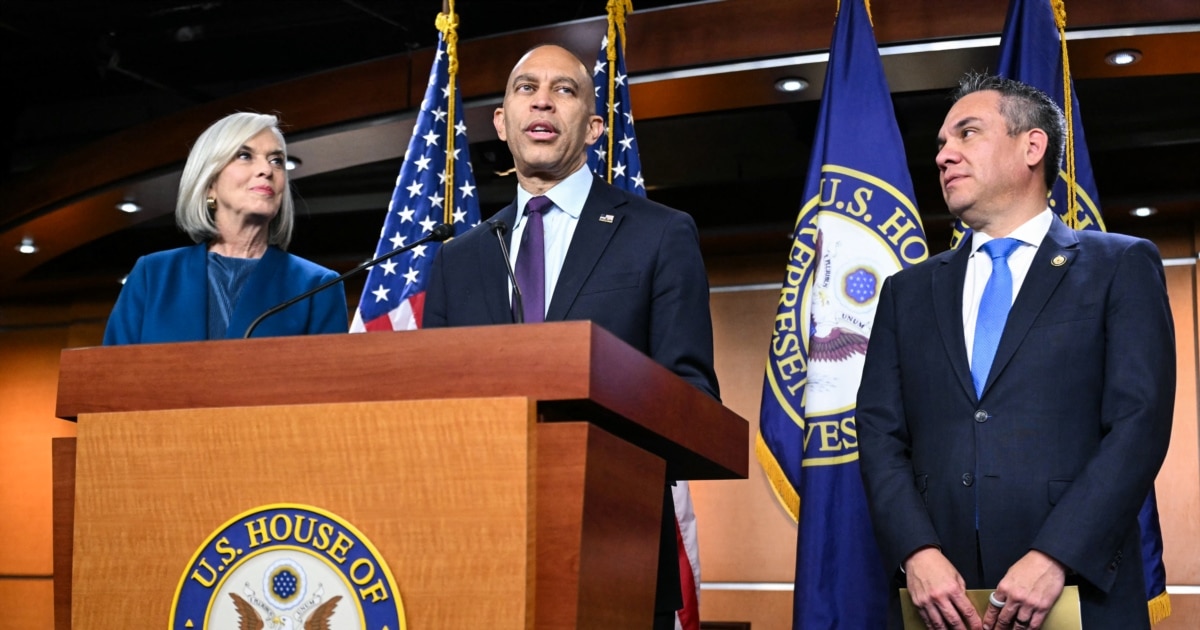
The Moment No One Saw Coming
Jim Jeffries has been selected by House Democrats as their speaker nominee after the party retaken control of the chamber in Tuesday’s midterms. The vote among Democratic members was private, but the outcome was never genuinely in doubt: he was the sole candidate. Come January 3, when the new Congress convenes and members take their oaths, Jeffries becomes the first Black person to hold the Speakership in American history.
That milestone alone would make headlines worldwide. But the real story is what it signals about how the United States will govern — and specifically how it will handle one of the most consequential foreign-policy dossiers on its desk: China.
East Asian capitals have spent the past two years bracing for legislative paralysis under Mike Johnson, a speaker whose majority was so razor-thin that a handful of rebellious Republicans could (and routinely did) hold government funding hostage. The contrast between Johnson’s tenure and what Jeffries inherits is not merely procedural. It is strategic.
Who Wins, Who Loses, Where the Pressure Lands
Jeffries enters the job with a comfortable edge over Republicans. Even before the final seven House districts resolve — including a pair in North Carolina and Minnesota heading for recounts, plus Louisiana’s December 12 runoffs — Democrats lead 257 to 171. That cushion gives him room to work without depending on Republican votes, something no modern speaker has enjoyed in recent memory without severe political cost.
For allies in Tokyo and Seoul, that matters more than any ceremonial symbolism. Both capitals have watched Washington stumble through repeated debt-ceiling crises and spending fights while trying to maintain a coherent strategic posture toward Beijing. A speaker who does not need GOP compliance on every vote is far more likely to produce the kind of stable, predictable legislation that alliance partners depend on.
The losses are real but diffuse. The hard-right wing of the Republican Party now faces a Democratic speaker who can advance bills without their consent. Congressional progressives who wanted a more aggressive agenda may find themselves disappointed if Jeffries proves more cautious than expected; the speakership is a different animal from the caucus chairmanship. And China’s leadership, which has grown accustomed to exploiting American political divisions, loses a valuable wedge.
The China Question
Here is where the non-obvious implication emerges: Jeffries is likely to pursue a harder line on China than many inside the Democratic establishment would prefer, precisely because his political position rewards it.
A speaker facing no requirement to negotiate with Conservative Republicans has fewer incentives to soften rhetoric or block legislation targeting Beijing’s economic practices. He can advance export-control measures, semiconductor restrictions, and industrial-policy investments without running the gauntlet of Johnson-style insurgencies. The CHIPS and Science Act framework that passed under Joe Biden is exactly the kind of legislation a Jeffries speakership would expand, not contract.
That does not mean he will be uniformly hawkish. Jeffries has a long record as a civil-rights lawyer and a senator focused on criminal-justice reform and domestic inequality. But his national-security record shows pragmatism rather than isolationism, and the structural realities of governing with a comfortable Democratic majority push in one direction: action on China without the constraints of a fragile coalition.
For South Korea, this cuts both ways. Seoul benefits from stronger US backing on tech-export controls that limit Chinese access to advanced semiconductors — a category where Korean firms like Samsung and SK Hynix operate at the center of global supply chains. But an assertive American stance also increases the pressure on Seoul to choose sides more sharply, narrowing its own diplomatic maneuvering space vis-a-vis Beijing, its largest trading partner.
Japan faces a similar calculus. Tokyo has aligned more closely with Washington on technology restrictions and military posturing across the Taiwan Strait. A stable Democratic majority in the House makes that alignment easier to sustain; it also raises the stakes if Jefferson ever falters, because the alternative — Republican control of the chamber — remains unpredictable in a different direction.
Institutional Credibility Is the Real Currency
The deeper impact of Jeffries’ election is not any single policy shift. It is the restoration of something America’s allies have doubted since 2023: the capacity of the House to function as a branch of government rather than a theatre of obstruction.
Mike Johnson survived only because Republican voters rewarded defiance, not governance. Jeffries faces no such incentive structure. He must deliver results for a Democratic base that turned out in significant numbers to reclaim the House, and those results will be measured in concrete legislative output — infrastructure implementation, trade enforcement, defense authorization packages that actually reach the president’s desk.
That expectation creates risk for Jeffries himself. Speakers who fail to move legislation face primary challenges from their own flank. If the 2028 cycle approaches and the House cannot demonstrate legislative productivity despite comfortable majorities, the institution’s credibility erodes further. But the probability of gridlock under Jeffries is meaningfully lower than under Johnson, and that gap is visible to foreign governments that plan in quarters, not news cycles.
What Comes Next
The immediate timeline is straightforward. The remaining seven House races will decide whether Democratic supermajority hopes survive or dissolve. The Alaskan Senate race, won late Wednesday by Democrat Mary Peltola over Dan Sullivan, gives Democrats a working majority in the Senate at 56-44 including two independents caucusing with the party. Chris Van Hollen’s challenge to Chuck Schumer for the Senate leadership adds another internal dynamic to watch as the new Congress organizes.
But the broader arc is already clear. A Black speaker presides over a Democratically controlled House and a narrowly Democratic Senate — a configuration the United States has not seen in decades, and one that reframes how the world watches American decision-making.
Tokyo and Seoul are recalibrating their diplomatic staffing and liaison channels now. Beijing is monitoring the composition of committee assignments with particular interest. In capital cities across the Indo-Pacific, analysts are already adjusting forecasts based on a simple premise: the House under Jeffries will be louder, steadier, and more legislatively productive than the House under Johnson, and that changes the tempo of American statecraft in ways that extend well beyond rhetoric.