Why Jin Sakai In Ghost Of Yōtei Signals Sony's Multi-Game Strategy
Sucker Punch is using Ghost of Tsushima's cultural momentum to boost Ghost of Yōtei's second act, but the Jin Sakai crossover points to something bigger: a live-service model built across franchises.
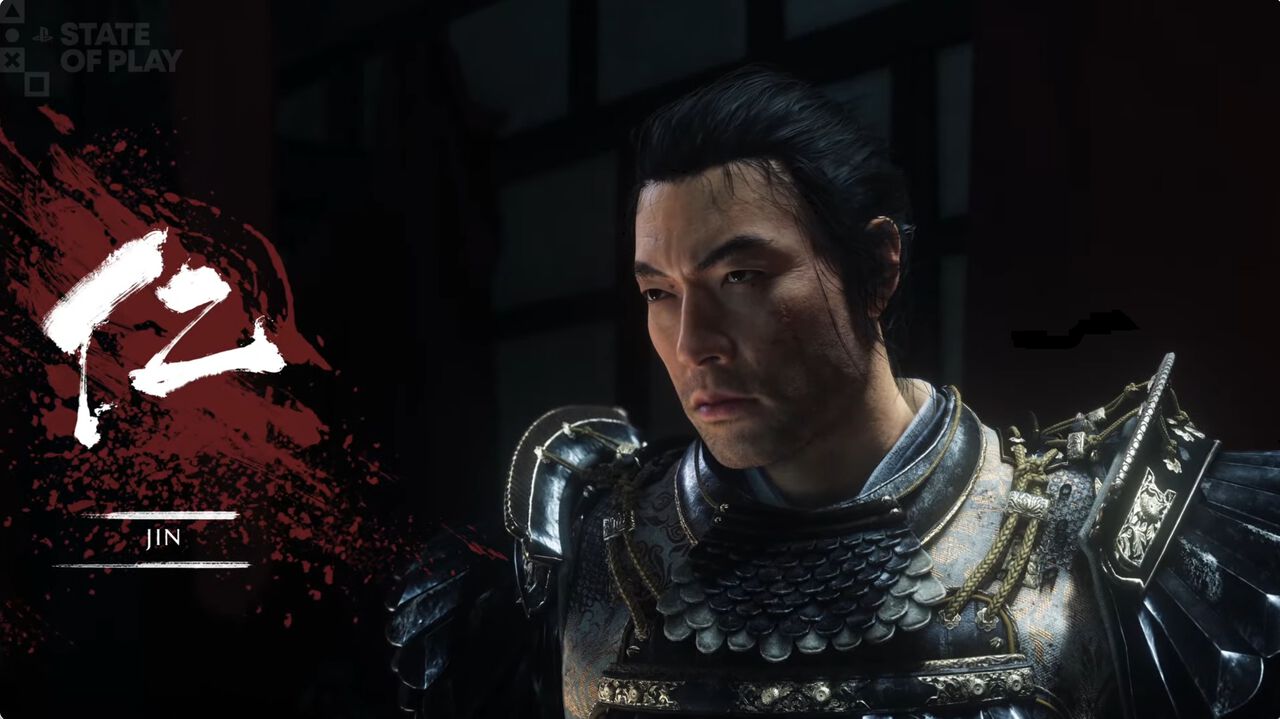
The Jin Sakai crossover is not just a cameo.
When Sucker Punch announced that Jin Sakai would appear as a playable character in Ghost of Yōtei’s roguelike survival mode Most Wanted, it looked like a generous nod to Tsushima fans. That reading misses the shape of the strategy underneath. This is Sony using one franchise’s cultural momentum to carry another across a critical threshold — and doing it in a way that redefines how a single-player studio approaches post-launch engagement.
The DLC arrives October 2 alongside the Ghost of Yōtei Complete Edition, which bundles the roguelike mode, a new story expansion called Echoes of Sekigahara, the Legends online co-op mode, and a suite of cosmetics. Existing owners can upgrade for 1,480 yen. New buyers pay 8,980 yen for the Complete Edition. Early pre-orders include the Sakai armor set — a tactical detail worth unpacking below.
But the headline move is Jin himself. He enters Most Wanted with all four combat stances from Ghost of Tsushima, his original weapon configurations intact, and his animation models faithfully recreated by Sucker Punch’s art team with Yōtei-specific modifications. The developer specifically noted the effort invested in balancing fidelity to Tsushima’s Jin with visual coherence to Yōtei’s aesthetic. That care signals this was never going to be a throwaway Easter egg.
Why Tsushima’s momentum matters right now.
Ghost of Tsushima directed by the late Nemanja Hadzic remains one of PlayStation’s most acclaimed single-player titles, and its cultural footprint in Japan has been unusually strong for a Western-developed samurai game. The Netflix film, the anime, the ongoing presence on global charts — Tsushima built a brand that outlasted its initial release cycle. Yōtei, by contrast, launched into a more crowded field and has not generated the same sustained cultural noise.
Sucker Punch understands this imbalance. Placing Jin inside Yōtei’s Most Wanted mode is an act of narrative gravity. Players who loved Tsushima but never picked up Yōtei now have a reason to. Players already invested in Yōtei get a payoff that rewards their commitment. The crossover collapses two audiences into one funnel without feeling transactional, because Jin’s design in Most Wanted is genuine — he plays differently, uses different starting gear, and brings a combat identity that fans recognize.
The roguelike mode is the real story.
Most Wanted (剑客戏谭 in the Japanese localization) is a single-player, wave-based survival mode with a roguelike progression system. Players select a bounty hunter from the Yōtei Six — the primary antagonists — fight through escalating enemy waves and mini-boss encounters, earn perks between runs, and eventually face the toughest bounty: Saito. Difficulty scales incrementally. There is no hard cap on replay.
Four characters are available: Atsu, the Yōtei protagonist; Osetsu, who wields chain sickles and kunai; Nagato, a former ally of Atsu who uses spears and bows; and Jin Sakai. Each has unique weapons, ultimate abilities, and chaining execution moves. Perks span weapon upgrades, armor changes, summons, parry improvements, and survivability. The build-crafting loop is designed to reward experimentation — the developer explicitly encouraged players to find combinations they did not expect to work.
Cosmetic unlocks from Most Wanted carry into both the base game and the Echoes of Sekigahara expansion. This is a deliberate design choice: it ties the roguelike to the larger game’s economy of self-expression and gives players a reason to return to Yōtei’s open world after completing a run.
The Sakai armor is a pricing lever.
Here is where the business strategy becomes visible. Pre-order the Complete Edition or the digital version by September 30 and receive the Sakai armor set early on October 2. Earn it through Most Wanted instead and unlock it through gameplay. Sucker Punch is not hiding the incentive structure — it is stated plainly in the official materials.
The 1,480 yen upgrade path for existing owners is aggressive. For context, that is less than many standalone DLC chapters cost at launch. The upgrade effectively asks loyal players to pay again for content that extends a game they already own — but frames it as a Complete Edition purchase, which bundles everything including Legends co-op and the story expansion. The math favors the upgrade for anyone who played Yōtei past the first 20 hours.
New buyers face a steeper decision. At 8,980 yen, the Complete Edition positions Yōtei as a premium post-launch product rather than a discounted legacy title. This is confident pricing for a game that launched nearly a year ago.
Echoes of Sekigahara builds a bridge between eras.
The story expansion splits its narrative between two time periods. The past segments take place during the Battle of Sekigahara and explore Atsu’s relationship with Nagato before the main game’s events. The present-day segments occur in 1603, as Atsu hunts bounty hunters in the Ezo region while navigating a fractured organization called the Dokufuku Party, which lost its leader Snake and now operates without central command — though not without cruelty.
A new area, Ashio-dai, introduces new enemy types, a new weapon category called nagamono (long weapons), new legendary missions, new techniques, and new armor sets. The expansion’s scope suggests Sucker Punch is treating Yōtei as a persistent world rather than a finished product with a single arc.
The free update tells the rest of the story.
Even players who never buy the Complete Edition or the upgrade receive a free patch on October 2. It adds a Beauty of Yōtei photo mode, new music for the Watanabe mode, a hybrid armor appearance system that lets players mix cosmetics and stats, and high-contrast accessibility options.
This is significant. Sucker Punch is keeping a portion of its player base engaged through free content while monetizing the deeper experience. It is a live-service posture from a studio known for crafted single-player campaigns. The free update does not feel like a consolation prize — it is a retention strategy dressed as a gift.
What this signals about Sony’s multi-title playbook.
The Jin crossover is the visible tip of a broader approach. Sony is leveraging a proven IP to extend the commercial life of a newer one, bundling content into a premium edition, offering a low-cost upgrade path, rewarding early commitment with cosmetics, and maintaining free engagement for stragglers. Every element serves a different segment of the audience without alienating any of them.
This is not traditional live-service design — there are no battle passes, no seasonal tiers, no multiplayer matchmaking as the core loop. It is a curated post-launch strategy that treats DLC as expansion rather than extraction. For a studio that has built its reputation on complete, self-contained experiences, this pivot is notable.
The question now is whether this model scales. If Yōtei’s Complete Edition performs well, Sucker Punch will have a blueprint for how to extend future single-player releases without abandoning their identity. If it underperforms, the experiment will be contained. Either way, the Jin Sakai crossover is the moment that made the strategy legible.