Jun Maeda's Cancer Announcement Changes Everything for Key
Jun Maeda, the visionary behind CLANNAD and AIR, has chosen palliative care over active treatment to preserve his strength for creation. What this means for Key's legacy and the future of visual novels.
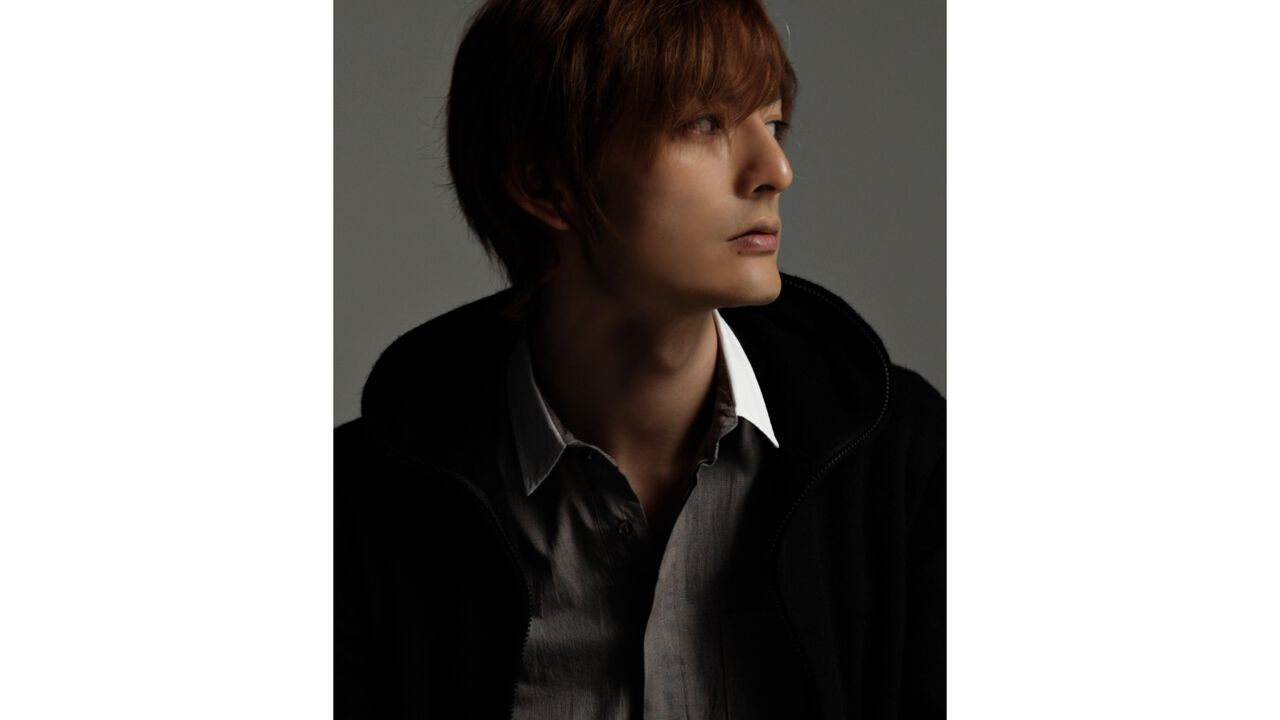
The Creative Cost of Survival
Jun Maeda did not announce his diagnosis quietly. On October 19, 2026, Key’s official X account confirmed what fans had barely dared consider: the writer who shaped an entire generation of visual novels now has throat cancer and has chosen not to fight it aggressively. Instead, he will pursue palliative care, preserving his energy for the one thing that matters to him more than anything else—his work.
The decision itself is the story. Maeda, the creative architect behind CLANNAD, AIR, Little Busters!, and dozens of other landmark titles, told the world plainly that he wants to keep creating with whatever strength he has left. Active treatment would consume that strength. So he is stepping away from it. What remains is a man who has dedicated thirty years to making people feel something real, now measuring his remaining time in songs written and scenes told.
Why This Matters Beyond the Niche
Visual novels occupy a strange position in global pop culture. They are beloved, deeply influential, and rarely taken seriously by the wider entertainment industry. CLANNAD alone has been adapted into multiple anime seasons, a film, and countless spin-offs. Its emotional DNA—the way it ties grief to warmth, loss to gratitude—has seeped into anime storytelling at large. You can hear it in shows that have nothing to do with games but owe an enormous debt to Maeda’s blueprint.
His departure from active treatment changes the calculus for everything connected to Key. The studio was never just a brand. It was built around a single creative voice, and Maeda was that voice. Without him pushing forward, the company faces a future it has never had to consider: continuation without its primary songwriter of tears.
What Has Been Completed—and What Hasn’t
For Heaven Burns Red, the mobile title currently running under Key’s banner, the news lands differently. Maeda stated he has finished writing the main story through Chapter 6’s conclusion and completed lyrics and composition for the first half of Chapter 6’s music. Those deliverables are locked in. The game will continue. Players will get the story they were promised.
But the gap between finishing a story and being able to write the next one is not trivial. Maeda’s announcement makes clear that his creative bandwidth is shrinking. There may be no Chapter 7 from him. There may be no new song cycle. The infrastructure of Heaven Burns Red will keep running, but the wellspring it drew from is drying up.
This is not unusual in creative industries—artists age, bodies fail—but it is rare in visual novels, where the writer is almost always the star. No one steps in to replace Maeda’s voice. The genre simply does not have a pipeline for it.
The Music Project Pivot
Perhaps the most telling detail in Maeda’s announcement is his sudden acceleration of an unrelated music project. He said he has redirected his focus because the time available for production is limited. He plans to finish what he has already started and release it through YouTube.
This is not a casual update. It is the behavior of someone who has calculated his remaining window and is racing toward closure. Maeda has spent decades writing music for games—over 1,500 compositions credited to him, many of them defining the sound of the medium. Now he is stripping away the constraints of game development timelines and delivery pipelines to release music directly. The implication is stark: these tracks may be among his last.
What Comes Next for Key
Visual Arts, Key’s parent company, has opened an email address and postal address for fans to send messages of support. They are accepting letters and emails but declining physical gifts. The response has been immediate and overwhelming, consistent with the devotion Maeda’s work has cultivated over nearly three decades.
But condolences do not solve the structural problem ahead. Key has already shifted away from its traditional PC visual novel releases toward mobile titles like Heaven Burns Red. The question now is whether that pivot was enough to sustain the brand without its founder actively writing new material. If Maeda’s output contracts to zero, Key becomes a licensing operation—re-releasing old titles, licensing the brand, managing live-service games powered by existing scripts.
That is not a terrible outcome. It is, however, a different outcome. The era of Maeda-shaped creation is ending, and the industry has not prepared for it because it assumed he had infinite time. He does not.
The Emotional Math of a Creator’s Final Act
What makes this moment particularly heavy is that Maeda’s entire body of work is about what happens when people face finite time. CLANNAD is a meditation on mortality disguised as a slice-of-life romance. AIR builds toward an ending that is literally about choosing between love and survival. Planetarian centers on a robot reading stories to a dying girl. Maeda spent his career asking his audiences to sit with grief, to accept loss, to find beauty in impermanence.
Now he is living inside that question himself. The artist who taught millions of people how to grieve is being asked to grieve publicly, with an audience that has loved him through every fictional ending and may not know how to handle the real one.
The palliative care decision is not surrender. It is a recalibration. Maeda has chosen to spend his remaining energy on creation rather than on prolonging life at the cost of that creation. For a man whose entire identity is built on making stories that matter, that is the only logical choice.
The Legacy That Remains
There will be more Heaven Burns Red content. There may be music releases on YouTube. There will be re-releases of CLANNAD and AIR for new generations of players who have never experienced them. The catalog is enormous and will outlive Maeda’s ability to add to it.
But the cultural moment—the sense that Key was always one step ahead of itself, producing the next emotional breakthrough—is over. That feeling was always tied to Maeda’s presence, and now it is gone. What remains is a body of work that changed Japanese popular culture and a creator who has spent his final months making sure it keeps going as long as he can hold the pen.
The fans will write their letters. The music will arrive on YouTube. The games will continue. And somewhere in Osaka, Jun Maeda will write what he can, knowing that every word is a choice about how to spend time that will not last.