Kaliningrad's Nuclear Shadow: How Putin's Doctrine Reshapes Europe — and Why Seoul Should Care
Putin has explicitly threatened nuclear use if Kaliningrad is attacked. Germany warns of serious hybrid attacks ahead. The escalation changes NATO's deterrence calculus — and offers a chilling parallel for Seoul.
The Kaliningrad Line Has Moved
Putin did not mince words at the Valdai discussion club in Moscow on October 2. If Russian territory — Kaliningrad included — comes under direct attack, Russia will consider using all available weapons. That means nuclear weapons. Not ambiguity. Not strategic silence. A stated policy shift.
The warning came days after Russia’s Foreign Ministry sent NATO a letter stating that continued blockade of Kaliningrad would be met with all means available, including nuclear weapons. The letter described NATO’s posture as dangerous and reckless and flagged a high risk of direct armed conflict in the Baltics.
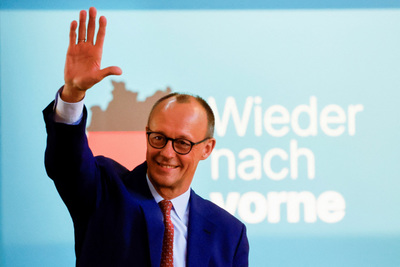
Germany’s response was equally stark. Chancellor Friedrich Merz, speaking at the 2026 International Westphalia Peace Prize ceremony in Münster, said Russia is escalating tension because it has failed to achieve its goals in Ukraine. He warned that Germany is preparing for serious hybrid attacks and that any such attack would trigger a swift and unequivocal response.
Two capitals. Two declarations. Both pointing toward the same trajectory: Europe is no longer managing a frozen conflict. It is entering a phase of active deterrence competition with nuclear overtones.
What Putin Actually Said Matters
The precise language in Putin’s Valdai remarks deserves close attention. He did not say Russia would use nuclear weapons first. He said the question of using all weapons available would become “inevitably and immediately” an agenda item if Russia faced direct attack. That is a threshold test — the moment of decision is pushed closer to the trigger than it has been in public before.
He also restated what has been growing into doctrine: that Russia’s military competitive advantage lies in its nuclear capability. He acknowledged France and Britain as nuclear powers but claimed no other country matches Russia’s strike capacity. That framing is not just posturing. It signals that Moscow views nuclear weapons as the central pillar of its deterrence strategy — not a last resort but a bargaining tool used continuously.
The context is Kaliningrad. This exclave, sandwiched between NATO members Poland and Lithuania and bordered by the Baltic Sea, is Russia’s most vulnerable forward possession. It houses the Baltic Fleet’s nuclear-capable missiles and critical air defenses. Any conflict that cuts off Kaliningrad from mainland Russia would make it a besieged asset — exactly the scenario Putin is warning against.
What makes this shift historically significant is that it marks the first time since the Cold War that a nuclear-armed state has publicly tied its nuclear threshold to the defense of a conventional military position so far forward. During the Cold War, nuclear weapons were understood as ultimate deterrents against existential threats to the homeland itself. Kaliningrad is not Moscow. It is a narrow sliver of Russian territory detached from the rest of the country by two NATO borders. By explicitly linking nuclear escalation to the survival of Kaliningrad, Putin is lowering the nuclear threshold in ways that military analysts on both sides of the Atlantic are now urgently debating.
The Hybrid Layer Is Already Here
Merz’s warning about hybrid attacks was not abstract. In August, German authorities attributed a drone explosion at Leipzig airport to Russia. That was not a frontline incident. It was an attack on European soil using asymmetric methods designed to destabilize without triggering Article 5.
Belgium’s Defense Minister Theo Fransen warned of an impending “dark winter” caused by sustained Russian hybrid operations. Danish intelligence assessed that Russia could launch limited military attacks against NATO members within months. These are not speculation. They are assessments from three different member states converging on the same threat picture.
The pattern is deliberate. Russia is testing NATO’s red lines below the threshold of collective defense — cyberattacks, sabotage, drone strikes, disinformation, energy pressure — while keeping the nuclear card visible enough to deter escalation. It is a strategy of controlled provocation designed to fracture Western resolve without crossing into open war.
The second-order effects of this hybrid campaign are already rippling through European economies and political systems. Insurance premiums for critical infrastructure have risen sharply. Corporate risk assessments now include Russia-specific contingencies that did not exist before 2022. Several Baltic states have begun mandatory civil defense drills that go beyond anything seen since the 1980s. Poland has accelerated its nuclear ambiguity question — publicly discussing whether it should develop its own deterrent capability rather than relying exclusively on extended deterrence from the United States.
These are not immediate crises. They are the slow accumulation of strategic pressure, the kind that erodes institutional confidence over time. NATO’s integrated command structure was designed for conventional warfare, not for the kind of persistent, sub-threshold harassment that Russia is now waging. The alliance has no clear protocol for responding to a campaign that degrades infrastructure, disrupts supply chains, and sows political discord — all while staying below the threshold that would trigger a collective military response.
Why Seoul Cannot Look Away
South Korea is not geographically exposed to Kaliningrad. But the logic Putin is articulating — vulnerability justifies nuclear escalation — is the same logic North Korea has perfected and the logic China quietly studies.
Seoul’s security architecture rests on extended deterrence: the U.S. nuclear umbrella, joint command arrangements, and missile defense systems. None of these are designed for the kind of hybrid warfare Russia is now waging in Europe. If Moscow can conduct disruptive operations against NATO members without triggering a full alliance response, the calculus for Pyongyang and Beijing changes.
The timing is notable. Korean media is covering this escalation now, ahead of broader Western reporting. That suggests Seoul is tracking how NATO’s deterrence model holds under pressure — because the same model underwrites its own security.
The parallel is unmistakable. North Korea occupies territory that is geographically contiguous with South Korea, just as Kaliningrad is embedded within NATO territory. Pyongyang has spent decades building a military posture designed to make any attack on its regime catastrophically expensive — a doctrine that mirrors Putin’s statement in principle if not in the specific nuclear threat. China watches both situations with analytical precision, studying how nuclear deterrence functions when a stronger power confronts a smaller but heavily armed adversary.
For Seoul, the Kaliningrad situation raises an uncomfortable question: what happens when extended deterrence fails to deter hybrid aggression? The U.S. security guarantee is real but abstract when the threat is not a tank column crossing a border but a series of calculated provocations that test alliance cohesion. NATO’s experience in Europe may well become the template for how deterrence operates in East Asia in the coming decade.
What Happens Next
Three scenarios are now on the table, and none are comfortable.
First, the deterrence holds. NATO absorbs hybrid attacks, reinforces the Baltics, and keeps Kaliningrad isolated without direct conflict. This requires internal cohesion — something Europe has struggled to maintain.
Second, a miscalculation. A drone strike causes casualties. A cyberattack takes out critical infrastructure. A limited Russian military move tests NATO’s response. At some point, ambiguity breaks and someone crosses a line.
Third, normalization of the new reality. Russia makes Kaliningrad explicitly nuclear-hardened. NATO responds with forward-deployed conventional forces and revised targeting plans. The Cold War structure returns, colder and more armed.
Merz is right that Russia is acting from desperation. But desperation is unpredictable. Putin’s Valdai speech removed one of the last remaining buffers of strategic ambiguity. The question now is whether NATO can respond with equal clarity — and whether allies like South Korea are paying enough attention to what happens next.
The dark winter Fransen warned about may not arrive with snow. It may arrive with silence — the silence after a detonation that no one saw coming because everyone assumed deterrence had already done its work.