KBS Bets Its Single-Drama Legacy on Music-Driven Storytelling
After 42 years, KBS's flagship 단막극 tradition has pivoted to 'Sound: Track' — a music-based single-drama series designed for the streaming era. Here's what the bet says about Korea's last public broadcaster.
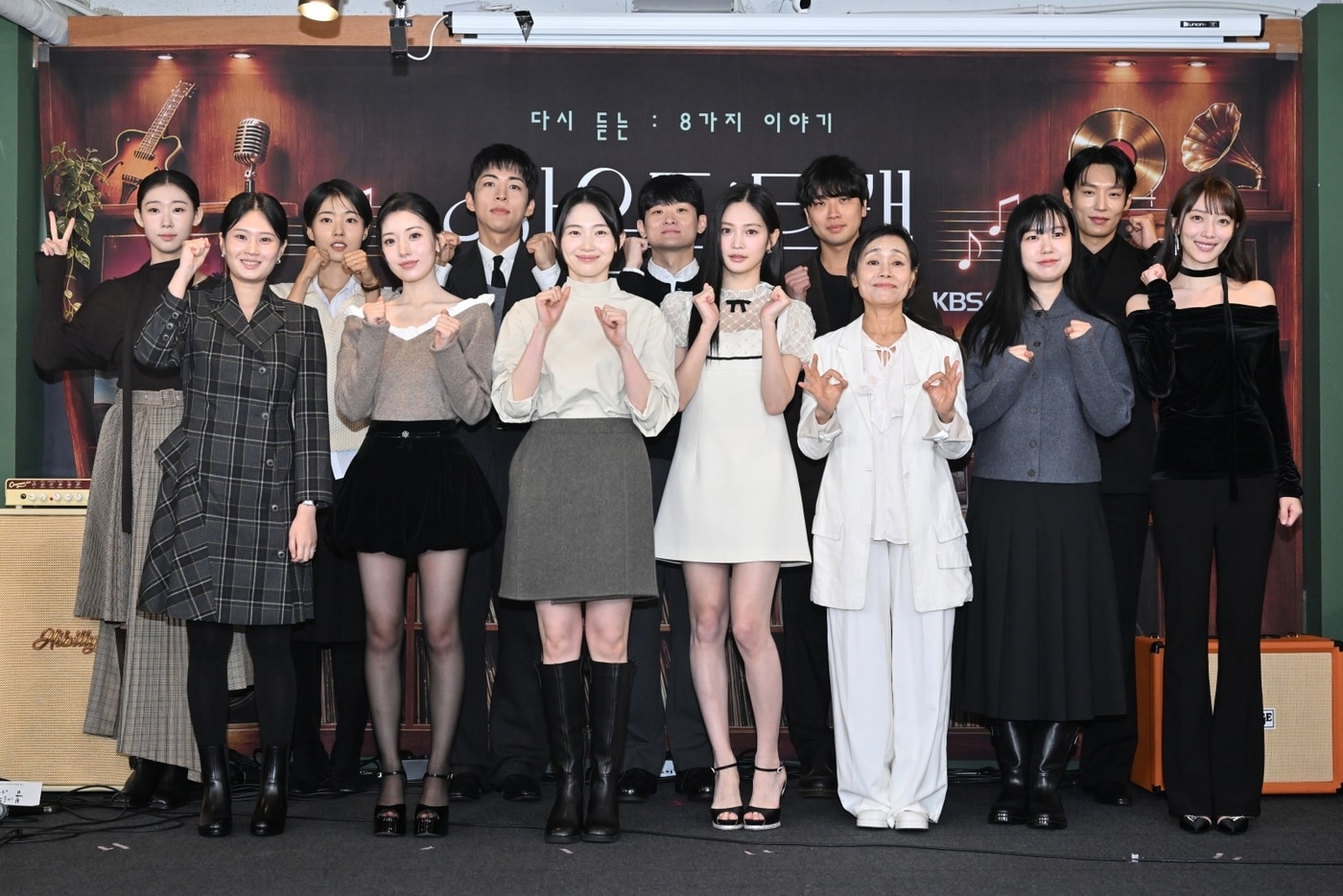
What happens when the world’s oldest network decides its drama tradition needs music?
KBS recently announced “Sound: Track” — a limited eight-episode series built entirely around beloved Korean pop songs spanning four decades. On paper, this looks like another nostalgia grab. But reading between the lines of what the producers said at the December press conference, you can see something unusual: a 42-year-single-drama juggernaut actively rewriting its own DNA to survive in an era where the cable networks killed its format.
It is a small pivot. It is also, for a state-owned broadcaster, a remarkably visible one.
The 42-year anchor
KBS’s 드라마스페셜 (Drama Special) is the longest-running single-drama anthology in Korean television history. For more than four decades, it aired standalone hour-long plays — often literary adaptations, social commentaries, intimate character studies. No recurring casts. No serialized plots. Just one story per episode, broadcast weekly or biweekly, sometimes in prime time, sometimes late.
그 단막극의 전통을 잇는 것이 이번 ‘사운드:트랙’ 프로젝트다. 개념은 단순하다: 각 에피소드가 하나의 유명 노래를 기반으로 하되, 그 노래가 품고 있는 감정과 서사를 극으로 확장하는 것이다.
First episode, “봄 내음보다 너를,” is built around singer Kim Na-young’s 2021 song and follows a struggling songwriter confronting her fear of performing after her cat dies. Director Kim Young-jun told the press he chose the song precisely because he had experienced the same loss.
Second, “연극이 끝난 후,” draws on the 1988 hit by the band Sharp, centering on a female PD reassigned to a children’s program who unexpectedly finds her way back to purpose. Third, “나의 외로움이 널 부를 때,” adapts Jang Pil-soon’s 1997 classic about unrequited love and hidden loneliness. Fourth, “바이, 썸머,” builds around IU’s 2025 release — the most recognisable name on the roster — following a group of friends navigating youthful friendship and eventual divergence.
Each track occupies a distinct emotional register. The list itself — spanning 1988 to 2025 — is a deliberate timeline of Korean popular music, one that spans generations of listeners.
Why music now?
The answer lies in two pressures pressing against traditional Korean broadcast. First, streaming has collapsed the economics of short-form prestige. Second, KBS’s 단막극 viewership has quietly declined without the genre ever dying outright.
Music solves both problems simultaneously.
A well-known song carries narrative scaffolding already baked into it — melody, lyrics, memory. An episode built around a track by IU or Jang Pil-soon enters the cultural conversation armed with emotional shortcuts no drama writer could manufacture from scratch. Viewers do not have to be convinced to care; they already brought the feeling with them.
The format also maps cleanly onto the binge cycle. Eight episodes, roughly an hour each, one per week — long enough to build attachment, short enough to finish before your next life intervention. That pacing exists today only in limited form on Korean terrestrial networks.
Director Kim Han-sel was explicit about this during the press conference, saying the team approached the project with responsibility for next season and beyond. The implication is clear: this iteration is experimental, but the intention is institutional. If the numbers hold, the music-first approach becomes permanent.
Who is watching, and why does it matter?
This is where reading Korean sources matters.
Most international coverage of Korean television treats K-dramas as exported product — the scripted serials streaming giants buy in bulk. 단막극, by contrast, is domestically anchored, culturally specific, and largely invisible outside Korea. Its audience skews older, its budgets modest, its critical profile niche.
“Sound: Track” represents an attempt to resurrect that domestic audience and recalibrate it for younger viewers simultaneously. Casting IU-backed episodes alongside sharper dramatic themes — grief, career displacement, quiet heartbreak — is a deliberate bridging move.
Actress Pyo Ye-jin said she accepted the role because her mother adored 단막극 when she was growing up. Actor Lee Ki-taek noted how abruptly the lead character shifts tone across scenes, demanding precision in performance. These comments reveal a format many observers assume is dead: still alive, still attracting committed talent, still requiring craft.
The cast itself reads like a generation bridge — veteran actress Kang Ae-shim appearing alongside rising stars Seo Su-bin, Han Ye-ji, Jung Da-bin — reinforcing the idea that this project targets both demographics the format historically held and those it has been losing.
The broader question
If KBS succeeds with “Sound: Track,” the implications extend beyond schedule planning.
No other East Asian public broadcaster operates a single-drama tradition this old. NHK’s equivalents lean heavily toward documentary and period production. China’s equivalent formats prioritize holiday specials. KBS’s commitment to one-hour, non-serialized, socially observant drama is structurally unique.
The pivot to music-driven storytelling may seem narrow. It is actually a test case for whether a national broadcaster can adapt its institutional identity without importing the serialized model that consumed independent film production across Asia over the past decade.
Episodes air Wednesdays at 9:50 p.m. and Thursdays at 10 p.m., running December 18 through mid-January. Whether this is revival or replacement depends on how Korean audiences respond to a tradition that has somehow survived 42 years only to reinvent itself once again.
The smarter bet is that단막극 never really disappears. It simply changes tune.