The Kim Hyun-ji Shadow Power Theory Won't Die
A politician's off-mic joke about the president's chief secretary running personnel decisions has reignited one of South Korea's most persistent political conspiracy theories. The story reveals the institutional ambiguity that makes shadow-power narratives impossible to kill.
The Hot Mic That Revealed a Deep Anxiety
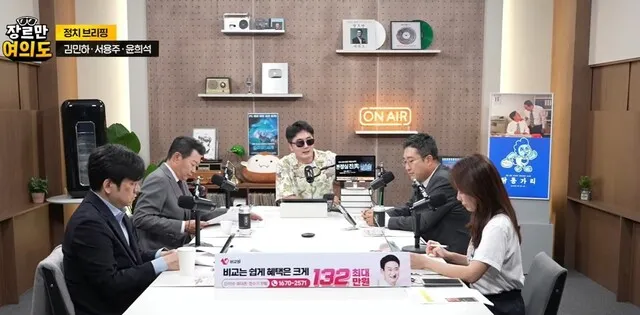
Seo Yong-ju did not mean to set off an alarm. The political researcher and former Democratic Party spokesperson was appearing on a JTBC YouTube program called Yeouido Only When Genres Allow on a Tuesday morning, casually discussing the government’s ministerial nomination controversy, when he let slip what he later called a joke. “Who handles personnel? Kim Hyun-ji, right?” the microphone caught. A producer warned him the show was live. He looked genuinely surprised.
The remark traveled fast across Korean media and social platforms. Within hours, the ruling People Power Party was issuing formal statements accusing the executive branch of secretive appointment manipulation. Opposition lawmakers demanded a formal investigation into whether the Presidential Secretariat was operating outside its statutory authority. Seo issued a Facebook apology, insisting he was not stating fact but bantering. The show’s producers also apologized, noting that Cho Sung-joo does, in fact, hold the title of Personnel Chief at the Presidential Secretariat.
The factual corrections were quick. The institutional anxiety behind the remark was not.
What made this particular incident noteworthy was not the gaffe itself—hot mics are a routine hazard of political broadcasting—but the ease with which Seo’s offhand comment landed on pre-existing ground. He did not need to argue his case. He did not need to present evidence. The audience already accepted the premise. That acceptance, more than the remark itself, is what sent shock waves through the Democratic Party’s communications team and prompted emergency briefings among senior strategists.
Who Is Kim Hyun-ji and Why Does It Matter
Kim Hyun-ji serves as the First Secretary to the President, a position that sits just below the top tier of the presidential staff apparatus. The role carries no explicit statutory power over appointments. The Personnel Chief, a separate post, formally handles that function. Yet in practice, the First Secretary operates in the president’s inner orbit—closer to daily access than any other staff member besides the Chief of Staff.
This proximity is precisely why the shadow-power narrative persists across multiple administrations. In Korean politics, formal titles tell you where someone sits on an organizational chart. Informal access tells you who actually decides things. Kim Hyun-ji’s position places her in the narrow corridor through which information, recommendations, and objections must pass before reaching the president. That gatekeeping function, however incidental, generates speculation about influence that no job description can dispel.
Kim Hyun-ji has been the subject of this rumor cycle before. During the Yoon Suk Yeol administration, questions surfaced repeatedly about whether she wielded influence over appointments without holding the official portfolio. Senior officials from multiple ministries were reported to have adjusted their staffing recommendations based on informal signals originating from the First Secretary’s office. Each time, the story cooled. Each time, a new hot mic or leaked conversation revived it. The pattern itself has become a kind of institutional folklore—a recurring motif in the dark comedy of Yeouido politics.
What distinguishes the current iteration is the speed of amplification. Where previous episodes required weeks of investigative reporting to gain traction, the JTBC incident generated headline coverage within forty-five minutes and trended across multiple social media platforms before Seo could complete his apology. The infrastructure of political gossip in South Korea has accelerated dramatically, and the Kim Hyun-ji theory benefits from every structural change that makes rumors travel faster.
The Structural Ambiguity That Fuels the Theory
The Korean presidential system creates an institutional environment where shadow-power rumors are almost inevitable. The president’s staff apparatus is enormous—dozens of secretaries, aides, and committee members—all operating under rules that do not always clearly define their individual boundaries of authority. The Personnel Chief reports to the Chief of Staff, not directly to the president. The First Secretary has no formal personnel mandate but arguably has better access.
This arrangement produces a chronic disconnect between who is responsible and who is perceived to be influential. When a ministerial appointment proceeds smoothly, the Personnel Chief receives credit. When it stumbles or appears politicized, speculation shifts to whoever stood closest to the president during the decision. Kim Hyun-ji occupies that position by default, making her the natural target for grievances that have no formal outlet.
When Seo Yong-ju claimed that “there is no Personnel Chief” and implied that Kim Hyun-ji filled that vacuum, he was expressing a widely held informal assumption rather than a documented fact. The show’s correction—that Cho Sung-joo does handle appointments—reaffirmed the formal structure. But it did nothing to address the underlying suspicion: formal structures in the Blue House rarely reflect how decisions actually get made. Bureaucrats within the secretariat themselves acknowledge, in private conversations, that the published org chart bears only a loose relationship to operational reality.
This gap between official hierarchy and actual influence is not unique to South Korea. It exists in every executive-centered system. What makes it particularly combustible in Korea is the concentration of power in a single presidency and the cultural expectation that access, not title, drives outcomes. Korean political culture has long operated on the assumption that the real story lives beneath the surface of official statements. A hot-mic remark confirming that assumption carries disproportionate weight precisely because it sounds like insider knowledge rather than speculation.
Second-Order Effects and Institutional Consequences
The consequences of this incident extend beyond the immediate political sparring. Several Democratic Party officials privately acknowledged that the repeated revival of the Kim Hyun-ji theory creates a compounding credibility problem. Each time the party dismisses the rumor as baseless, it reinforces the perception that there is something to dismiss—something being hidden. The more aggressively the secretariat denies influence, the more plausible the allegation becomes to skeptical observers.
The personnel appointment process itself faces indirect pressure. Officials who might otherwise advocate for merit-based selections now weigh the political optics of bypassing informal channels. Several mid-level bureaucrats reported adjusting their recommendations preemptively, anticipating that any deviation from the First Secretary’s informal preferences would generate gossip regardless of whether those preferences were actually communicated. This self-censorship, subtle and unmeasured, represents a real cost to the system—a distortion of process caused not by any formal authority but by the fear of what might be inferred.
Media organizations have also begun treating the Kim Hyun-ji theory as a standing story rather than an episodic scandal. Outlets now include routine reference to her influence in coverage of appointment controversies, normalizing the assumption that she functions as a shadow Personnel Chief. This framing shapes public understanding independently of any single incident. The theory has entered the descriptive vocabulary of Korean political journalism, which means it will persist regardless of whether any future hot mic provides fresh material.
Who Wins, Who Loses
The immediate political calculus favors the opposition. The People Power Party used the remark to press allegations of opaque appointment manipulation, a charge that carries weight in a country still sensitive to executive overreach. For a party that has faced its own controversies over patronage and insider appointments, the timing was sharp. Opposition lawmakers framed the incident as evidence of a pattern, linking it to previous appointment disputes and calling for statutory reform of the Presidential Secretariat’s personnel procedures.
For the Democratic Party, the damage is more diffuse but real. A senior figure’s offhand comment—even framed as a joke—feeds the very narrative the party claims to oppose: that power in Seoul operates through back channels rather than open process. The party’s repeated dismissal of the Kim Hyun-ji theory as conspiracy has lost persuasive power with each revival. Internal communications leaked to the press revealed frustration among party strategists who argued that outright denial was no longer credible and that a more nuanced response was needed.
Kim Hyun-ji herself is the unnamed winner in a strange sense. The attention, however intrusive, confirms the implicit premise of the rumor: that she is consequential enough to warrant speculation. Silence from her camp so far has been interpreted by insiders as deliberate—she has learned that any public response amplifies the narrative further. That silence, in turn, feeds the narrative, creating a self-reinforcing loop that no formal statement can break.
Why This Story Keeps Coming Back and What It Means
Conspiracy theories about informal power in Korean government are not driven by evidence. They are driven by structural uncertainty. As long as the presidential staff system remains opaque and as long as personnel decisions are perceived to move through informal networks rather than published criteria, the Kim Hyun-ji theory will resurface. The JTBC hot-mic incident will fade from the news cycle within days. The underlying question it tapped into—how power actually flows inside the Presidential Secretariat—remains unanswered. That is what makes the rumor durable.
Seo Yong-ju’s regrettable remark happened to be the spark. The dry tinder was already in place: decades of centralized presidential authority, a staff system designed for speed rather than transparency, a political culture that rewards insider knowledge, and an opposition that benefits from every suggestion of hidden control. The theory will not die because it serves too many masters. Reform advocates cite it as evidence that the system needs oversight. Opposition parties use it as ammunition in specific disputes. Journalists treat it as shorthand for broader questions about executive accountability. Even supporters of the current administration cannot entirely dismiss it without validating the accusation that they have something to hide.
The only way the narrative loses traction is if the institution it describes becomes legible. That would require published criteria for personnel decisions, clear documentation of who participates in nomination discussions, and enforceable boundaries around staff authority. None of these reforms are technically difficult. All of them require the current administration to accept constraints on a system that has always operated through informal channels. Until that happens, another hot mic will revive the theory, and the cycle will begin again.