Kim Jong Un's Bridge to Beijing: Re-anchoring North Korea
Kim Jong Un's first trip to China in a year, marked by a new border bridge, signals Beijing's push to re-anchor Pyongyang and rebalance the Sino-DPRK relationship after years of Moscow focus. The move reshapes regional deterrence calculations.
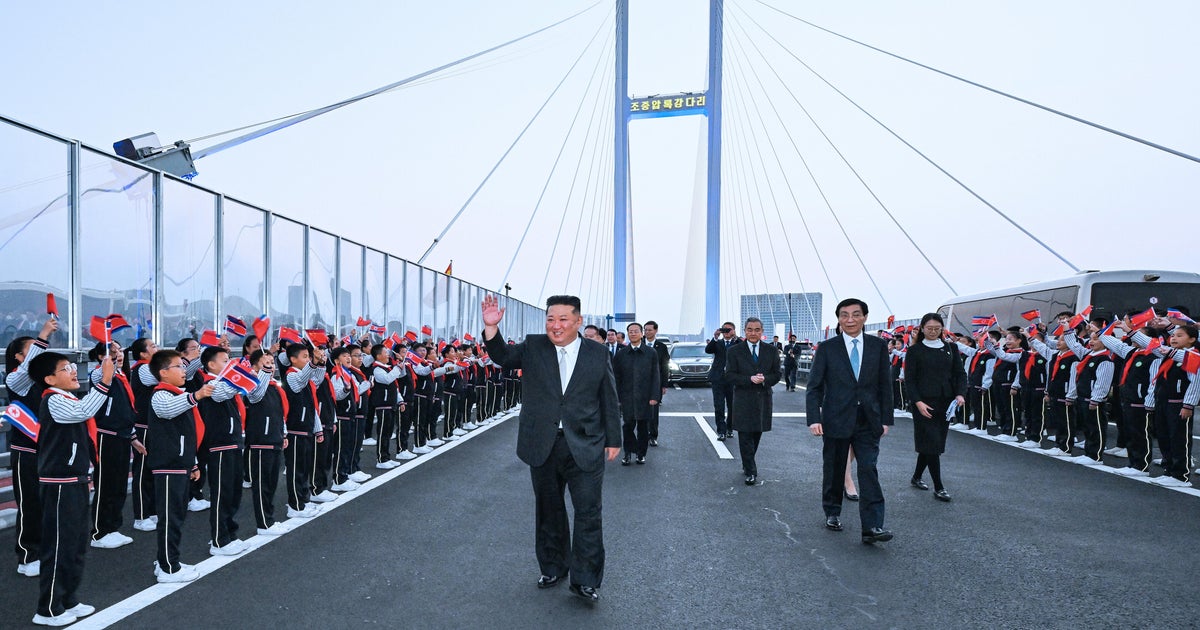
A bridge of stone and signal
North Korea’s leader Kim Jong Un crossed into China on Saturday not through the familiar rail tunnel of Dandong, but over a newly opened bridge spanning the Yalu River. The ceremony in the border city was brief: a handshake with Chinese Foreign Minister Wang Yi, a visit to a Korean War memorial, a tour of a car factory. But the symbolism carried weight beyond infrastructure. For the first time in a year, Kim had set foot on Chinese soil, and Beijing chose to mark it with a permanent structure—a bridge designed to link the two countries physically and, in Pyongyang’s words, “join the minds of the peoples.”
The visit arrives at a moment when North Korea’s foreign policy has grown increasingly assertive, framing itself as part of a bloc opposing what it calls a “new Cold War” led by the United States. Yet this trip reveals a recalibration. After months of deepening military ties with Russia—sending thousands of troops and conventional weapons to support Vladimir Putin’s war in Ukraine—Kim is now re-centering his relationship with Beijing. The bridge is both literal and metaphorical: a channel for trade, travel, and political reassurance, and a statement that Pyongyang’s primary patron remains the one neighbor that can sustain its economy and shield it from international isolation.
What the details reveal
According to South Korea’s Unification Ministry and China’s Xinhua News Agency, Kim arrived in Dandong and proceeded directly to a memorial commemorating Chinese support during the 1950–53 Korean War. There he reaffirmed the “invincible DPRK-China friendship forged at the cost of blood.” He then met with Wang Huning, a member of China’s Politburo Standing Committee, who conveyed greetings from President Xi Jinping. The two toured a local car factory before Wang accompanied Kim back to the bridge for the send-off.
No substantive joint statement was released. That is typical: Sino-DPRK diplomacy often favors performative gestures over explicit commitments. But the itinerary tells a story. The visit stayed within China’s Liaoning province, avoided Beijing, and centered on symbolic and economic landmarks—not nuclear or missile talks. China appears to be emphasizing soft infrastructure over hard security deals, at least publicly. The bridge, once operational, will facilitate cross-border truck traffic and possibly passenger flow, offering a tangible benefit to a North Korean economy still strained by sanctions and chronic shortages.
The pivot from Moscow to Beijing
North Korea’s recent alignment with Russia has been unprecedented in scale. Since 2023, Pyongyang has delivered ammunition, artillery shells, and likely thousands of troops to support Moscow’s war effort. In return, Beijing has watched nervously as Moscow gains a reliable military partner and North Korea reduces its diplomatic dependence on China. Xi Jinping’s birthday parade in September 2025, attended by both Kim and Putin, underscored the new triangle—but also hinted at China’s discomfort. The presence of Russia alongside North Korea risks diluting Beijing’s traditional role as Pyongyang’s sole patron.
This year, Kim has not visited China. The gap allowed Russia to fill the space, and North Korean soldiers to appear on Ukrainian battlefields. Now, with the bridge opening and the Dandong visit, Beijing is reclaiming the narrative. The gesture is classic Chinese statecraft: invest in physical links, remind neighbors of historical ties, and avoid confrontational language. China has long preferred to manage North Korea through engagement rather than pressure, and the bridge is a direct extension of that approach.
Regional implications
For Washington, Tokyo, and Seoul, the visit reinforces a familiar anxiety: that China may be working to stabilize North Korea economically and politically, thereby reducing the leverage that sanctions and military deterrence can provide. A more self-sufficient Pyongyang is harder to constrain. The bridge, if it stimulates trade and cross-border movement, could subtly improve living standards in North Korea’s northeast—a region that has seen limited development due to sanctions and geographic isolation.
At the same time, the visit does not erase North Korea’s military cooperation with Russia. Kim is likely playing multiple patrons against each other, a strategy his father and grandfather pursued. But the choice to highlight China first, with a ceremony centered on friendship and shared history, signals that Beijing remains the indispensable relationship. For the US-Japan-South Korea alliance, the lesson is that deterrence must account for a North Korea that is less isolated than it appears, and whose economy may receive a small but symbolic boost from closer ties with China.
The human dimension
English-language coverage of North Korea often focuses on missiles and summits. The everyday reality of the regime is held together by logistics: fuel, food, medicine, and the movement of goods across its porous border with China. That border runs through Dandong, which already handles most of North Korea’s legal trade. The new bridge adds capacity and sends a political message that China is willing to deepen connectivity even as it calls for denuclearization.
Kim’s own words after crossing the bridge—“the bridge would undoubtedly and correctly fulfill its historic mission of linking the two countries and firmly joining the minds of the peoples of the two countries”—are formulaic, but the choice of words is deliberate. “Joining minds” echoes decades of propaganda about socialist brotherhood, a language that resonates more in Pyongyang than in Moscow. It is a reminder that ideology still matters, however diluted, in Sino-DPRK relations.
What happens next
No new agreements were announced. No trade deals were signed on camera. The visit was a confidence-building measure, a way for both sides to reaffirm ties without constraining their options. China will continue to provide economic lifelines through informal channels and border zones. North Korea will continue to balance between Beijing and Moscow, extracting benefits from both while avoiding full dependence on either.
For the US and its allies, the bridge is a warning: attempts to isolate North Korea through sanctions alone are insufficient when a neighbor is willing to build roads, rail, and rivers crossings that bypass restrictions. The real challenge is not just deterrence but management—keeping the regime stable enough to prevent collapse, but constrained enough to limit provocations.
The new bridge in Dandong will carry trucks, not tanks. Yet its shadow stretches across the wider geopolitics of Northeast Asia. In a region where history is never past and infrastructure is always political, Kim Jong Un’s visit reminds us that the oldest ties remain the most durable.
Conclusion
Kim Jong Un’s trip to China marks a deliberate step back toward Beijing after a period of closer cooperation with Moscow. The newly opened Yalu River bridge is both a practical upgrade and a symbolic gesture, signaling that China remains Pyongyang’s primary patron and economic lifeline. For the United States and its allies, the visit underscores the limits of sanctions and the need to account for China’s role in stabilizing the North Korean regime. The bridge may link two cities, but it also connects decades of strategic ambiguity—and the next chapter of Sino-DPRK relations will be built on such concrete foundations.