Kim Jong-un's China Visit Signals DPRK's Balancing Act Before APEC
North Korea's leader bypassed Beijing for a stop in Dandong, meeting a #4-ranking official instead of Xi Jinping. The move came days before a bridge linking the two countries finally opens — and ahead of APEC, where Trump and Putin may face off.
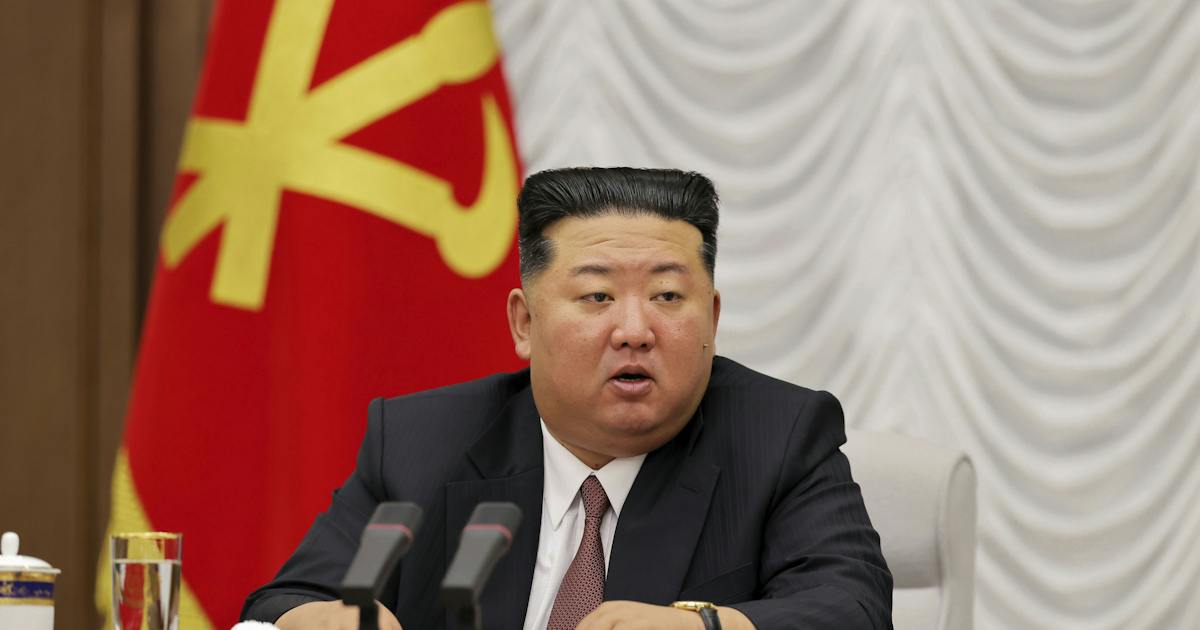
The visit that wasn’t in Beijing
Kim Jong-un arrived in Dandong on October 24 for what was meant to look like a routine cross-border trip. What actually unfolded was a carefully staged message, aimed as much at Washington as at Beijing.
He met Wang Huning, ranked fourth in the Chinese Communist Party hierarchy and chairman of the National Committee of the Chinese People’s Political Consultative Conference. Wang is a ideologue, not a dealmaker. He is not the person who brokers foreign policy. That kind of work happens elsewhere — usually with Xi Jinping personally involved.
Kim did not go to Beijing. He flew into northeastern China, stayed only hours, and returned home the same day. Premier Li Qiang showed up in Dandong to welcome him, which is a notable gesture — a premier traveling to a border city signals attention. But the absence of a Xi meeting is the louder signal.
Xi Jinping and Kim Jong-un met in Pyongyang back in June. Two months ago. That is not a long time to leave a relationship untouched. If Kim had gone to Beijing, the reading would have been clear: a prep meeting before a potential summit with Donald Trump. Instead, he came to Dandong and turned around.
The bridge that took twelve years to open
The visit landed on the eve of something symbolic that took over a decade to materialize. The new Yalu River bridge connecting Dandong and Sinuiju — completed but left unbuilt for roughly twelve years because China and North Korea could not agree on how to split construction costs — finally opened to traffic on October 15.
The delay was petty by diplomatic standards. The opening is not.
This is the first land crossing of its kind in eighty years of post-Korean War separation between the two countries. China and North Korea have traded across rivers and rail for generations, but this bridge changes the geometry. It turns a symbolic connection into a physical one. Trucks can move. Goods can flow. The logistics of sanction evasion become harder for Washington to monitor when there is a paved road where there was once only a half-built skeleton of concrete.
Hu Jintao, a senior Nikkei analyst, noted that the cost-sharing dispute likely resolved itself through Chinese concession — and that Kim’s visit timing suggests Pyongyang agreed in return to play along with Xi’s current historical narrative project. Xi has been increasingly vocal about China’s exclusion from the post-World War II order in Asia, resentful that the San Francisco Peace Treaty process left Beijing out of the room. Kim’s appearance at a Korean War museum in Dandong, alongside a top party figure, reads as participation in that story.
Why Dandong matters more than you think
Dandong sits directly across the Yalu River from Sinuiju, North Korea’s fourth-largest city. The two cities are separated by a river so narrow that on clear days you can see both sides simultaneously. It is the most watched border crossing on the planet and also one of the least regulated when it comes to what actually moves through it.
China is North Korea’s economic lifeline. Over 90 percent of Pyongyang’s trade flows through Beijing’s corridor. The new bridge does not change that percentage dramatically, but it changes the velocity. What moved slowly for twelve years now moves.
More importantly, the bridge’s opening coincides with a shift in Chinese posture toward North Korea that has been gradual but real. Xi Jinping has stopped treating Kim Jong-un as a pariah to be managed and started treating him as a strategic asset to be cultivated. Wang Huning hosting Kim is consistent with that framing — ideologically aligned, structurally peripheral, which is exactly where Xi wants someone like Wang to operate when the goal is signaling without committing.
The APEC signal
All of this builds toward November, when APEC convenes in Korea and Donald Trump is expected to attend alongside Vladimir Putin. Reports suggest a Trump-Putin meeting is on the table. A Trump-Xi meeting is also being discussed. In that environment, Kim’s brief appearance in Dandong serves a purpose: it shows the United States that North Korea retains access to great-power patronage even as sanctions bite and even as Moscow pulls it closer.
North Korea has been deepening its military relationship with Russia in recent months, supplying ammunition and troops for the war in Ukraine. The pivot toward Moscow is real and accelerating. But Beijing remains the structural anchor. Kim does not need to choose between Russia and China. He needs to make sure both know he still has leverage with each.
The Dandong stop accomplishes that. It whispers to Washington: I am not isolated. It whispers to Moscow: I am not abandoned. And it whispers to Pyongyang’s own elites: I can still move freely across the most restricted borders in the world.
What happens next
Kim is expected back in Pyongyang. The bridge in Dandong will carry traffic. The museum visits will be photographed and disseminated through state media as evidence of enduring fraternal ties.
The real test will come at APEC. If Kim is invited — or if he finds a way to insert himself diplomatically — the Dandong signal will be reinforced by face-to-face contact with leaders who control the levers of the economies that keep North Korea functioning. If he is excluded, the visit remains a useful but limited gesture.
Either way, the bridge is open. And bridges, once built, tend to carry more than just trucks.