Kim's Dandong Visit Sends a Calculated Message to Beijing and
Kim Jong Un's surprise single-day trip to Dandong — bypassing Beijing entirely — signals calibrated diplomacy aimed at both China and the US, with the new Yalu River bridge at the center of competing economic and sanctions strategies.
The Visit That Wasn’t in Beijing
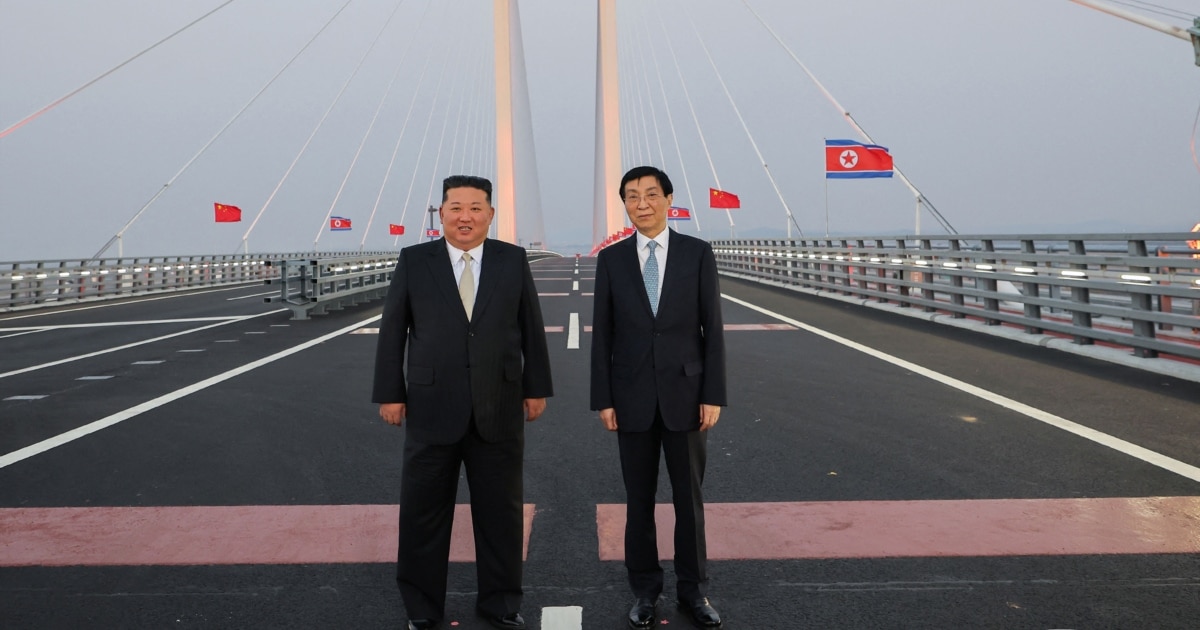
Kim Jong Un traveled to China on Wednesday and returned the same day. He did not meet Xi Jinping. Instead, he was received by Wang Huning, China’s political heavyweight ranked fourth in the power hierarchy, along with Foreign Minister Wang Yi. The location was Dandong, a border city in Liaoning province, not the capital.
This was Kim’s sixth foreign trip since ascending to power and his first visit abroad in more than a year. His last trip to China was to Beijing in September 2023, where he met Xi directly. The choice to bypass Beijing this time is not accidental. Geography and protocol are themselves diplomatic messages, and Pyongyang sent both.
Reading the Rituals
The visit coincided with the 76th anniversary of China’s intervention in the Korean War — an event Beijing commemorates annually as the War to Resist US Aggression and Aid Korea. Kim paid respects at the Anti-US Aggression and Aid Korea Memorial Hall and laid flowers at the monument honoring Chinese People’s Volunteer Army soldiers. He called the site a “noble blood-stained testimony to the invincible friendship between North Korea and China.”
Those words are traditional rhetoric. The substance lies elsewhere. Wang Huning’s presence, rather than Xi’s, signals that Beijing treats this visit as important but controlled — a reaffirmation of ties without the theatrical weight of a head-of-state summit. North Korea also sent its own calibrated delegation: Foreign Minister Choe Son Hui, Party Secretary Cho Yong-won, and Kim Yo-jong, Kim’s powerful sister. These are the faces of routine strategic alignment, not crisis diplomacy.
The Bridge Is the Real Story
What makes this visit notable is not what was said at the memorial hall. It is the infrastructure Kim was shown off.
The newly opened Xinyalu River Bridge, officially opened on May 15, connects Dandong with North Korea’s Sinuiju across the Yalu River. The structure spans roughly three kilometers with four lanes. It is designed explicitly to increase cross-border trade and passenger movement. Wang Huning personally accompanied Kim partway across the bridge before seeing him off.
Trade through Dandong has long been the lifeline for North Korea’s sanctioned economy. The new bridge doubles the crossing capacity compared to the older, older bridge nearby. For a country that relies heavily on cross-border commerce with China — estimates suggest the vast majority of its formal trade flows through Chinese ports and land crossings — the bridge is economically significant beyond its physical dimensions.
The American Warning
The US State Department did not stay silent. A spokesperson stated that the new bridge’s opening underscored the importance of ensuring increased border trade is not used to facilitate sanctions evasion or support North Korea’s illicit weapons programs. Washington reiterated that China has obligations under UN Security Council resolutions and must enforce sanctions at its own borders.
The timing is notable. The US warning came after the bridge opened and ahead of Kim’s visit, suggesting Washington anticipated the infrastructure would be leveraged politically. The message is direct: the bridge is an opportunity, but also a risk.
What Beijing Gains and Loses
China benefits from the bridge. Increased trade through Dandong generates revenue for the region and gives Beijing another lever of influence over Pyongyang. But the bridge also amplifies the enforcement problem. More traffic means more opportunity for sanctions evasion — smuggled goods, dual-use materials, cash flows.
Beijing has a consistent dilemma: it wants a stable North Korea but not one that destabilizes the region through weapons testing or defectors. It wants trade to continue for humanitarian and geopolitical reasons but not in ways that undermine the very sanctions it has voted to uphold. The new bridge compresses these contradictions into a single piece of infrastructure.
What Washington Misses About the Timing
Kim’s visit to Dandong rather than Beijing is most legible when read against the broader arc of North Korean diplomacy. After years of isolation, Kim has been rebuilding ties with China while also testing how far he can push military capabilities without provoking a full-break. The current moment carries implied dynamics with the Trump administration, though neither side has made that connection explicit.
The visit’s brevity and the avoidance of Xi suggest Pyongyang is managing expectations on both sides. It is reminding China of historical ties without demanding special treatment. It is demonstrating engagement with the outside world without signaling desperation. And it is keeping open the possibility that Washington, too, may eventually need to talk to a North Korea that refuses to be isolated.
Who Wins and Who Loses
China wins in the short term: continued access to a neighbor it considers strategically vital, a visible infrastructure project that reinforces its role as North Korea’s economic anchor. Kim wins by maintaining the appearance of parity — receiving a senior Chinese official rather than the top leader, but still commanding the headline. The US loses nothing concrete but gains ammunition for diplomatic pressure on Beijing. North Korea’s own population receives the symbolic reinforcement of continued survival partnerships.
What Happens Next
The real test is what happens at the bridge in the months ahead. If trade volume increases significantly without meaningful compliance monitoring, the US warning will ring hollow. If Beijing enforces sanctions rigorously despite the new infrastructure, Pyongyang will adjust its tactics elsewhere. If the bridge becomes a symbol of deeper economic integration, the geopolitical implications could reshape the region’s calculus on North Korea.
For now, the visit was a carefully staged reaffirmation — traditional language, modern infrastructure, no summit theater. That is the point. Kim does not need a grand ceremony. He needs to show that North Korea remains connected, capable of maneuver, and unwilling to be treated as a diplomatic afterthought by anyone, including its closest ally.