King Charles Just Joined the AI Safety Lobby. Here's Why It Matters.
King Charles III brought NVIDIA, DeepMind, and OpenAI executives together at a Scottish estate to argue that AI governance needs a moral voice — one the UK is trying to claim while the US and China race ahead on capability.
The King Is No Longer Just a Figurehead
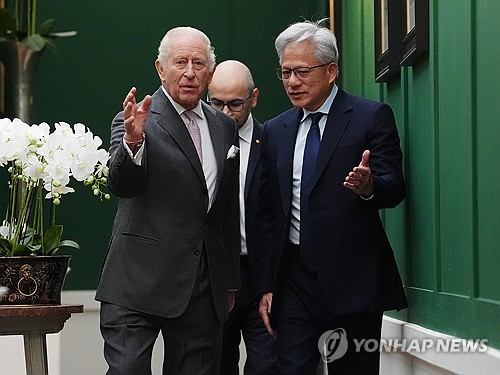
King Charles III hosted a meeting at Drumalby House in Scotland last week that quietly reframed what the British monarchy does in the 21st century. Jensen Huang, CEO of NVIDIA; Demis Hassabis, co-founder of DeepMind and Google’s chief scientist; and Sarah Freund, OpenAI’s CFO, sat across from the monarch to discuss something most people would never expect to find on a royal agenda: how to keep artificial intelligence from becoming an existential threat.
Charles opened with a blunt assessment. AI development was accelerating at a pace he found deeply troubling, and he wanted assurance that humanity would not lose control over its own destiny. His exact words — as reported by Reuters and the BBC — framed the issue as a question of human dignity: people needed to know their fate and their souls were not being handed over to systems no one fully understood.
That framing is not accidental. Charles has spent decades cultivating expertise in sustainability, architecture, and institutional reform. This was his latest move into a domain where Britain traditionally holds sway — global governance — even as the country’s hard power has dimmed.
Huang’s Counter-Argument: Regulate Products, Not the Engine
Jensen Huang did not arrive to agree blindly. He pushed back in a way that reveals exactly where the fault lines lie in the AI safety debate. Huang argued that AI is fundamentally different from social media. Social media is a product. AI is the technology behind every product — the engine, not the vehicle.
His prescription was specific: test AI systems rigorously before they ship, and hold back deployment when they are not safe enough. If new laws are needed, amend existing frameworks. The government should monitor what happens after products reach the market, not try to micro-manage the underlying research.
This is the position of a man whose company sells the chips that power most of the world’s AI models. Huang has consistently opposed heavy-handed regulation of AI development itself, arguing that it would slow progress and cede advantage to competitors — namely, China. His appearance at Charles’s meeting was not a surrender to the safety camp. It was an attempt to steer the conversation toward product-level oversight, where the burden falls on manufacturers rather than researchers.
The Unusual Alliance: Monarchy Meets Big Tech
What makes this meeting significant is not just who showed up but where it happened and who organized it. Drumalby House is a private Scottish estate. This was not a Whitehall briefing or a government commission. Charles convened these figures on his own terms, assembling a coalition that blends moral authority with technical credibility.
Hassabis brings deep expertise in both AI research and safety — DeepMind was one of the first labs to publish serious work on AI alignment. Freund represents OpenAI, the company that launched the current wave of public anxiety about AGI risk. Huang represents the hardware ecosystem that makes all of this possible. Together, they form an unlikely triad: the chip maker, the model builder, and the safety researcher, all sitting at a table with a king.
The implication is clear. The UK is attempting to position itself as the venue where the conversation about AI governance actually happens — not through legislation alone, but through a network of influential actors who can shape norms before laws catch up. If successful, this could give Britain disproportionate soft power in a domain where it otherwise lacks the scale of the US or the speed of China.
The Geopolitical Context: Britain Without Brute Force
The meeting cannot be understood without acknowledging the landscape. The United States has produced the dominant AI models and the leading chip designs. China is investing aggressively and moving fast, often with fewer constraints. Europe is drafting regulation — the AI Act is already law — but implementation remains uneven and the continent lags in cutting-edge model development.
Britain sits in a narrow middle ground. It has DeepMind, OpenAI’s UK operations, and a growing startup ecosystem. It does not have NVIDIA-level hardware dominance or China-level state coordination. What it does have is institutional credibility and a king willing to use it.
Charles’s intervention signals that the UK wants to lead on the question of how AI should be governed, even if it cannot lead on how fast it should be built. This is a strategy of influence rather than dominance — hoping to set the terms of debate while others compete on capability.
What Comes Next
Several outcomes are plausible. The most likely is that this meeting becomes a symbol — a photo opportunity that reinforces Britain’s self-image as a thoughtful mediator in global tech disputes. The more ambitious possibility is that it seeds a formal framework for AI oversight that other countries adopt or respond to. The risk is that it achieves neither, leaving the UK talking to itself while the US and China reshape the field on their own terms.
Huang’s emphasis on product-level regulation rather than research-level control suggests the industry prefers the first path — visible governance that does not slow development. Charles’s warning about existential risk suggests the safety camp wants something more structural. Where those positions meet remains unclear.
What is clear is that the conversation about AI governance is no longer confined to laboratories and legislatures. It has moved, at least partially, into the realm of informal influence — royal estates, private meetings, and public statements from figures who carry weight without holding office. That shift matters. Who gets a seat at that table, and what they walk away promising, may define the next phase of AI policy more than any single law.