Korea Cracks Down on Accounting Fraud With First-Ever Audit Cycle
South Korea's top financial watchdog announced a sweeping overhaul of corporate accounting inspections, slashing review cycles from roughly 20 years and tightening penalties for both firms and executives caught cutting corners.
A 20-Year Blind Spot
South Korea’s financial watchdog has declared war on its own complacency. For decades, listed companies on the Korea Exchange have sat through an average inspection cycle of roughly two decades — longer than most boards of directors survive. In that window, a CEO could serve three full terms without a single rigorous accounting review by regulators.
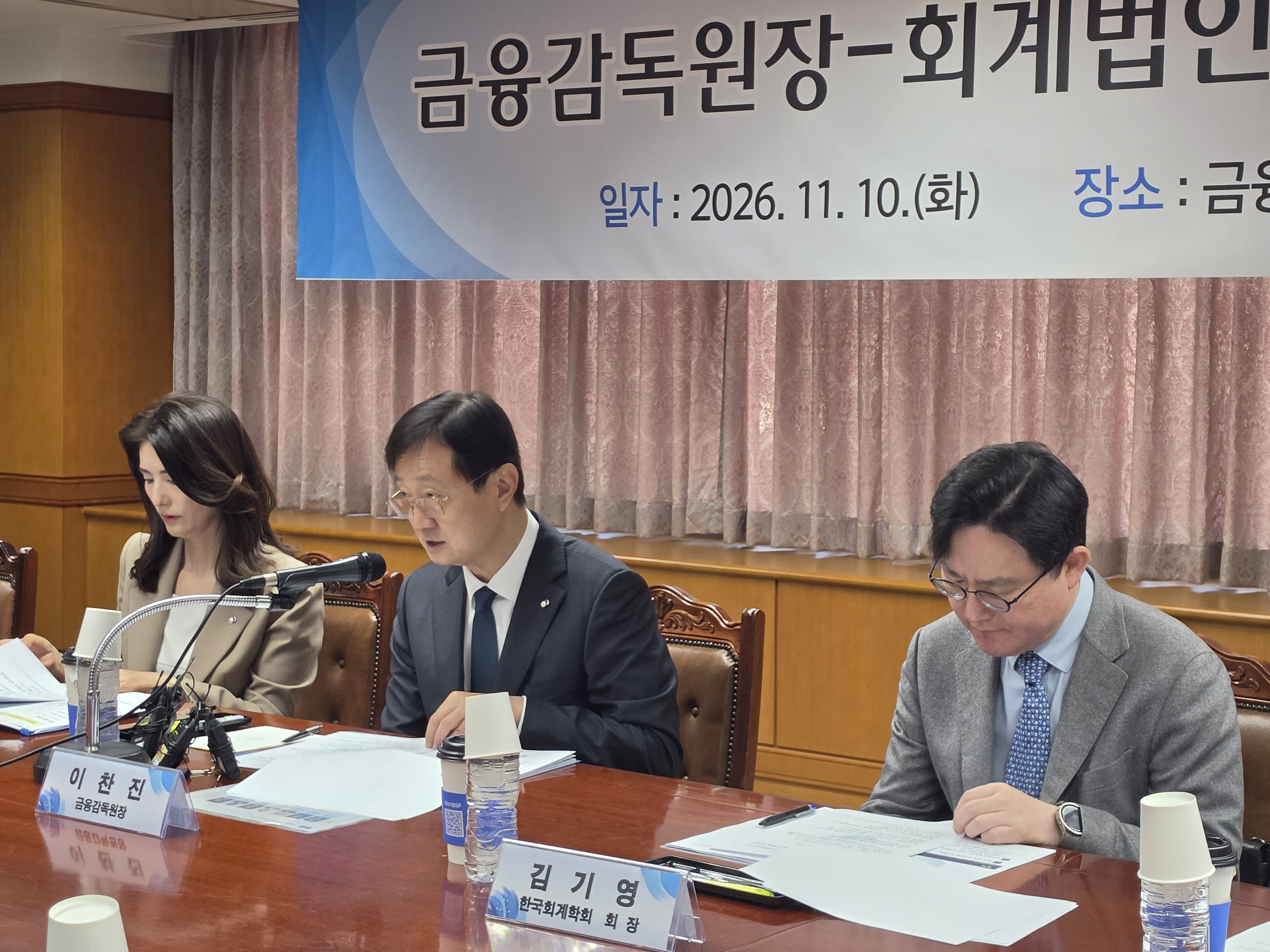
On November 10, Financial Supervisory Service (FSS) Governor Lee Chan-jin laid out the remedy: slash those cycles dramatically, bring Korea in line with the United States and Europe, and make accountants and their client executives pay when corners get cut.
The announcement came during a closed-door session with CEO-level representatives from eight major accounting firms and industry experts at the FSS headquarters in Yeouido, Seoul. What emerged was not a gentle nudge toward better practices but a structural reset designed to end what insiders privately describe as a race to the bottom in audit fees and hours.
The Numbers Behind the Problem
The data tells a blunt story. According to FSS figures cited during the session, the average audit fee for listed companies fell 4.5 percent between 2022 and last year, dropping from ₩264 million to ₩252 million. Total audit hours per engagement fell by the same margin — from 2,458 hours to 2,348 hours.
That may look modest in aggregate, but it represents a sustained pressure trend across an industry already competing fiercely for mandates. When audit shops bid against one another, the path of least resistance runs through shrinking budgets and time allocations. The consequence: thinner coverage, fewer substantive tests, and a higher probability that red flags remain buried under a clean opinion.
Governor Lee flagged exactly this dynamic. “Where audit hours drop sharply without reasonable cause, we will conduct targeted additional reviews of both the company and the auditor,” he said.
The International Benchmark
The comparison Lee invoked is not abstract. The US Securities and Exchange Commission subjects all public companies to review cycles measured in years, not decades — typically three. The UK Financial Conduct Authority inspects its FTSE 350 constituents on roughly a five-year cadence. Neither system is perfect, but both reflect an underlying logic that Korea has lagged behind: periodic, credible threat of scrutiny keeps management honest and auditors diligent.
Korea’s roughly twenty-year interval between formal supervisory examinations effectively meant that many firms went an entire leadership tenancy without serious external examination. That gap is what Lee called “unworkable” for modern market integrity.
The FSS says it will expand its inspection staffing and organizational capacity to close the gap. No specific timeline for full implementation was disclosed at the session, but the direction is unambiguous.
Who Wins, Who Loses
For investors — especially foreign institutional holders who have long complained about uneven disclosure quality — the reform is a net positive. Tighter cycles and stiffer consequences reduce the information asymmetry that makes Korean equities riskier than their fundamentals suggest.
For accounting firms, the outlook is less comfortable. The FSS explicitly framed the reform as a pivot away from price competition toward quality competition. Firms that built market share by underbidding on fees and hours now face the prospect of heightened enforcement attention, potentially heavier liabilities, and clients who may demand more work at sustainable rates.
The message to law firm partners and Big Four country managers alike was blunt: the era of treating audits as commoditized checklists is ending.
Executives at listed companies also face a tougher regime. Lee stressed that intentional accounting manipulation will meet a zero-tolerance standard and that violations stemming from weak internal controls at audit firms will no longer be treated as isolated lapses by individual staff. The corporate governance responsibility floor has been raised.
What Happens Next
Several questions remain unanswered publicly. The FSS did not release a detailed schedule for how existing review cycles will be compressed, nor did it specify whether smaller listed companies will be prioritized differently from large caps. It also stopped short of quantifying the headcount expansion needed to sustain faster rotation among examiners.
What is clear is the political economy of the moment. Seoul is under growing pressure to demonstrate that Korean capital markets can compete on transparency with Tokyo and Shanghai. Cross-border investment flows into K-pop and K-beauty stories are irrelevant if the underlying financial reporting does not withstand international due diligence.
The reform also arrives as global supply-chain realignment reshapes where Asian manufacturing and technology investment flow. Markets that signal discipline and reliability attract slower-moving but steadier capital — pension funds, index trackers, ESG-mandated allocators — precisely the investors Korea needs to broaden its shareholder base beyond domestic retail and chaebol-affiliated funds.
Governor Lee summed up his ambition in one phrase: make the accounting profession shift from price competition to quality competition. Whether that vision translates into practice depends on enforcement follow-through over the next 18 to 24 months. The rhetoric is strong. The track record will matter more.