Koreas AI Glasses Ban Exposes a Global Exam Integrity Crisis
South Korea is banning AI smart glasses from its national college entrance exam — but the deeper story is about wearable computing colliding with centuries-old testing protocols worldwide.
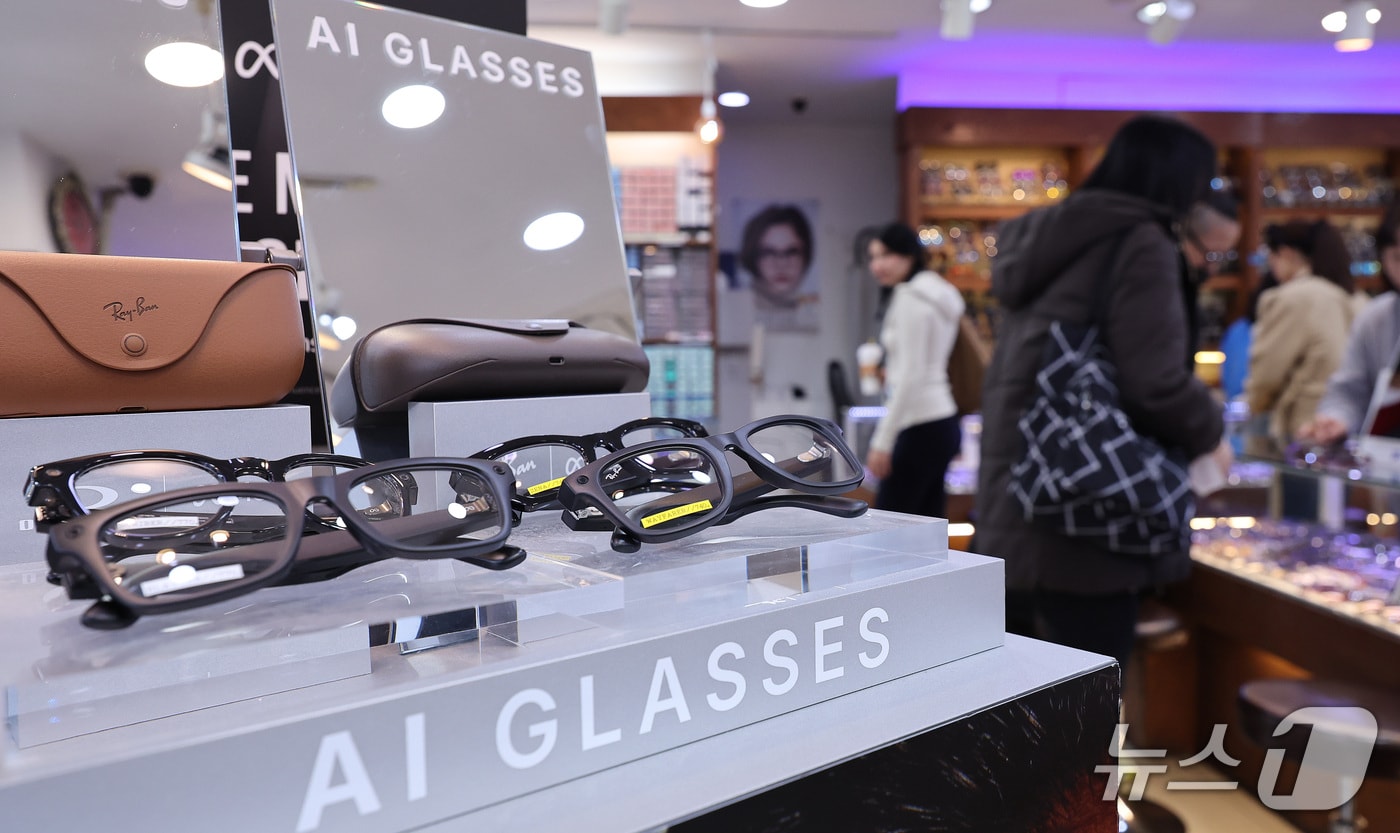
The glasses are coming, and exam boards are already behind
Last week, before shops in Seoul still had display models of AI-smart glasses under fluorescent lighting, South Korea declared war on them.
The education ministry confirmed it would deploy dedicated detection officers at every test center for the College Scholastic Ability Test, known in Korea as the 수능 (Suneung), scheduled for November 19. Wearing AI glasses during the exam now counts as cheating — even if you never activated them. Refusing to comply with an invigilator inspection carries the same penalty. A first offense wipes out your score; doing it deliberately strips you of next year’s eligibility too. Criminal prosecution is being reserved for organized attempts.
The rules read like someone tried to write a policy by browsing Amazon yesterday and then panic-editing overnight. Phones, smartwatches, earbuds, tablets, e-dictionaries with screens, electric cigarette cases, power banks, tumble-ups — all banned. Even digital IDs on phones won’t be accepted as identification. Only analog watches without screens pass inspection. Students must arrive by 8:10 a.m. with paper test tickets and physical photo ID.
On the surface this is a procedural memo for eighteen-year-olds. Beneath it sits a much larger friction: wearable computing hardware is advancing faster than any testing regime can adapt to it.
What makes the Korean case different
Other countries have wrestled with cameras, smartwatches, and hidden Bluetooth earpieces. Those were harder to conceal because they required visible wires or obvious form factors. AI-smart glasses change the geometry. They look like ordinary prescription frames from the outside. Inside, they contain micro-displays, cameras, wireless radios, and increasingly capable on-device processors running large-language-model inference in real time.
A student wearing them could photograph a question, run it through an edge-computing model, and receive an answer — all without anyone noticing, save for a slight tilt of the head. This is exactly why South Korea’s education ministry moved from “no electronics” to “even wearing these counts as use.” That semantic shift matters. It means intent no longer has to be proven. Presence alone triggers the sanction.
It is also a sign that the policy gap is closing fast. In previous years, invigilators dealt with smuggled notes and phone cameras. Now the calculus includes devices indistinguishable from regular eyewear.
Who wins and who loses
The winners here are the institutions that want to preserve meritocratic legitimacy, at least in the short term. By making non-compliance itself a punishable act, the ministry sidesteps the near-impossible task of proving whether someone actually looked at an augmented-reality overlay while solving a mathematics problem. The evidence standard collapses into behavior: you didn’t remove the glasses when asked? You cheated.
The losers are everyone caught in the drag of an expanding regulatory perimeter. Students carrying medical devices such as continuous glucose monitors or hearing aids already require prior review. Adding another layer of screening means more students facing additional bureaucratic hurdles on exam day. There is also a quieter equity concern: wealthier families can afford private coaching that reduces reliance on technological crutches, while the threat of detection primarily penalizes those willing to spend money on the newest gadgets.
But there is a third group worth naming explicitly. The tech companies selling AI-smart glasses aren’t losing anything today. Their product-market fit was never going to be built on high-stakes testing. If anything, government bans reinforce the cultural narrative that these devices are powerful enough to undermine systems worth protecting. That’s accidental marketing.
Why this matters outside South Korea
The Suneung occupies a singular place in Korean society — a single-day exam that effectively determines university placement and, by extension, career trajectories. Its integrity is treated as sacred. The intensity surrounding it explains why the government is taking such hardline measures. But the underlying dynamic is universal.
Every major testing body faces the same curve. The SAT and ACT in the United States rely on in-person proctoring that increasingly depends on AI-driven monitoring software. China’s gaokao spends millions on surveillance infrastructure and identity verification. India’s JEE and NEET confront cheating rings equipped with Earpods and smart-contact lenses — yes, those exist. The pattern repeats across Japan’s center tests, Australia’s ATAR, and Europe’s Baccalaureate systems.
What South Korea did in November 2026 will happen everywhere within two years. The question is whether other systems move with the same speed or get caught negotiating process for years afterward.
The long game is far harder than a ban
Banning AI glasses is straightforward. Recognizing when a student has been using them covertly is not. Optical sensors cannot tell whether someone wearing AR frames is looking at an external display or simply living in augmented reality. Infrared scanners cannot distinguish a fashion-forward prescription lens from one embedded with waveguide optics. Thermal imaging won’t help either, since the processing load on current-generation glasses is modest.
This puts testing authorities in a structural trap. To catch sophisticated cheating they must invest in equally sophisticated detection. But sophisticated detection costs money, raises privacy objections, and still produces false positives. So most organizations fall back on behavioral proxies: prohibiting certain types of glasses, requiring head-coverings, or seating students far apart. None of these solve the problem. They only make cheating slightly less convenient.
There is a second-order consequence that rarely enters public debate. When exams become increasingly indistinguishable from security operations — metal detectors, bag searches, camera sweeps, AI proctoring algorithms, device mandates — the experience of testing shifts from measuring knowledge to managing risk. The psychological load on candidates rises. The cost of administration escalates. And the signal-to-noise ratio of the results may actually worsen, because the most stressed students tend to perform worst under surveillance conditions.
What happens next
Within five years, AI-smart glasses will be cheaper, thinner, and more capable than anything available today. Battery density improvements alone will allow all-day wear with discrete processing. On-device language models will become fast enough to run locally without cloud dependency. The technical barrier to embedding examination cheating into everyday eyewear approaches zero.
Meanwhile, testing regimes will continue treating the problem as one of enforcement rather than design. Until someone fundamentally rethinks what high-stakes assessments measure — moving toward open-resource formats, project-based evaluation, or competency mapping — the arms race stays locked in place.
South Korea’s announcement is not the end of a cycle. It is the latest escalation in one that started the moment someone realized a $30 pair of reading glasses could carry a computer, and the moment after that when someone figured out how to make that computer talk to the internet.