Korea's $54 Billion Bet on Alaska LNG Changes Everything
Trump is expected to announce a massive Korean investment in Alaska LNG on Sept 30, part of Seoul's $200 billion strategic commitment to US projects. The deal redefines US-Korea energy ties and signals a new chapter in Arctic development.
What Just Happened
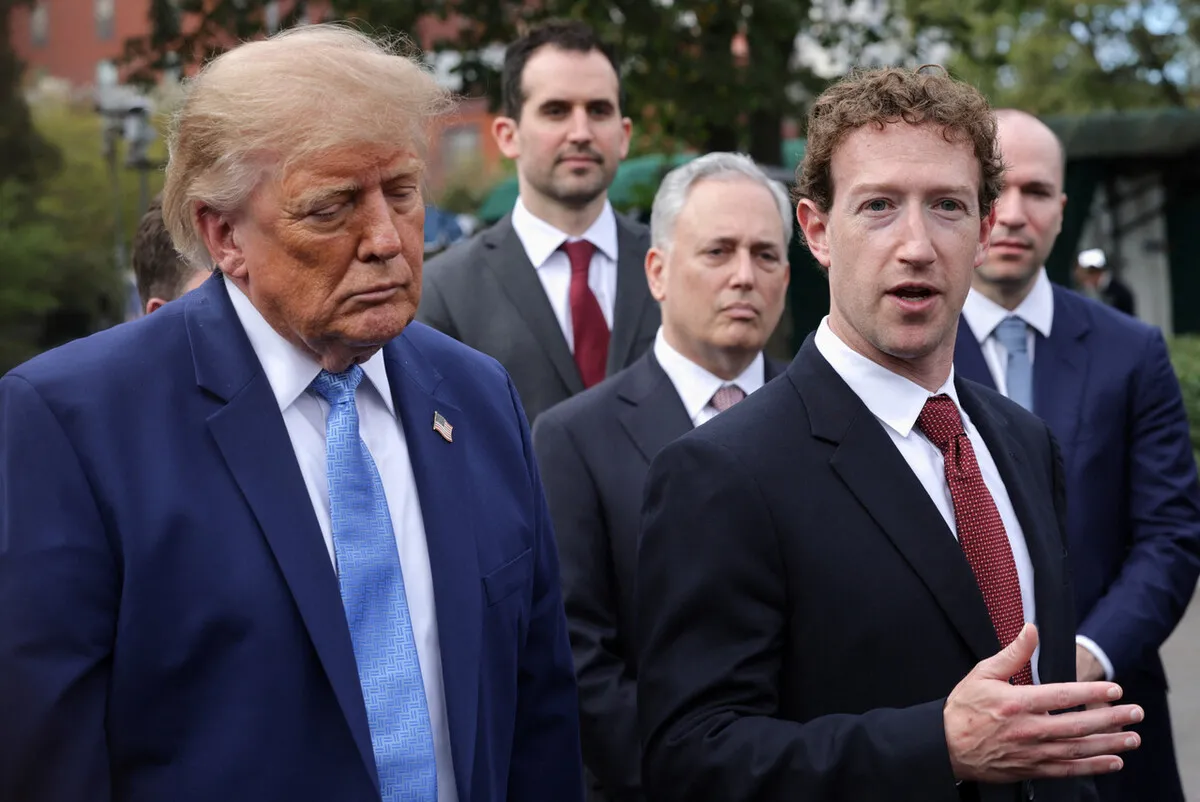
On September 29, Mark Zuckerberg walked out of a White House lunch in the East Room, with Donald Trump watching him closely. The photo opportunity was calculated. But the real story emerged the next day, when Reuters reported that Trump could announce on September 30 a plan to deploy South Korea’s strategic investment fund toward massive US energy projects — led by a $54 billion Alaska LNG initiative.
Seoul had already told Congress on September 22 that its $200 billion strategic investment package would begin with a natural gas power plant in Texas. Alaska LNG and US nuclear projects were listed as candidates for later review. Now those candidates appear ready to move.
Why This Matters
Alaska LNG has been discussed for over a decade without materializing. The economics never worked convincingly. Pipeline costs from the North Slope to the southern coast were steep. Liquefaction infrastructure needed to be built from scratch. And the United States, flush with cheap shale gas, had little urgency to export energy from its most remote territory.
That calculus shifted. What changed is less important than what is happening now: South Korea — a country that imports nearly all its energy — is about to become the financial backer of America’s Arctic energy ambitions.
The route matters. Gas would be piped north-to-south across Alaska, liquefied on the coast, and shipped directly across the Pacific to Asian markets. The cargo would never touch the continental United States. That is a logistics profile unlike anything else in the global LNG trade.
For Korea, which spends roughly $100 billion annually on LNG imports, the deal is a hedge against supply disruption and price volatility. For the United States, it is an export project that bypasses the lower 48 states entirely and taps a resource base Trump has long championed.
The Political Layer
Reuters noted that the announcement comes as part of a series of economy-related reveals Trump is preparing ahead of the November midterm elections. That timing is not incidental.
A $54 billion investment announced from the White House reads as a domestic victory. It creates jobs. It promises energy independence. It places American LNG — not Middle Eastern — on Asian dinner tables. For a president who has built his brand on transactional deals, this is exactly the kind of story he wants to own.
But it also elevates the role of Korean capital in a way that could reshape the bilateral relationship. South Korea is no longer just a security partner or a market for American agriculture. It is becoming a financier of American energy infrastructure. That is a different kind of alliance.
The Numbers
$54 billion is the figure attached to the Alaska project alone. It sits inside a $200 billion Korean commitment to US investment that was announced earlier this month. The Texas power plant is the first project. Alaska LNG is the next.
To put the scale in perspective: global LNG trade moves roughly 400 million metric tons annually. A single Alaska LNG facility would represent a meaningful fraction of that total. The capital required — $54 billion — rivals the cost of some of the world’s largest conventional LNG trains. This is not a pilot project.
Who Wins and Who Loses
South Korea wins access to a diversified LNG supply routed directly to Asia, reducing reliance on Middle Eastern cargoes that traverse chokepoints like the Strait of Malacca. The Korean won fund gains a strategic asset.
The United States wins an export project in a state that has long sought economic development opportunities. Alaska benefits from infrastructure it never had. The broader US economy benefits from the contraction in Korean demand for Middle Eastern LNG, which reallocates global supply chains.
Middle Eastern producers lose margin. Qatari, Australian, and Malaysian exporters face a new competitor that ships from a different basin with different cost structure. The Pacific route from Alaska may carry higher per-unit costs than Gulf of Mexico or Middle Eastern cargoes, but it offers pricing flexibility and supply chain resilience that buyers increasingly value.
China loses strategically. A strengthened US-Korea energy partnership deepens the trilateral security architecture and reduces Beijing’s leverage over Korean energy imports. That is not a side effect. It is the point.
What Comes Next
The announcement on September 30 will likely confirm the framework. But framework agreements and financed projects are different things. $54 billion does not appear in a press release — it emerges through construction contracts, shipping agreements, and political negotiations in Anchorage and Washington.
Alaska’s regulatory environment, environmental review process, and Indigenous land claims will test the timeline. The project requires a 800-kilometer pipeline through permafrost terrain. Liquefaction plants need to be built in a place where building anything is hard. Weather constrains construction windows. Labor is scarce.
None of that is impossible. It is just expensive and slow. Which means the real test is whether Korean investors commit capital on the ground, not just on paper.
The Texas power plant will be completed faster and cheaper. It will deliver visible results before the midterms. Alaska LNG is the longer game — the one that defines the relationship for decades.
The Bigger Picture
This deal reveals something about how the Indo-Pacific energy order is being rewired. South Korea, historically a price-taker in global energy markets, is now deploying sovereign capital to shape supply routes. The United States, historically a reluctant exporter, is becoming an energy supplier through partnerships that bypass traditional trade patterns.
Alaska LNG is not just a project. It is a statement that the Arctic is opening — economically, strategically, and geopolitically — and that the countries willing to finance it will define the terms.
Trump’s announcement on September 30 will be the headline. The real story is what comes after.